
Chicago’s reversed river remains one of the most dramatic human-made changes to a waterway, and efforts to repair its damage now center on invasive species control, pollution cleanup, and ecological restoration.
I wanted to share a piece from our friends at Ag & Water desk visit to Chicago during the Socety of Environmental Journalists conference. Check it out and learn about the topic of How do you fix a backyard river.
Dear Editors at The Narrative Matters,
One of the most profound ways humans have reshaped the landscape happened right here in the Mississippi River Basin.
On Jan. 2, 1900, workers completed a 28-mile canal linking the Chicago River to the Des Plaines River. That reversed the Chicago River’s flow and created an interconnected water system running from the Great Lakes to the Gulf of Mexico.
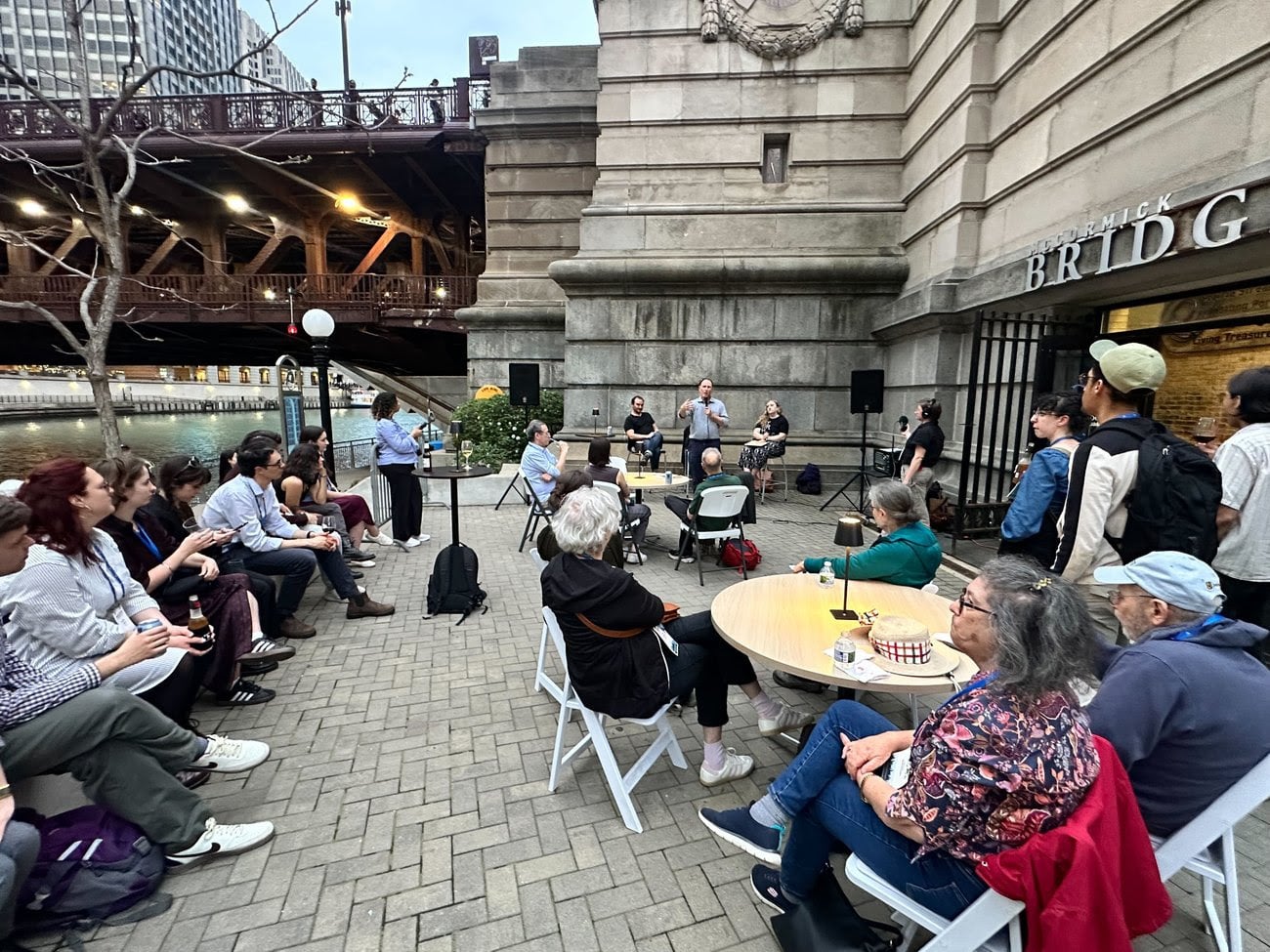
During the Society of Environmental Journalists’ conference in Chicago in April, the Ag & Water Desk hosted a discussion of that project and its impact more than a century later. Madeline Heim of the Milwaukee Journal Sentinel moderated as Cameron Davis, a commissioner with Chicago’s Metropolitan Water Reclamation District, and Nick Wesley, co-founder of the environmental nonprofit Urban Rivers, shared their thoughts.
“Suffice it to say, this is a really important waterway,” Davis said, “and it’s important because of the scope of the combination of the two watersheds creating the mega-shed.”

A photo display inside the McCormick Bridgehouse & Chicago River Museum explains the river’s impact. (Dominique Hodge/Ag & Water Desk)
Madeline Heim: Could you talk about the environmental impacts of such a decision on the ecosystem as a whole, and what effects do we still see today?
Cameron Davis: We’ve essentially created a syringe through which the equivalent of pathogens, ecological pathogens, can move. So we can inject invasive species from the Great Lakes now into the Mississippi River Basin and likewise, invasive species from the Mississippi River Basin can be injected into the Great Lakes if we’re not very careful.
Nick Wesley: Now we’re dealing with a pretty different system. … We all know about the Zebra mussels, things like that, which have done just tremendous amounts of ecological damage. But in rivers like this, native mussels in some cases made up like 90-something percent of the biomass of the system. And in the process of transforming our whole river … we physically removed all of these mussels that have a really tremendous effect on water clarity and other things like that, which then affects the aquatic plants that are all through there. So it’s kind of this domino effect.
MH: One thing I really wanted to zoom in on is what happens when you connect a major metropolitan area and all of its nutrients that are coming into the water with the Mississippi River, which already has issues with lots of phosphorus and nitrogen coming downstream? We know that most of that is coming from agriculture, but as I understand it, the Chicago metro area is an extremely large single contributor to the water flow of the Mississippi River.
CD: One of the things that the agency [MRWA] has done is install phosphorus removal technology … that essentially removes the phosphorus from the waste stream and turns it into a usable product. That installation is the largest nutrient removal project in a water reclamation plant anywhere in the world.
MH: Nick, I’m wondering if you could also talk about Urban Rivers’ work in Bubbly Creek. And first, can you tell us why it’s called Bubbly Creek, and then say a little bit about what you’ve been doing there?

Madeline Heim of the Milwaukee Journal Sentinel moderates our panel with Cameron Davis (center), a commissioner with Chicago’s Metropolitan Water Reclamation District, and Nick Wesley (left), co-founder of the environmental nonprofit Urban Rivers. (Dominique Hodge/Ag & Water Desk)
| NW: Bubbly Creek is the one of the most notoriously polluted areas of any river in some ways. Upton Sinclair wrote about it in The Jungle, about how it was essentially the dumping ground for all these carcasses and stuff like that, and as they rotted they would release methane. … So [now] we have kind of an archipelago of these floating islands, all with native plants, the roots going down pulling up excess nutrients, creating habitat for pollinators, other things like that. … The communities around it, they’re so used to this being this like no-go zone, this kind of place that everyone assumes is just you know awful. And having these kind of floating gardens there and seeing the wildlife coming back, it really is showing people that this isn’t what it always has been. It has a lot more potential, it’s a lot cleaner than it used to be, and it really is a key place in the ecological context of the Chicago River. MH: Do you think they’d ever rename Bubbly Creek? NW: I love the name. I think they should keep it — to see where it came from and where it is now. CD: I want to add on to what Nick just said. Bubbly Creek is still very contaminated. We’re still living with the legacy of contamination that wound up in the Chicago River, settled at the bottom, in the bottom sediments of the river system, and we still have in this 156-mile stretch of Chicago-area waterway system a lot of legacy contaminant in that sediment. So right now, I think we’re on the cusp of reversing 100 years of that toxic legacy. It is something that many of us have been working for and fighting for for generations, and the notion that this wheel could be starting to turn right now is, I think, one of the most important things that this region can be doing at this moment. |
| What struck me most about this conversation is how, even in places where humans have entirely rewired the ecosystem, there remains the possibility of restoring nature. You can find a more detailed transcript on our website, agwaterdesk.org. More next week from across the Basin. Thanks for reading! |
Sincerely, Chas SiskEditorial Director,Ag & Water Desk |
#EnvironmentalJournalism #BackyardRiver #WaterRestoration #RiverCare #Chicago #SocietyOfEnvironmentalJournalists #WaterManagement #AgAndWaterDesk