
The Pearl River nourishes wildlife, communities and Gulf seafood. Critics say the latest flood-control proposal is a real estate development in disguise.

Illan Ireland, Mississippi Free Press
JACKSON, Miss. — Tamitha Dill worries her house could be in danger every time it rains. Her northeast Jackson neighborhood is highly susceptible to flooding from the nearby Pearl River and its tributaries, and she was one of many residents who evacuated in 2020 when the river crested at near-record levels.
Dill has followed evolving government plans to reduce Jackson-area flooding along the Pearl, but recent versions touted by local officials have left her wanting.
“We need a solution, a real solution that makes sense,” Dill said. “We have pride for our communities, and we want to stay here, but we want to stay in an environment where we feel safe.”
Dill is part of a cohort of Jackson-area residents who oppose the latest flood-control plan, which calls for widening the river near the capital city and potentially building a dam along the waterway. The proposal follows a similar blueprint to One Lake, the contentious, decades-old plan to excavate and dam the Pearl near Jackson and create new waterfront property along the river.
These critics have highlighted the plan’s expected ecological toll and anticipated burden on taxpayers. Many have also questioned the underlying motivations behind the design, describing it as a development scheme with ancillary flood-control benefits.
“Federal flood mitigation should prioritize protecting families and reduce flood risk,” Dill said, ”Not creating development opportunities while neighbors remain vulnerable.”
Cascading effects
First unveiled in 2011, One Lake is part of a long lineage of plans from Jackson-area developers to create an artificial water body along the Pearl River. By increasing the river’s conveyance capacity and making levee improvements, the plans have sought to rein in flooding around Jackson while increasing waterfront access and economic development.
Though they’ve garnered support from business groups and local officials, One Lake and successive lake plans have faced opposition from a subset of Jackson residents, who argue the proposals put development ahead of flood relief and threaten local green spaces and wildlife. Some worry the plans would not sufficiently protect majority-Black neighborhoods that already experience frequent flooding.
“This is not a flood-control plan,” Dill said. “There may be some … reduction in flooding, but not at a level where we’re going to see a major difference.”
Using a lake for flood management could also have consequences downstream of the project area: The Pearl River is a slow-moving, ecologically diverse waterway that winds hundreds of miles through Mississippi, eventually forming part of the Louisiana border before emptying into the Gulf of Mexico.
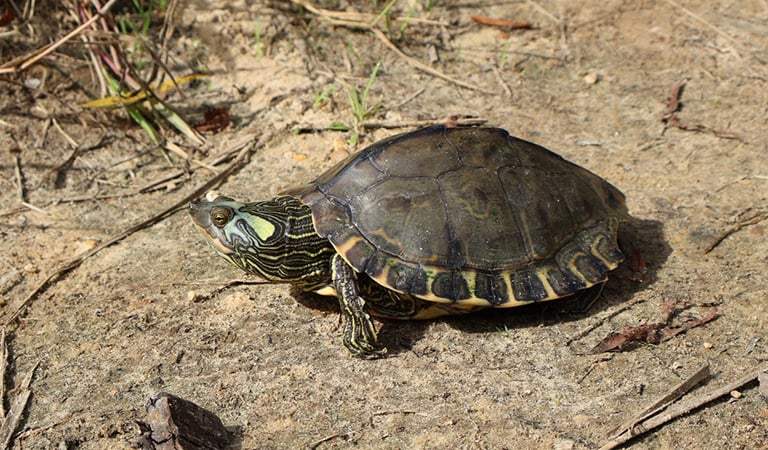
The river supports numerous communities and industries south of Jackson, from shrimp and oyster fishing in the Gulf to a paper mill’s operations in southwest Mississippi. It’s also home to animals like the Pearl River map turtle, a species endemic to the watershed that earned federal protections two years ago.
For years, downstream communities have maintained that One Lake and similar proposals would disrupt the river’s hydrology, imperiling livelihoods and habitats and further endangering species like the map turtle. Residents say the altered water flow would also accelerate land erosion and bank loss along the lower Pearl.
“The construction of the One Lake plan would be an environmental catastrophe,” said Martha Watts, the former mayor of Monticello, Mississippi, a river town located about 75 miles south of Jackson. “Protecting property from floods in Jackson is important, but protecting the thousands of landowners downstream is just as important.”
The latest lake plan under consideration is the result of a yearslong collaboration between the Rankin-Hinds Pearl River Flood and Drainage Control District — the project’s local sponsor — and the U.S. Army Corps of Engineers, the federal agency tasked with its design and implementation. Last summer, the Army Corps released a study with two similar flood-control proposals, dubbed Alternatives D1 and E1. Both involve lowering the banks of the Pearl around Jackson and adding levees near flood-prone neighborhoods, though only Alternative D1 includes a dam.
In February, the Rankin-Hinds Flood Control District announced that the federal government had selected a final plan design based on Alternative D1, citing a Jan. 31 memo from Adam Telle, the assistant secretary of the Army for civil works. But the memo directed the Corps to move forward with a combination of Alternatives D1 and E1, and Telle subsequently clarified that more studies are needed before a final design is formally authorized.
These include an environmental impact study with mitigation plans for expected habitat loss, as well as additional research on the project’s downstream impacts. The Corps’ previous study estimated that Alternative D1’s implementation would eliminate 740 acres of forested wetlands and 232 acres of riverine habitat.
In an interview with the Mississippi Free Press, Rankin-Hinds Flood Control District attorney Keith Turner confirmed that the Corps would be conducting downstream sedimentation and water quality analyses as part of its final environmental study. Past studies modeling the downriver impacts of previous lake plans showed no meaningful changes to water volume or quality, he added.
“There’s been no evidence thus far to suggest that there’s any reason to be concerned,” Turner said, noting that the district plans to work with federal agencies to install permanent water quality and conveyance monitors downstream of the project area.
To dam, or not to dam
A key potential feature of the final flood-control plan is the low-head dam from Alternative D1, which would create the lake championed by the Flood Control District and other groups. While proponents say the impoundment would expand recreation and development opportunities around Jackson, critics insist it would drive much of the project’s downstream destruction and habitat loss.
The Corps’ own draft study from last summer states that Alternative D1’s proposed dam would not deliver any flood protection, though the document adds that it could help address water supply issues moving forward.
The addition of the dam would also make the project more expensive. In its 2025 study, the Corps projected that Alternative D1 could cost as much as $917 million to implement, compared with $753 million for the dam-less E1 proposal. While the federal government would cover 65% of the project’s overall price tag, the local Flood Control District — and district taxpayers — would be on the hook for the rest.
“Even with federal funding, Mississippi taxpayers could still be responsible for hundreds of millions of dollars,” Dill said. “Before any final decision is made, the public deserves answers: What will this truly cost residents? What will annual assessments look like? Will flood insurance rates decrease, and will vulnerable neighborhoods truly be protected?”
Dill believes a project this costly should address other sources of flooding around Jackson, like aging, ineffective drainage infrastructure and flash flooding from the Pearl River’s tributaries. Previous flood-control proposals included resources for tributary clearing and maintenance, but recent plans leave that work to the state, local municipalities and another federal agency.
Turner said he expects the project’s actual cost to be significantly lower, noting that Corps estimates include contingencies that drive up construction and maintenance rates. He predicted that the final plan will cost between $450 million and $500 million, telling the Mississippi Free Press that the Mississippi Legislature should consider contributing to the Flood Control District’s share of the total.
As the federal government nears a final decision on the project, critics have urged officials to select a plan that better reflects the interests of the entire Pearl River watershed.
“The Pearl River is our river,” said Watts, who left office as Monticello’s mayor last year. “It’s everyone’s river. It’s not one politically connected group’s river.”
The Army Corps is expected to release its final environmental impact study later this year, and potentially by this summer, Turner said. The public will have 30 days to provide feedback on the document before an official decision is made.
This story is a product of the Mississippi River Basin Ag & Water Desk, an independent reporting network based at the University of Missouri in partnership with Report for America, with major funding from the Walton Family Foundation.
Pearl River, flood control, wildlife preservation, Gulf seafood, real estate development, flood management proposals, environmental concerns, community safety
#PearlRiver #FloodControl #WildlifeProtection #GulfSeafood #RealEstateDevelopment #EnvironmentalProtection #CommunitySafety