

For decades, NASCAR was seen as a sport dominated by a particular demographic. But over the past 25 years, Hispanic drivers have been steadily changing that narrative, bringing fresh talent, passionate fan bases, and groundbreaking achievements to stock car racing’s biggest stage.
The Trailblazers Who Opened Doors
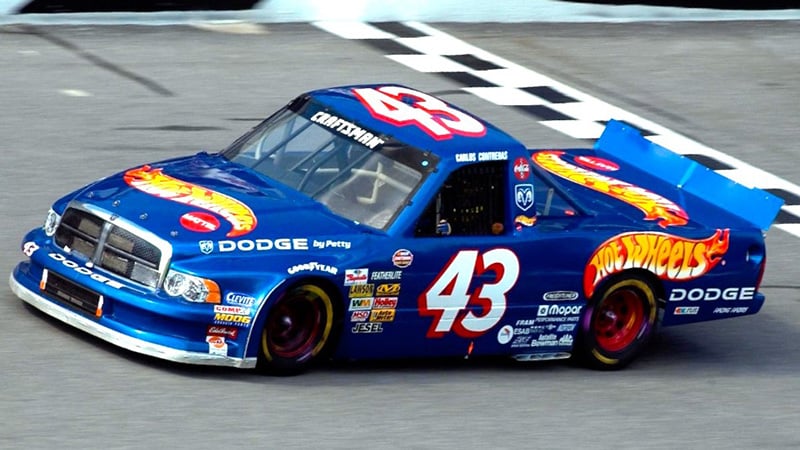
The story of Hispanic NASCAR drivers begins with Carlos Contreras, a Mexican racer who made history in 1999 as the first full-time Hispanic driver in one of NASCAR’s national series. Contreras spent nearly two decades competing primarily in the Truck and Xfinity Series, laying the foundation for those who would follow.
Milka Duno shattered another barrier in 2014 when the Venezuelan driver became the first Hispanic woman to compete in NASCAR’s national series. Her participation in both the Nationwide (now Xfinity) and Truck Series marked a pivotal moment for representation in the sport.
Today’s Champions Making History
The current generation of Hispanic NASCAR drivers isn’t just participating—they’re winning, and winning big.
Daniel Suárez stands as perhaps the most successful Hispanic driver in NASCAR history. The Mexican-born racer captured the 2016 NASCAR Xfinity Series championship and made headlines again in 2022 when he became the first Mexican-born driver to win a Cup Series race. His victory wasn’t just personal; it was a celebration felt across the Hispanic community.
Aric Almirola, whose Cuban-American heritage has made him a fan favorite, has multiple wins across NASCAR’s top three national series. Though he stepped back from full-time Cup Series racing, his transition to the Xfinity Series in 2024 shows his continued commitment to the sport.
Nick Sanchez represents the rising generation of Cuban-American talent. His success in both the Xfinity and Truck Series, with several Truck Series victories under his belt, proves that Hispanic excellence in NASCAR is here to stay.
The Mexico Connection
Mexican drivers have particularly strong representation in NASCAR today. Andrés Pérez de Lara competes full-time in the Truck Series while also racing part-time in the Xfinity Series. Jake Garcia, a Mexican-American driver, has made the Truck Series his home base, continuing the tradition of Mexican excellence in NASCAR.
Regina Sirvent deserves special recognition as a true pioneer. This Mexican racer not only became the first woman to win in the NASCAR Mexico Truck Series but also made history as the first woman to race in a NASCAR-sanctioned event at the iconic Los Angeles Memorial Coliseum.
International Star Power
Some of the most exciting Hispanic NASCAR moments have come from international racing stars who brought their talents to stock cars. Juan Pablo Montoya, the Colombian racing legend, proved his versatility by winning two Cup Series races and one Xfinity Series race during his NASCAR career from 2006 to 2024.
Adrián Fernández, an 11-time IndyCar winner from Mexico, showed that open-wheel success could translate to stock cars during his 10 Xfinity Series starts between 2005 and 2008.
Nelson Piquet Jr., the Brazilian driver, found success in both the Xfinity and Truck Series, adding to the rich tapestry of Latin American talent in NASCAR.
Beyond the Track: Cultural Impact
The impact of Hispanic NASCAR drivers extends far beyond race wins and championships. They’ve brought new fans to the sport, created emotional connections with Hispanic communities across America, and inspired young racers who see themselves represented at NASCAR’s highest levels.
When Suárez won his Cup Series race, celebrations erupted not just in NASCAR garages but in Mexican communities throughout North America. These drivers serve as cultural ambassadors, bridging the gap between NASCAR’s traditional fanbase and growing Hispanic audiences.
Inspiring the Next Generation
Perhaps most importantly, these drivers are changing who sees themselves as potential NASCAR competitors. Young Hispanic racers now have role models who look like them, speak their language, and understand their cultural background.
The success of current Hispanic NASCAR drivers is creating a pipeline effect. Racing programs in Mexico and throughout Latin America are seeing increased interest, and more Hispanic families are getting involved in grassroots racing programs.
Looking Ahead
The presence of Hispanic drivers in NASCAR isn’t a trend—it’s the new reality of American stock car racing. As the sport continues to evolve and expand its global reach, Hispanic drivers will undoubtedly play an increasingly important role.
Their achievements prove that talent knows no borders, and their continued success is writing new chapters in NASCAR’s storied history. From Contreras’s pioneering efforts to Suárez’s championship celebrations, Hispanic drivers have transformed NASCAR into a more diverse, exciting, and globally relevant sport.
The checkered flag waves the same for everyone, but the paths these drivers have taken to reach it have been uniquely their own—and uniquely inspiring.
#HispanicHeritage, #NASCARDiversity, #RacingLegends.