


Articulated Insight – “News, Race and Culture in the Information Age”
ICE Detention Expansion: What It Means for Immigration Enforcement
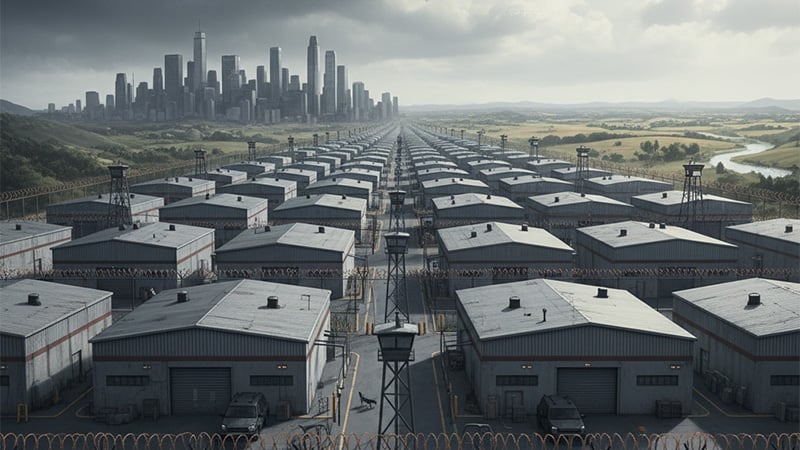
U.S. Immigration and Customs Enforcement (ICE) is currently undertaking a massive expansion of its detention system. This effort is guided by a federal directive aimed at increasing the capacity for mass deportations. With billions in new federal funding, ICE is planning to establish a national network of large “mega-centers.” Additionally, the agency will convert commercial warehouses into detention facilities. This project seeks to hold between 90,000 and 135,000 detainees by 2025 and in the years following, signaling a major change in how immigration laws are enforced.
What the Expansion Involves
Huge Capacity Increase
First, ICE is scheduled to grow its detention capacity from the current 38,000–40,000 beds to more than 90,000 by late 2025. Furthermore, projections show a potential increase to 135,000 by 2029. This significant growth highlights the agency’s goal of making large-scale deportations easier to carry out.
“Mega-Centers” and Warehouse Conversions
Expansion plans also include building eight large-scale “mega-centers,” with each one able to hold up to 10,000 detainees. In addition, 16 regional processing sites and repurposed industrial warehouses will function as detention facilities. This will centralize immigration enforcement operations even further.
Surge in Funding
Congress has provided about $45 billion for ICE detention, which triples the agency’s yearly budget. A large part of this money is set aside for hiring 12,000 more ICE agents and officers. Consequently, this will strengthen the agency’s ability to conduct mass deportations.
Private Prison Partnerships
This expansion depends heavily on private prison companies, like GEO Group and CoreCivic, to run the new facilities. However, these partnerships have faced criticism from advocates who are worried about profit motives and poor conditions.
What This Means for Immigration Enforcement
Faster Mass Deportations
The main purpose of this expansion is to make the deportation process more efficient. It aims to create a “no-release” system where it is harder for individuals to get bond. Therefore, this approach is meant to speed up removals and clear the backlog of immigration cases.
More Arrests and “At-Large” Operations
In addition ICE also intends to raise the number of “at-large” arrests by 600%. This strategy targets individuals within communities instead of just focusing on those apprehended at the border. Ultimately, this change points to a more forceful method of immigration enforcement inside the U.S.
Safety and Human Rights Issues
Advocates and watchdog groups have expressed serious concerns about the quick expansion. They are particularly worried about turning non-residential buildings, such as warehouses, into detention centers. Key issues include potential overcrowding, insufficient medical care, and poor living conditions.
Legal and Political Fights
These moves are being met with opposition from local communities and state officials. Many are against the creation of new detention centers in their areas. Critics point to safety, ethical problems, and the risk of human rights abuses as major reasons for their objections.
Less Oversight
As the detention system gets bigger, reports indicate that oversight is being weakened. This lack of transparency makes it harder to check conditions inside the facilities and to hold operators responsible for their actions.
Broader Effects on Immigration Policy
The growth of ICE’s detention system signals a move toward a more centralized and tougher approach to immigration enforcement. By building more capacity and making deportations quicker, the U.S. government hopes to manage immigration backlogs and enforce stricter border rules. Nevertheless, this strategy has created a major debate about its ethical, legal, and humanitarian consequences.
For a deeper look into the challenges of immigration enforcement, explore The Narrative Matters for more insights.
For Further Reading
For additional information on the role of private prison companies in immigration detention, please visit The Sentencing Project.
#ImmigrationPolicy #HumanRights #ICEExpansion