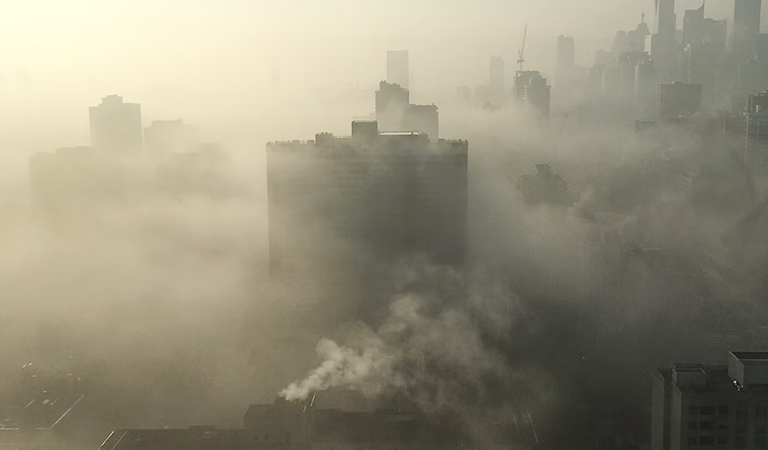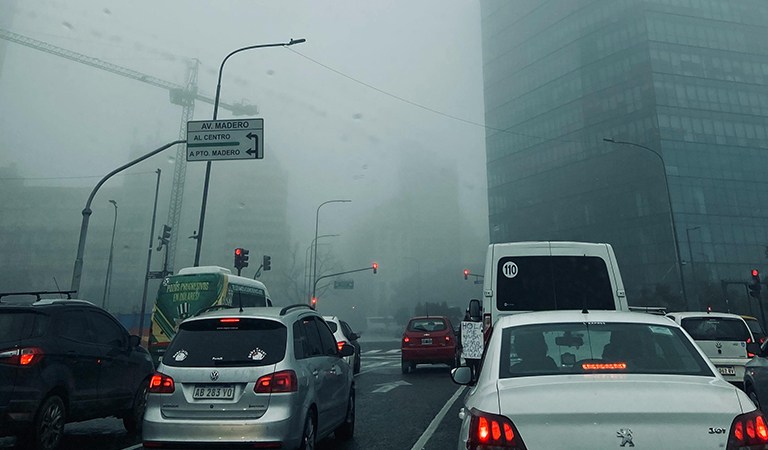

Daily air quality forecasts for 2026 have resumed, revealing that millions of Americans, including St. Louis residents, continue to face unhealthy air levels. The American Lung Association’s latest report highlights worsening ozone pollution and the ongoing challenges posed by climate change, despite decades of progress.
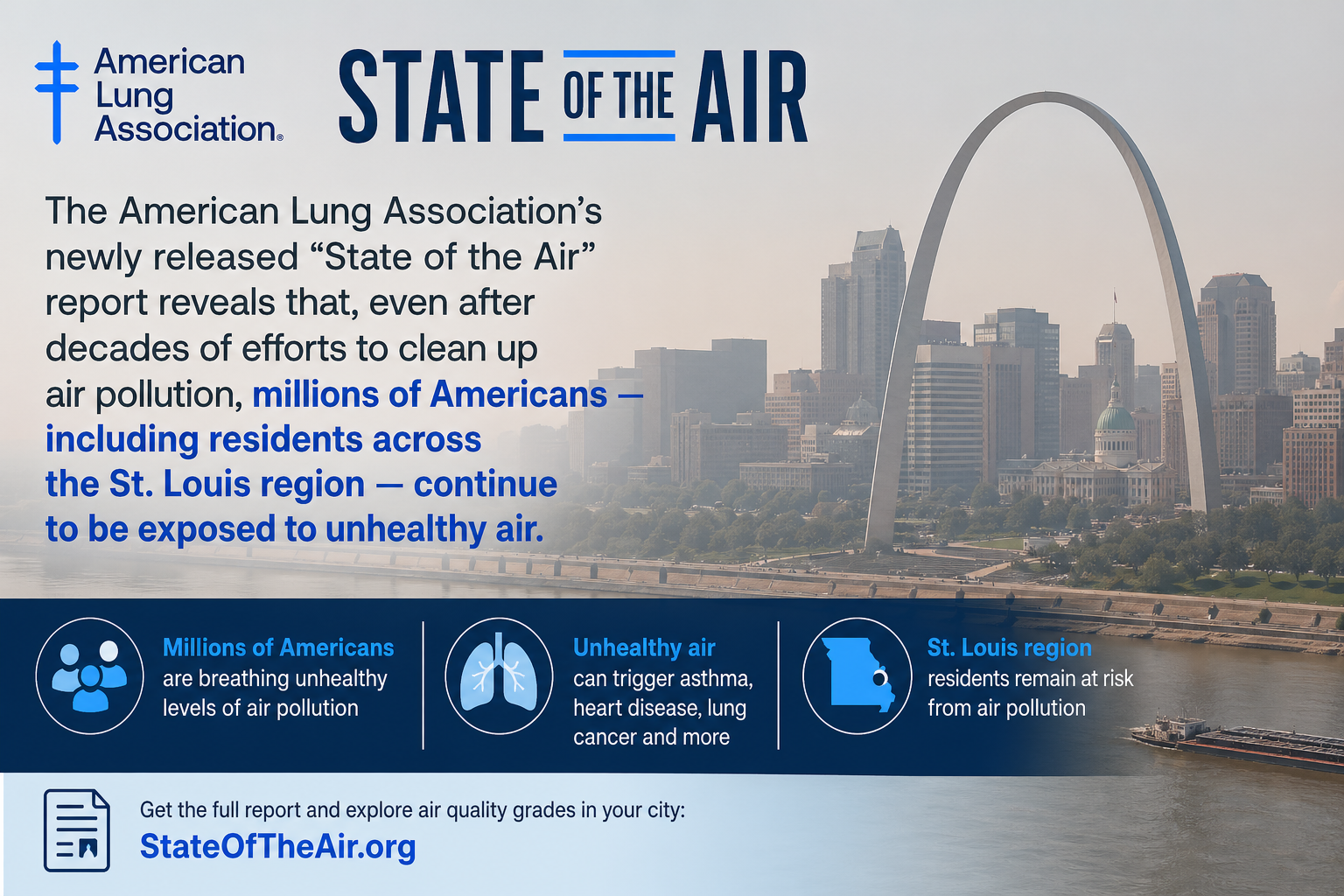
Starting May 1, daily air quality forecasts for the 2026 season are back. Despite decades of efforts, the American Lung Association’s latest report shows millions of Americans, including St. Louis residents, are still exposed to unhealthy air.
The State of Our Air Today
The newest “State of the Air” report covers the years 2022 through 2024. It reveals alarming statistics about our environment. About 44% of people nationwide live in areas with failing air quality grades. This means 152.3 million individuals face dangerous levels of ozone or particle pollution.
Particle pollution improved slightly over the last decade. However, ozone pollution harms more people now than in the previous five reports. We clearly need more regional and state action to address these pollution sources. You can read the full details in the report.
St. Louis Shows Mixed Results
A long-term look at the data shows both progress and concern for St. Louis. During the summers of 1996 through 1998, the area saw nearly 50 high ozone days. In this recent report, that average dropped to just over 10 days per year.
This drop shows that clean air programs and new technologies actually work. Voluntary emission reductions have also made a huge difference over time.
However, recent national rankings temper this progress. For the second consecutive year, the St. Louis metro area placed among the top 25 most ozone-polluted U.S. cities. It tied for number 24 out of 226 metropolitan areas. The region also ranked 31st nationally for annual particle pollution. This represents a drop of 14 positions from last year.
All eight counties in the bi-state non-attainment area earned failing grades for ozone pollution.
Missouri Counties with Failing Grades:
- Jefferson
- St. Charles
- St. Louis County
- St. Louis City
Illinois Counties with Failing Grades:
- Jersey
- Macoupin
- Madison
- St. Clair
“This report reflects both how far the St. Louis region has come and how much work still lies ahead,” said Susannah Fuchs. She serves as the Director of Healthy Air Solutions for the American Lung Association in Missouri. “Reductions in high ozone days over the past few decades show that solutions work. But the data makes it clear that recent climate pressures put those gains at risk.”
Climate Change Threatens Progress
The latest findings add to a growing body of evidence regarding climate change. A changing climate makes it much harder to protect our hard-earned gains in air quality.
Rising temperatures create massive challenges. Prolonged droughts and increased wildfires contribute to frequent high-ozone days. They also cause short-term spikes in particle pollution. These events put millions of people at heightened risk. They complicate ongoing cleanup efforts across the entire country.
The report highlights specific problem areas. The Southwest faces the greatest challenges with ozone pollution. This stretches from California all the way through Texas. Large portions of the Midwest also struggle with these issues.
Ground-Level Ozone Poses Severe Risks
Exposure to unhealthy ground-level ozone affects more people than any other monitored pollutant. During the three-year period covered, 38% of the population faced serious health risks. That equals roughly 129.1 million people breathing dangerous ozone levels.
This represents the highest number reported in six years. It impacts tens of millions of children and older adults. Individuals with asthma and other respiratory conditions suffer the most. Nearly half of all children in the U.S. breathe unhealthy air. This includes almost 500,000 kids in Missouri alone.
“As we head into another summer season, everyday choices make a real difference,” Fuchs noted. “We can change how we commute or how we use energy at home. Small changes help reduce pollution and protect vulnerable people.”
Past clean air measures successfully reduced ozone pollution for several years. However, recent data shows a distressing reversal. Past progress remains incredibly fragile. This year, 219 counties across 36 states earned failing ozone grades. This marks the highest number since 2016.
How You Can Protect Yourself
The Clean Air Partnership encourages residents to monitor local air quality conditions. You must pay special attention on orange or red air quality days. Consider adjusting your outdoor activities to reduce exposure.
You can find daily, color‑coded forecasts at CleanAir-StLouis. The site allows you to sign up for email or text alerts. These alerts come directly through the U.S. Environmental Protection Agency’s EnviroFlash system.
Forecasters also share updates on AirNow.gov. You can catch them during First Alert 4 weather broadcasts and at FirstAlert4.com.
Additionally, CleanAir-StLouis offers great resources. You can find air quality tips and seasonal updates there. Residents can also stay connected via social media by following the Clean Air Partnership. To access the full 2026 report, simply visit Lung.org.
About the Organizations
The American Lung Association
The American Lung Association leads the fight for healthy lungs. They work tirelessly to save lives and prevent lung disease. They achieve this through education, advocacy, and research. The organization focuses on four strategic goals. They want to defeat lung cancer and champion clean air for everyone. They also strive to improve life for those with lung disease and create a tobacco-free future. You can learn more or call 1-800-LUNGUSA by visiting Lung.org. To support their vital work, find a local event at Lung.org/events.
The Clean Air Partnership
Leaders formed the Clean Air Partnership in 1995. The American Lung Association and the St. Louis Regional Chamber lead the group. They work alongside Washington University and the East-West Gateway Council of Governments. They aim to increase awareness of regional air quality issues. They continuously encourage activities that reduce harmful air pollution emissions.
#AirQuality #CleanAir #PublicHealth #EnvironmentalAwareness #StateOfTheAir #PollutionPrevention #StLouis #HealthyLungs #AirPollution #EnvironmentalHealth