
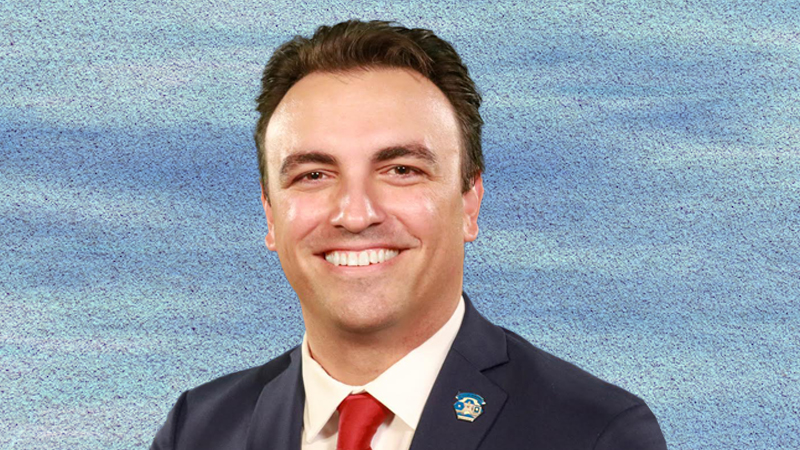
Councilmember Konstantine Anthony: Fighting to Protect Jobs in the Media Capital of the World
Councilmember Konstantine Anthony stands at a rare crossroads where politics, labor advocacy, and the media’s future collide. He represents Burbank—the widely known “Media Capital of the World.” Anthony has become one of the most outspoken local officials challenging corporate consolidation in the entertainment industry. His recent call for litigation to block the proposed Warner Bros. acquisition places him in the national conversation. This discussion covers antitrust enforcement, workers’ rights, and the survival of creative labor in an era of mega-mergers.
Anthony has formally requested that the City of Burbank enter into litigation. He aims to prevent the acquisition to preserve jobs and economic stability within the city. The stakes are high, as Burbank hosts many of the world’s most influential companies in film, television, and gaming, with a population over 105,000.
“Any attempt to consolidate large media conglomerates must be scrutinized under U.S. antitrust laws,” Anthony argued. He stressed that Burbank’s identity and economy are deeply connected to the entertainment workforce.
A Fight Framed by Labor and Law
Anthony’s main concern is the ripple effect of consolidation, particularly job losses from redundancy. When asked about the economic outcomes that worry him if the acquisition proceeds, he pointed directly to historical patterns in media mergers.
“Usually when you see companies like that—who buy another company that does the same thing—there are cuts,” Anthony explained. “You have to eliminate redundancy.”
He referenced the current media landscape. He noted that Netflix already owns significant media assets, including documentaries and non-narrative content. Warner Bros. brings its own vast catalog and production infrastructure to the table.
“There is an overlap,” he said. “And when there’s overlap, workers pay the price.”
Despite these concerns, Anthony acknowledged the city council’s legal limitations. California state law restricts municipalities from directly starting antitrust litigation. Still, Anthony and his colleagues have not stayed silent.
“There are five of us on the Burbank City Council,” he said. “Because we can’t take legal action doesn’t mean we don’t speak up.”
Instead, the council has drafted a formal letter to the California Attorney General. This office does have the authority to pursue antitrust action. The letter urges scrutiny of the proposed acquisition.
From Entertainment to Elected Office
Born in Castro Valley, California, Anthony’s path to public office is deeply rooted in the entertainment industry. Over 20 years ago, he began his career as an improv comedian before moving into television and film. That firsthand experience gives him a unique perspective on how industry decisions affect workers far beyond executive boardrooms.
Lived experience also shapes his leadership style. Anthony is the first openly autistic elected official west of the Mississippi. He traces his political awakening to grassroots advocacy alongside other autistic individuals.
“I started my political advocacy with my friends who were also autistic,” he said. “It was a lot of fighting back against curing autism when that rhetoric was coming to light.”
He describes his role as consistently representing those without a platform. “I’m often representing the voiceless,” Anthony explained. “Not just because they don’t have a voice—but sometimes because they literally can’t talk. That has really shaped my political career.”
Labor at the Center of Policy
A member of both SAG-AFTRA and SEIU, Anthony sees labor advocacy as inseparable from governance. When asked how he integrates labor interests into economic policy decisions like the Warner Bros. acquisition, his answer was direct.
“If you are not looking at government as an elected official as a way to help working people,” he said, “then what are you doing it for?”
That philosophy guided his leadership during one of modern entertainment’s most turbulent periods. Anthony previously served as Mayor of Burbank during the 191-day entertainment union strike in 2023. The strike paralyzed film and television production across Southern California.
“People were losing their houses, couldn’t pay their mortgages,” he recalled. “And people didn’t understand it wasn’t just the people on set. It was all the secondary industries around them.”
Restaurants, retail workers, service providers, and countless gig workers felt the impact. Anthony spent much of that year walking picket lines, marching, and, most importantly, listening.
“What I learned most was by talking to people and asking what they were going through,” he said. “Learning about their experiences and what we could do to get out of that mess.”
Housing, Gig Work, and Corporate Power
Anthony’s opposition to the acquisition also intersects with broader issues he champions. These include housing affordability, homelessness, and gig worker protections. He argues that while studios are major employers, the industry’s reliance on unstable gig labor has left workers vulnerable.
“In between film jobs, people need gig work,” he explained. “But now we see full-on industries like rideshare and food delivery that have made an industry out of gig work—where you have to work 60 hours a week for low wages.”
For Anthony, fighting for affordable housing and stronger labor protections is not anti-industry. He believes it is essential to sustaining it.
“Fighting for more affordable housing is going to help everyone across the industry,” he said.
A Warning on Antitrust—and a Legacy Defined by Workers
Anthony believes the public underestimates the dangers of unchecked media consolidation.
“A lot of people don’t understand how our basic laws protect corporations,” he said. “We now have giant corporations that control capital. Antitrust laws were written hundreds of years ago, and now we have small laws and corporate loopholes that let these mergers happen.”
When asked how people should remember him long after his time in office, Anthony’s answer was simple and to the point.
“Very simply,” he said, “that I tried hard to fight for working people.”
In a city built on storytelling, Councilmember Konstantine Anthony’s story is one of resistance. He stands against silence, against consolidation, and against an economy that too often leaves workers behind.
#KonstantineAnthony #MediaConsolidation #WorkersRights