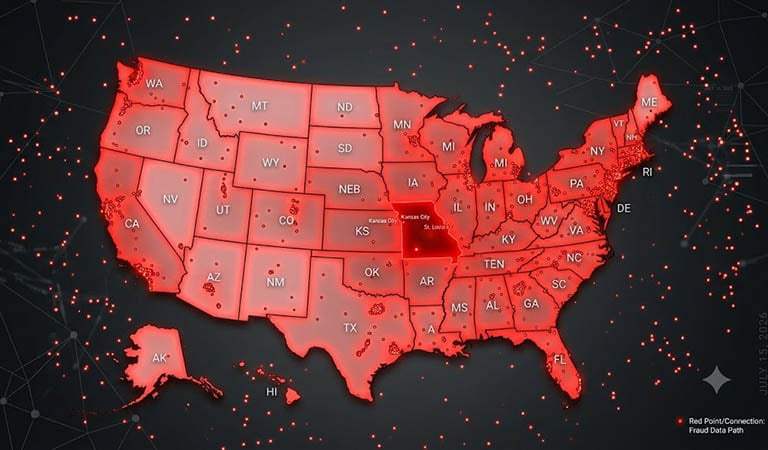

The U.S. government is launching its largest-ever crackdown on pandemic-era relief fraud. The Small Business Administration (SBA) has referred 562,000 delinquent and highly suspicious Paycheck Protection Program (PPP) and Economic Injury Disaster Loans (EIDL) to the U.S. Treasury. This historic move targets $22.2 billion in uncollected funds, signaling an aggressive push by the newly formed White House Task Force to Eliminate Fraud to claw back billions in stolen taxpayer dollars after years of administrative gridlock.

SBA’s Massive $22 Billion Dragnet: What Happens to Suspected Fraudulent Pandemic-Era Loans Now?
The U.S. Small Business Administration (SBA) has executed its largest-ever debt referral package, sending 562,000 delinquent and suspected fraudulent pandemic-era loans to the U.S. Department of the Treasury for collection. The massive referral, totaling $22.2 billion, targets borrowers who took out Paycheck Protection Program (PPP) and COVID Economic Injury Disaster Loans (EIDL) during the 2020–2021 pandemic crisis.
Here is a look at what is happening with the money recovery, why it is coming to a head right now, and how it impacts American taxpayers.
What is Happening with Money Recovery?
The $22.2 billion represents a massive chunk of past-due debt that has sat uncollected. With this action, the money recovery process is pivoting to a multi-agency offensive:
- Treasury Enforcement: The Treasury’s Bureau of the Fiscal Service is taking over active collections, giving the government powerful tools to claw back funds, including garnishing federal payments, seizing tax refunds, and leveraging private collection agencies.
- Criminal Investigations: In tandem with the Treasury referral, the SBA has transmitted these borrower profiles to the U.S. Department of Justice (DOJ) for potential criminal investigation. Previously, fewer than 1,000 of these 562,000 targeted borrowers had been investigated by the SBA’s Office of Inspector General.
This step follows smaller localized crackdowns by the agency earlier this year, which included freezing $8.6 billion from 111,620 suspicious accounts in California and $430 million from 6,900 accounts in Minnesota.
Why is This Happening Now?
The sudden surge in collections comes down to a sharp shift in federal policy and leadership priorities under the current administration.
The White House Task Force to Eliminate Fraud, spearheaded by Vice President JD Vance and Federal Trade Commission (FTC) Chairman Andrew Ferguson, has established a mandate to aggressively target waste in federal benefit programs.
According to SBA Administrator Kelly Loeffler, these 562,000 loans had previously been flagged internally for suspected fraud but were held back from the Treasury and DOJ by the prior administration. The SBA is characterizing the previous handling of these files as a “de facto amnesty scheme” that shielded delinquent borrowers from collection. The transition to a new administration has brought an end to that policy, paving the way for immediate asset recovery.
Furthermore, the scale of the problem demands it. Of the $1.2 trillion distributed through the emergency PPP and EIDL programs during the height of the pandemic, the SBA Inspector General estimates that at least $200 billion—roughly 16% of the entire relief fund—was distributed to fraudulent or highly suspect actors.
The Impact on U.S. Taxpayers
For American taxpayers, the ramifications of this $22.2 billion push are both financial and civic:
- Bottom-Line Recovery: Every dollar successfully clawed back by the Treasury directly offsets federal losses. While asset recovery on older debt is notoriously difficult—especially if the funds were laundered, spent, or funneled overseas—even a partial recovery represents billions returned to the federal ledger.
- Mitigating Inflationary Deficits: Pandemic relief fraud essentially injected billions of unbacked dollars into the U.S. economy, contributing to national debt and inflationary pressures. Forcing repayment removes those fraudulent funds from circulation, technically helping to ease long-term fiscal strain on the public.
- Restoring Trust and Deterrence: For the millions of taxpayers and legitimate small business owners who used relief funds properly or struggled without them, the lack of accountability has been a major point of frustration. The administration is banking on this massive referral to serve as a severe warning that the statute of limitations on government fraud has not run out, aiming to restore public trust in federal emergency safety nets.
As the Treasury begins deploying its collection mechanisms, the coming months will reveal exactly how much of the $22.2 billion can genuinely be retrieved from the half-million flagged accounts.
#PPPFraud #TaxpayerAlert #SBAOversight