
Survival Rate Cancer: Making Life-Saving Treatments Accessible to All”
Cancer breakthroughs often make headlines with high-tech therapies and futuristic treatments. While these discoveries are vital, a different revolution is taking hold. This new movement centers on making effective cancer care accessible for everyone, no matter their income. For low-income communities, true progress does not center on a new “cancer pill.” Instead, it arrives through cost-effective strategies, innovative technology, and expanding proven treatments. These targeted efforts directly address disparities in survival rate cancer statistics around the world, giving hope where it matters most.
In this article, you’ll discover the real-world breakthroughs transforming cancer care for vulnerable populations. We examine how communities scale existing treatments, close the diagnostic gap with technology, and reshape the system to make care a right—not a privilege.
Expanding Access to Proven Cancer Treatments
For many people, the biggest cancer breakthrough isn’t a new drug. Instead, it’s getting access to existing treatments that work. Too often, financial or logistical barriers stand in the way. Now, global health initiatives are actively breaking down these obstacles so more patients can receive life-saving care.
Making Radiotherapy a Reality
Radiotherapy remains one of the most effective and common cancer treatments. Yet, few patients in low- and middle-income countries (LMICs) can actually receive it. In fact, only a small fraction get the care they need compared to the global need.
Groups such as the International Atomic Energy Agency (IAEA) are responding with practical action:
- Increasing Equipment: They fund and install radiotherapy machines in hospitals that previously lacked this resource.
- Training Healthcare Professionals: These programs develop skilled teams of radiation oncologists, technicians, and physicists who operate equipment and deliver safe, effective treatment.
These efforts directly boost survival rate cancer numbers for many common and treatable cancers. As more hospitals and clinics gain the right tools, patient outcomes continue to improve.
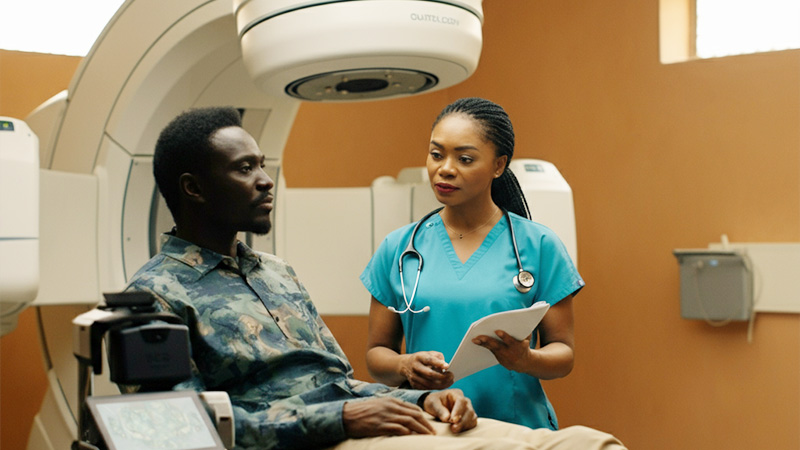
Image alt: A healthcare worker explains a cancer treatment plan, demonstrating improved survival rate cancer care in underserved communities.
The Power of Prevention and Early Screening
Not every cancer breakthrough relies on complex medicine. Sometimes, prevention and early detection have the biggest impact. Simple, cost-effective programs for screening and prevention change lives in communities with limited resources.
Let’s look at two vital initiatives:
- HPV Vaccination: HPV drives most cases of cervical cancer. Large-scale vaccination offers a low-cost, public health solution. As more young people receive the HPV vaccine, future generations face far fewer cancer risks.
- Accessible Screening: Communities now offer broad screening programs for common cancers such as breast, colorectal, and oral cancers. These programs use simple tools and clear protocols so patients receive early detection and timely care, greatly improving their chances.
A Technological Cancer Breakthrough in Diagnostics
Lack of trained specialists can delay diagnosis and treatment in many underserved areas. Because of this, technology steps in as a powerful equalizer. Artificial intelligence (AI), in particular, is closing the gap in cancer diagnostics.
AI-Powered Diagnosis and Risk Assessment
AI isn’t just a buzzword in cancer care. It helps bridge the diagnostic divide where human expertise is limited. Healthcare teams now use AI systems to analyze medical images and catch the earliest signs of cancer.
- Remote Image Analysis: Technicians in rural locations take X-rays and scan images, which AI then reviews. When the system finds something suspicious, an expert miles away can offer a second opinion quickly. This speeds up both detection and treatment.
- AI for Risk Profiling: AI tools also screen for cancers like breast cancer by reviewing patient data and images. As a result, health teams can prioritize high-risk individuals and reach more people with limited resources.
Through these advances, a person’s location no longer decides whether they get an early, accurate cancer diagnosis. This equal access makes a real difference in survival rate cancer outcomes.
Image alt: A doctor reviews a scan on a tablet, showing a cancer breakthrough in diagnostic technology.
Systemic Changes for Sustainable Cancer Care
Change goes beyond medicine and machines. Many of the most profound cancer breakthroughs appear at the system level. Both governments and nonprofits are working to make healthcare more fair and sustainable.
Patient Navigators and Community Health Workers
A cancer diagnosis is stressful. For people dealing with language barriers, literacy gaps, or long travel times, care can seem impossible to navigate. Patient navigators and community health workers (CHWs) step in to ease that journey.
They help in several important ways:
- Scheduling appointments and arranging transport.
- Translating and explaining complex health details in everyday language.
- Connecting patients to aid and support services.
These personalized services help patients stick with their treatments and boost recovery odds. For more on how communication changes outcomes, check out The Narrative Matters.
Integrating Cancer Care into National Health Insurance
Some countries now include cancer treatment in national health insurance programs. Rwanda leads the way in making care an entitlement for all citizens. This system removes the financial stress that once forced families to choose between treatment and insolvency. When insurance covers a “cancer pill” or approved treatment, more patients survive and thrive.
The Path Forward for Equitable Cancer Care
New therapies draw headlines. But for low-income communities, the greatest cancer breakthroughs provide proven care to more people, more efficiently. Expanding radiotherapy, rolling out widespread screening, using smart technology, and supporting patients through the system all offer immediate improvements.
With every step, we narrow the global cancer care gap. These practical, coordinated efforts boost survival rate cancer statistics and bring hope to families everywhere—regardless of where they live or what they earn.
Looking for more information on these vital initiatives? Visit the World Health Organization’s cancer page to continue learning.
#CancerCare #HealthEquity #MedicalBreakthroughs