

Garnishing Social Security: Social Security Garnishment Explained: Limits, Rules, and Safeguards
Many people believe their Social Security benefits are completely untouchable. It’s a comforting thought, especially when you rely on those funds for your daily living expenses. However, the reality is a bit more complex. While your benefits are generally safe from most private debt collectors, they aren’t immune to everything. Here’s a breakdown for garnishing social security and what to expect.
Understanding when and how your funds can be taken is crucial for financial planning. Here is a breakdown of the rules surrounding the garnishment of Social Security benefits.
When Garnishment Is Allowed
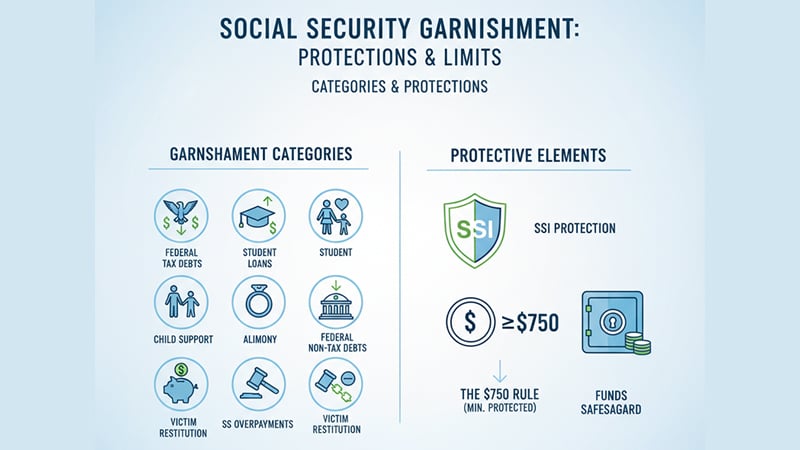
Generally, the government protects your Social Security income from regular creditors. However, if you owe money to the federal government or have family support obligations, that protection lifts. Here are the specific scenarios where your benefits are at risk:
- Federal Tax Debts: The IRS has significant reach. If you have unpaid federal taxes, the IRS can levy up to 15% of your monthly benefit checks to satisfy that debt.
- Federal Student Loans: While recent policies have shifted, it is still possible for the government to withhold up to 15% of your benefits if you default on federal student loans.
- Child Support and Alimony: This is one of the most common reasons for garnishing Social Security. Court-ordered child support or alimony payments can be enforced directly through your benefits.
- Federal Non-Tax Debt: If you owe money to other federal agencies—such as for SBA loans or federal benefit overpayments—the Department of the Treasury can collect on these debts.
- Social Security Overpayments: If the Social Security Administration (SSA) accidentally paid you too much in the past, they can withhold a portion, or sometimes even 100%, of your monthly benefit until the overpayment is recovered.
- Victim Restitution: If a court orders you to pay restitution to a victim of a crime, your benefits can be garnished to fulfill this obligation.
Limits and Protections
Even when garnishment is allowed, you aren’t left without safeguards. There are strict rules designed to ensure you aren’t left destitute.
Private Creditors Are Blocked
Perhaps the most important protection is against private debt. Generally, private creditors—like credit card companies, medical providers, and holders of personal loans—cannot directly garnish Social Security benefits. They can sue you and get a judgment, but they cannot touch the check before it gets to you.
SSI Is Fully Protected
If your income comes from Supplemental Security Income (SSI), you have the highest level of protection. SSI payments are entirely protected from all forms of garnishment, including government debts.
The “$750 Rule”
There is a floor to how much the government can take for certain debts. For defaulted student loans and non-tax federal debt, the government cannot reduce your monthly benefit below $750.
Caps on Support Garnishment
For child support and alimony, the Consumer Credit Protection Act sets limits. Depending on whether you are supporting another spouse or child and how far behind you are on payments, garnishment can range from 50% to 65% of your benefits.
Bank Account Protection
Once your money hits the bank, it could be vulnerable to freezing by private creditors, but banks are required to protect specific amounts. Financial institutions must automatically protect at least two months’ worth of directly deposited Social Security benefits from garnishment orders issued by private creditors.
Important Considerations
Navigating the rules of garnishing Social Security can be tricky. Keep these three factors in mind to better protect your finances:
- Direct Deposit is Key: How you receive your money matters. If you receive paper checks and deposit them yourself, the funds might get mixed with other money, making it harder to prove they are protected Social Security funds. Using direct deposit or a Direct Express card makes it much easier for the bank to identify and protect your benefits automatically.
- No Court Order Needed (Sometimes): Don’t wait for a lawsuit to take action. The IRS and federal agencies do not need to take you to court to start garnishing your check for tax debt or student loans. They have the administrative power to do so directly.
- Notification: You won’t just wake up to a smaller check without warning. You will receive a notice before any garnishment begins. This notice is your window of opportunity to contact the agency, negotiate a payment plan, or appeal the decision before your benefits are reduced.
Learn more about changes in Social Security.
#SocialSecurity #DebtManagement #FinancialPlanning