

Top World News Stories Week February 8
Here’s the Top World News Stories Week February 8. The first week of February has unleashed a torrent of significant news, marking a period of intense U.S. political controversies February 2026. As the nation grapples with shifting policies and executive actions, the political landscape feels more volatile than ever. This week, we are witnessing a convergence of election integrity disputes, historic immigration enforcement levels, and high-stakes budget negotiations that narrowly averted a prolonged government shutdown.
This article dives into the three most pressing stories dominating the headlines. We will unpack the details behind the executive push for federal election oversight, the surging numbers in ICE detention centers, and the recent congressional budget compromise. If you are looking to understand the current state of political turmoil and the ongoing government disputes shaping the nation’s future, you are in the right place.
The Push for Federal Election “Takeovers”
One of the most contentious developments this week involves a dramatic shift in how elections might be administered in specific regions. President Trump has officially called for the federal government to “take over” voting administration in more than 15 specific areas across the country. This move has sparked immediate debate regarding state sovereignty and federal overreach.
Federal Intervention in Local Voting
The call for a takeover is not happening in a vacuum. It follows a series of aggressive moves by federal agencies to investigate alleged irregularities from previous cycles. Specifically, the FBI recently executed a seizure of ballots from the 2020 election in Georgia. This action has alarmed democracy experts and local officials who argue that state boards should maintain autonomy over their electoral processes.
Proponents of the move argue that federal oversight is necessary to ensure integrity in areas they deem problematic. However, critics view this as a dangerous precedent that centralized power over the ballot box. The list of the 15+ areas targeted for this federal intervention includes key swing districts, raising questions about the strategic implications for the upcoming midterms.
The Reaction from Democracy Experts
The reaction from legal scholars and voting rights advocates has been swift. Many fear that replacing local election boards with federal appointees could undermine public trust. This particular slice of political turmoil is expected to result in immediate legal challenges. States are likely to sue to block federal agents from assuming control over local voting infrastructure, setting up a potential Supreme Court showdown later this year.
For more on how legislative changes impact local governance, read our analysis on state vs. federal rights at thenarrativematters.com.
Historic Surge in ICE Detentions
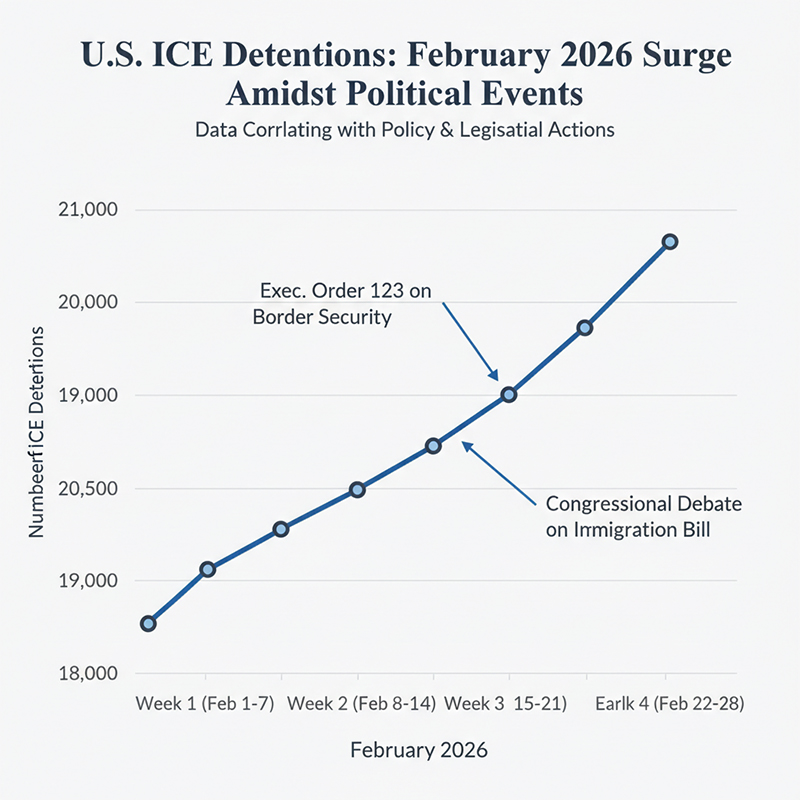
While election news dominates the political theory discussions, the situation on the ground regarding immigration is shifting rapidly. Immigration and Customs Enforcement (ICE) has reported a record-breaking surge in detainment numbers.
Breaking Agency Records
As of early February 2026, ICE reportedly has 73,000 people in custody. This figure represents the highest number of detainees in the agency’s history. This spike is a direct result of the White House’s renewed and massive immigration enforcement campaign. The administration has prioritized the detention of undocumented individuals at a scale not seen in previous years, utilizing both private and public facilities to house the influx.
The logistics of housing 73,000 individuals are complex. Reports indicate that facilities are operating at or above capacity, leading to concerns about conditions and legal access for those detained. The sheer volume of processing required has put an immense strain on the judicial system responsible for immigration hearings.
The Broader Enforcement Campaign
This increase in detention is part of a broader strategy labeled as a “mass deportation” effort. The administration has made it clear that this is a priority agenda item. Unlike previous enforcement waves that prioritized individuals with criminal records, current reports suggest a wider net is being cast. This has led to heightened anxiety in immigrant communities across the nation.
These government disputes regarding human rights versus national security enforcement are creating deep fissures in public opinion. Supporters argue this is necessary for national security and rule of law, while opponents label the mass detention as a humanitarian crisis.
The Federal Budget Compromise
Connecting these issues is the always-complicated matter of funding. The federal government narrowly avoided a prolonged partial shutdown this week thanks to a last-minute budget compromise.
Ending the Partial Shutdown
Legislators scrambled to pass a federal funding bill early this week. The threat of a shutdown had loomed large, with various agencies preparing for furloughs. The primary sticking point in negotiations was, unsurprisingly, the Department of Homeland Security (DHS) budget.
The debate centered on funding for the mass detention operations mentioned above. Opposition lawmakers were hesitant to sign checks that would facilitate the historic expansion of ICE custody capabilities. However, a compromise was eventually reached to keep the government open, though it came with fierce debates on the floor of the House.
The Minnesota Detention Funding Fight
A specific and contentious aspect of this budget battle focused on DHS funding allocated for mass detention centers in Minnesota. This specific line item became a flashpoint for the U.S. political controversies February 2026. Lawmakers from the region argued over the economic impact and moral implications of housing a large-scale detention facility in the state.
Ultimately, the bill passed, ensuring that border patrol and ICE operations continue without interruption, but the political cost was high. The compromise has left both sides dissatisfied, suggesting that we will see a repeat of these fiscal battles when the next funding deadline approaches.
For official details on the signed budget legislation, you can review the press releases at The White House (.gov).
Conclusion
The first week of February 2026 has set a chaotic tone for the rest of the year. From the Executive Branch seeking control over local elections to record-breaking detention numbers and razor-thin budget votes, the nation is navigating a period of significant transformation.
These U.S. political controversies February 2026 serve as a reminder that the balance of power is constantly being tested. Whether you are concerned about voting rights, immigration policy, or how your tax dollars are allocated, staying informed is the only way to navigate this complex landscape.
As these stories develop, we will continue to monitor how these federal moves impact local communities. Stay tuned for further updates on these critical issues.
#USPolitics #ImmigrationNews #BudgetCrisis