

Articulated Insight – News, Race and Culture in the Information Age
Eminent Domain’s Role in America’s Racial Wealth Gap
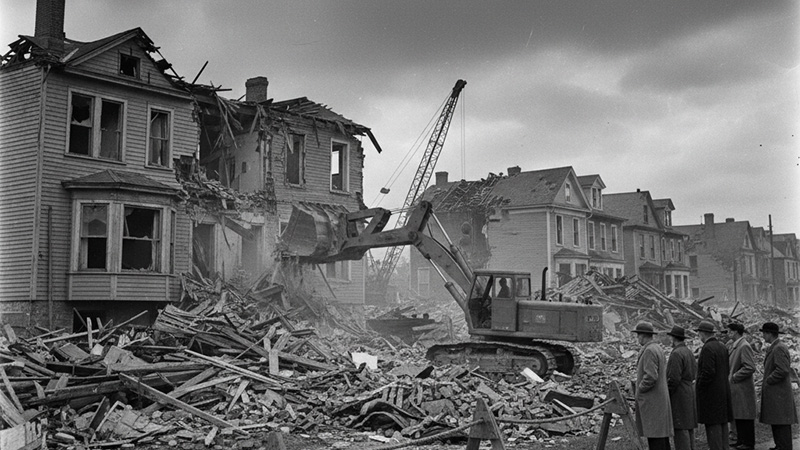
The American Dream is deeply tied to property ownership. For decades, however, eminent domain has served as a mechanism that strips that dream away from Black and Brown families. Since 1950, government seizures of private property for public use have disproportionately devastated communities of color. What the government often billed as necessary infrastructure development or “urban renewal” acted, in reality, as a tool for segregation and highway construction. Consequently, by 1973, these policies had forcibly displaced over 1 million Black Americans, shattering neighborhoods and entrenching a racial wealth gap that persists today.
This article examines how state-sanctioned land seizure destroyed generational wealth, erased thriving business districts, and continues to impact minority neighborhoods through modern gentrification.
The History of Eminent Domain and “Urban Renewal”
To fully understand the current housing crisis, we must look at the mid-20th century. Between 1949 and 1973, the United States underwent a massive transformation. Specifically, federal policies encouraged the clearing of so-called “blighted” areas to make way for the interstate highway system, hospitals, and civic centers.
While the legal definition of eminent domain requires “just compensation,” the reality for families of color was starkly different. Critics and activists of the era famously termed the practice “Negro Removal” as it uprooted entire communities. The statistics reveal a staggering disparity:
- Urban renewal projects displaced roughly 1 to 4 million Americans between 1950 and 1973.
- Notably, two-thirds of those displaced were African American.
- Black residents were five times more likely to face displacement than white residents.
This was not accidental. In fact, planners frequently routed highways directly through low-income minority neighborhoods because the political resistance was lower and redlining had already suppressed land values.
Economic Fallout: The Destruction of Generational Wealth
One of the most insidious outcomes of forced displacement is the erasure of economic stability. For the majority of American families, a home is their primary asset and the main vehicle for transferring wealth to the next generation.
When the government invokes eminent domain, it pays what it deems “fair market value.” However, in redlined Black communities, officials systematically undervalued homes. As a result, families received pennies on the dollar for their property. This left them with insufficient funds to purchase homes in other areas—many of which they were barred from entering due to segregation laws.
This process created a vicious cycle of asset stripping. For instance, when a family loses its home for a fraction of its worth, they also lose the equity they built over decades. This interruption in wealth accumulation directly contributes to the modern racial wealth gap.
Systemic Displacement and Housing Insecurity
The policies of the mid-century did not just take homes; they also fractured social safety nets. Systemic displacement pushed minority residents into isolated, poorly resourced areas. Consequently, this limited their access to:
- Quality schools
- Fair lending opportunities
- Reliable transportation
- High-paying jobs
By concentrating poverty in specific areas through displacement, urban planners effectively manufactured the very “blight” they claimed to be fighting.
Erasure of Culture: Destruction of Black Business Districts
It wasn’t just homes that the government bulldozed; it was economic independence. Thriving minority business districts were frequently targets of eminent domain proceedings.
City planners often designated prosperous, tight-knit minority neighborhoods as “blighted” to justify their seizure. This tactic effectively erased local economies. They demolished barbershops, grocers, funeral homes, and professional offices that served the Black community. When these businesses were destroyed, the community lost not only the services they provided but also the employment opportunities and the circulation of money within the neighborhood.
Case Studies of Forced Displacement
These statistics represent real families and real tragedies. Two notable examples, in particular, highlight how targeted these removal efforts were.
The Razing of Linnentown, Georgia
In the 1960s, the University of Georgia and the city of Athens utilized eminent domain to clear the Linnentown neighborhood to build dormitories. Linnentown was a middle-class Black community with high rates of homeownership. The city seized the land, paid residents notoriously low prices, and ultimately erased a thriving community to expand the university campus.
Sugar Hill, Los Angeles
Similarly, in the 1950s, developers targeted the Sugar Hill neighborhood in Los Angeles for the construction of the Santa Monica Freeway. This neighborhood was home to wealthy Black professionals and entertainers, including Oscar-winner Hattie McDaniel. Despite fierce legal battles, the freeway bisected and largely destroyed the neighborhood.
For a deeper dive into how historical narratives shape our current understanding of these injustices, you can explore related topics at The Narrative Matters.
Modern Eminent Domain and Gentrification Impacts
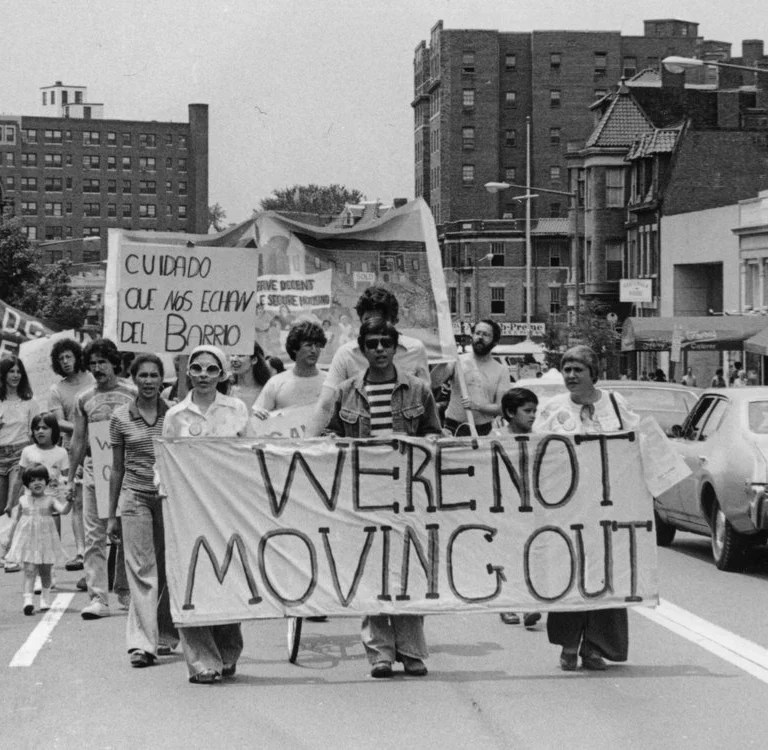
While the explicit segregationist language of the 1950s has vanished from law books, the disproportionate impact remains. Today, the threat has shifted from highway construction to private redevelopment and gentrification.
Following the controversial 2005 Supreme Court decision in Kelo v. City of New London, it became easier for municipalities to use eminent domain to transfer land from private owners to private developers, all in the name of “economic development.”
How Modern Policies Target the Vulnerable
Studies indicate that land seizures frequently target areas with lower-income, minority residents, often where the median income is less than $19,000. The pattern is clear and follows a predictable sequence:
- Devaluation: First, a city neglects services in a neighborhood.
- Speculation: Then, developers eye the land for luxury condos or shopping centers.
- Seizure: The government uses its land seizure powers to clear existing residents.
- Displacement: Finally, developers push out long-time residents who cannot afford the new development.
Since 1980, gentrification trends have pushed over 500,000 Black residents from their homes in 500 communities. This modern form of displacement continues to disrupt social networks and prevents families of color from reaping the benefits of rising property values in their own neighborhoods.
Conclusion
The history of eminent domain in America is not merely a story of infrastructure growth; rather, it is a narrative of exclusion and loss. From the highway projects of the 1950s to the luxury developments of today, communities of color have consistently paid the steepest price for “progress.”
Acknowledging this history is the first step toward repair. Moreover, policy changes that ensure true fair market compensation, a “right to return” for displaced residents, and stricter limits on seizing land for private gain are essential to stopping this destructive cycle of displacement.
To learn more about the specific history of the Sugar Hill displacement and its lasting effects, you can read detailed reports from NPR or The Washington Post .
#EminentDomain #SocialJustice #UrbanRenewal