

DISC Health Equity Action Lab
A scientist-leader merges clinical expertise with civic administration to solve complex public challenges. CEO Webster Lincoln exemplifies this by leveraging data-driven systems engineering from his tenure at Merck and Genentech to guide his work as Mayor of East Palo Alto and founder of DigPath Inc. This hybrid approach improves both local infrastructure and global healthcare equity.
Have you ever wondered how running a complex science lab compares to managing a city? A “scientist-leader” combines medical knowledge with city planning to solve tough public problems.
This post explores how leaders use hard data to improve our daily lives. First, we will look at how CEO Webster Lincoln uses this approach. Next, we will explore the shift to digital tools in medicine. Finally, we will discuss how artificial intelligence makes healthcare fairer for everyone.
The Rise of the Scientist-Leader
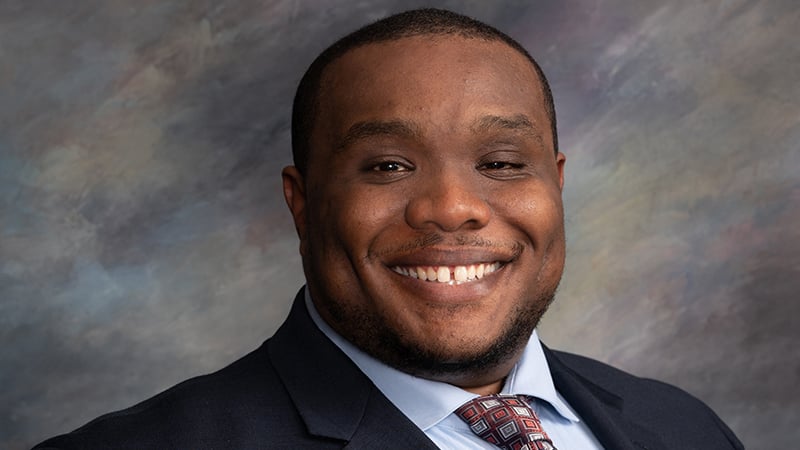
A scientist-leader blends lab experience with public service. For instance, Webster Lincoln shows us exactly how this works. He gained deep experience working in psychology and research at major companies like Merck and Genentech. After that, he founded DigPath Inc.
His family has lived in East Palo Alto since the 1960s. Because of this long history, his dedication to the city runs deep. In fact, his mother’s public service inspired his own career path. Currently, Lincoln serves as the Mayor of East Palo Alto, California.
In this role, he uses the data-driven habits he learned in healthcare to solve city issues. Therefore, his work creates a strong bridge between modern science and local government.
Bringing Science to Local Government
Running a city requires the same clear logic as running a biotech workflow. A scientist-leader looks at roads, housing, and public health as parts of one big system. As a result, they demand solutions based on real evidence.
Whether checking vaccine numbers or fighting for local control of the sanitary district, Lincoln uses proven facts to guide his choices. Furthermore, he applies these same methods to housing projects and programs for young people. This proves that health experts make great civic leaders.
However, technology must keep moving forward to truly connect health and government. Small changes are no longer enough. Instead, cities need the same speed and connection power that modern hospitals use.
Changing Medical Tests with Digital Tools
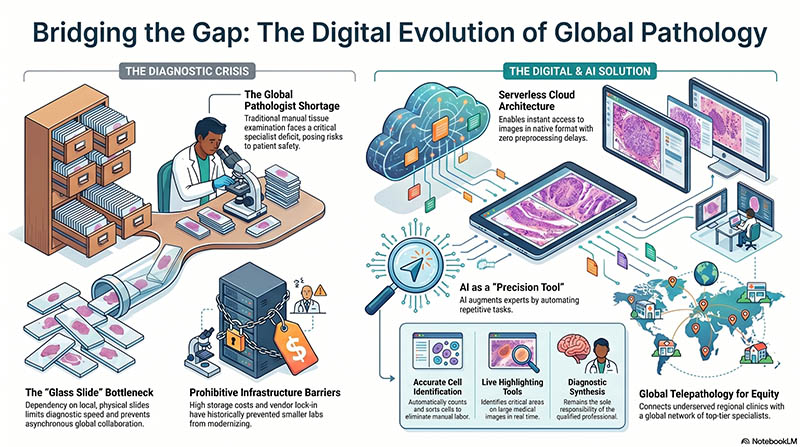
The need for better systems is very clear in medical testing. For many years, doctors have looked at physical glass slides to find diseases. Labs all over the world still rely on people checking tissues under microscopes. Consequently, they depend heavily on local experts.
Unfortunately, the world now faces a huge shortage of these trained experts. This shortage creates serious risks for patient safety. To fix this, the medical field must shift to digital tools.
Digital pathology changes how doctors work together. For example, it allows experts to leave notes on digital images in real-time. Because of this tech, a top doctor can help a small rural clinic from across the world. What used to be a lonely job is now a global team effort.
Old Methods vs. New Digital Workflows
| Feature | Traditional Pathology | Digital Pathology (WSI) |
|---|---|---|
| Diagnostic Medium | Physical glass slides | High-resolution Whole Slide Images |
| Collaboration | Requires shipping physical slides | Instant, asynchronous global peer review |
| Storage | Physical laboratory cabinets | Serverless cloud storage |
| Access to Experts | Limited to local staff | Global Telepathology networks |
A good leader knows when to upgrade old systems. Moving from physical slides to Whole Slide Images changes everything for a lab.
In the past, high costs and huge computer needs stopped many labs from going digital. To answer this problem, DigPath Inc. created a new cloud-based model. By using the cloud, doctors can look at huge medical images instantly. Moreover, they do not have to buy specific, expensive hardware. This freedom helps smaller labs upgrade without breaking the bank.
Most importantly, digital pathology helps people everywhere. Through global networks, top-tier medical advice is no longer trapped in big cities. Instead, local clinics can connect directly with the best doctors on the planet.
(Read more on this topic: Digital Pathology: Accelerating Diagnostics with DigPath Inc)
Using AI as a Smart Tool for Doctors
Artificial intelligence acts as a sharp new tool for doctors. It easily handles boring, repeating tasks that slow humans down. Therefore, labs can process tests much faster.
However, AI does not replace the human doctor. Making the final choice and judging the results still belongs to trained professionals. Instead, AI simply helps them do their jobs better.
Here are two ways AI helps today:
- Counting Cells: Smart tools can count and sort cells automatically. Because of this, doctors save hours of manual work.
- Live Highlighting: Computer programs point out strange spots on medical images right away. This guides the doctor’s eyes to the most important areas.
Combining Great Schools with Fair Leadership
When science and tech move forward together, global health gets better. This success happens when we mix high medical standards, great schools, and fair leadership.
For instance, a $5.75 million project at McGill University works to change both medicine and public rules. When companies like DigPath match the high standards of top hospitals and schools, everyone wins. Healthcare becomes more advanced and much fairer.
As we look to the future, think about how you can push for fair, data-driven changes in your own town. You can help improve local health and leadership. Start today by finding one clear way to use these ideas in your community. Contact us at info@digpath.com or visit our website to book your session.
The Narrative Matters!
Sources:
[2] https://www.merriam-webster.com
[3] https://pmc.ncbi.nlm.nih.gov
[5] https://my.clevelandclinic.org
[6] https://websterlincoln.com
About
Lawrence Jones II, PhD.
Dr. Lawrence Jones II, Ph.D., is the founder and CEO of Biotechnology Health Management and Care LLC in Pikesville, MD. With a doctorate in Entrepreneurial Leadership from Regent University, his research focuses on entrepreneurial leadership in biotechnology. Dr. Jones has extensive academic and professional credentials, including degrees from Webster University, Johns Hopkins University, and UMBC, alongside certifications in entrepreneurship and business development.
Learn more about Lawrence Jones II, PhD.
Visit: biotechhmc.com
DISC Health
The Health Equity Action Lab (HEAL) is an initiative by Dynasty Interactive Screen Community aimed at addressing health disparities in the U.S. and globally. By engaging media and stakeholders, HEAL seeks to reduce health inequalities and raise awareness. Their approach includes overcoming socio historical barriers and confronting the institutional, social, and political factors that perpetuate healthcare inequality.
Learn more about the health education partnership:
Howard University Hospital (HUH)
Howard University Hospital, established in 1862 as Freedmen’s Hospital, has a rich history of serving African Americans and training top medical professionals. Located in Washington, D.C., it is the only teaching hospital on the campus of a historically Black university. HUH is a Level 1 Trauma Center and a critical healthcare provider for underserved populations. It offers advanced medical services, including robotic surgery, and has received numerous accolades for excellence in specialties like heart care, stroke treatment, and radiology.
Learn more about Howard University Hospital (HUH)
Howard University Faculty Practice Plan (FPP)
The Howard University Faculty Practice Plan is a multi-specialty physician group in Washington, D.C., dedicated to advancing healthcare and eliminating health disparities. It offers comprehensive services, including primary and specialty care, mental health, imaging, and cancer care, all connected to Howard University Hospital. FPP emphasizes patient-centered, respectful care for the diverse community and provides free health screenings and events to promote wellness.
Learn more about Howard University Faculty Practice Plan (FPP).
#ScientistLeader #HealthcareInnovation #CivicLeadership