

DISC Health Equity Action Lab
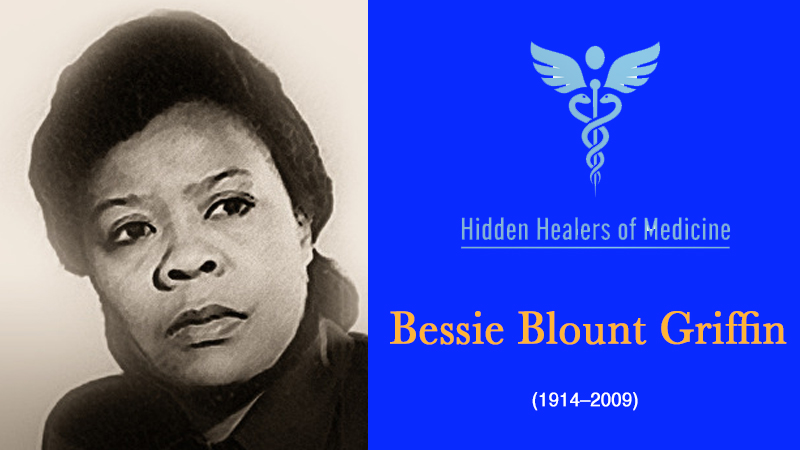
Hidden Healers: A Celebration of Historical Black Figures in Medicine: The Legacy of Bessie Blount Griffin in Assistive Care
When we think about modern medical care, we often focus on doctors and surgeons. However, the tools that help patients live full lives are just as vital. Bessie Blount Griffin was a woman who understood this better than most. She invented special feeding devices for wounded veterans after World War II. As a result, she helped restore independence to people with paralysis or limb loss.
Her bright ideas built the ground floor for today’s assistive technology and rehabilitative care. Furthermore, at a time when disability was often ignored, Griffin made sure that dignity and the ability to do things for oneself were at the center of healthcare.
A Passion for Healing and Helping
Bessie Blount Griffin was not just an inventor; she was a nurse and physical therapist first. Because of her close work with soldiers returning from war, she saw their struggles firsthand. Many of these brave men had lost the ability to use their hands or arms. Consequently, they had to rely on others for basic tasks like eating. Griffin knew that to truly heal, a person needs to feel capable. Therefore, she set out to find a solution.
Innovations that Changed Lives
Griffin created a device that allowed amputees to feed themselves. It was a tube that delivered food to a person’s mouth whenever they bit down on it. This simple yet clever tool meant a soldier could eat a meal without asking for help. In addition to this, she designed a portable receptacle support. This was a neck brace that held a bowl or cup close to a patient’s face.
Although she offered her invention to the Veterans Administration, they did not accept it at first. However, she did not give up. Instead, she famously demonstrated her device on a television show, proving how well it worked. Eventually, the French government saw the value in her work and bought the rights to her invention. This proved that her ideas had global worth.
Why Her Legacy Matters Today
Today, we take many assistive tools for granted. But someone had to start the conversation about making life easier for those with physical challenges. Bessie Blount Griffin was that voice. Moreover, she did this as a Black woman in a time when both her race and gender created huge barriers.
Her work reminds us that medicine is not just about curing sickness. It is also about helping people live with dignity. By focusing on what patients could do rather than what they couldn’t, she changed the field of rehabilitation forever.
References
Blount, B. (1950). Archives of Physical Medicine, 31, 633–637.
Smithsonian Institution. (2020).
CDC. (2021).
About
DISC Health
The Health Equity Action Lab (HEAL) is an initiative by Dynasty Interactive Screen Community aimed at addressing health disparities in the U.S. and globally. By engaging media and stakeholders, HEAL seeks to reduce health inequalities and raise awareness. Their approach includes overcoming socio historical barriers and confronting the institutional, social, and political factors that perpetuate healthcare inequality.
Howard University Hospital (HUH)
Howard University Hospital, established in 1862 as Freedmen’s Hospital, has a rich history of serving African Americans and training top medical professionals. Located in Washington, D.C., it is the only teaching hospital on the campus of a historically Black university. HUH is a Level 1 Trauma Center and a critical healthcare provider for underserved populations. It offers advanced medical services, including robotic surgery, and has received numerous accolades for excellence in specialties like heart care, stroke treatment, and radiology.
Learn more about Howard University Hospital (HUH)
Howard University Faculty Practice Plan (FPP)
The Howard University Faculty Practice Plan is a multi-specialty physician group in Washington, D.C., dedicated to advancing healthcare and eliminating health disparities. It offers comprehensive services, including primary and specialty care, mental health, imaging, and cancer care, all connected to Howard University Hospital. FPP emphasizes patient-centered, respectful care for the diverse community and provides free health screenings and events to promote wellness.
Learn more about Howard University Faculty Practice Plan (FPP)
#BessieBlountGriffin #RehabilitationMedicine #AdaptiveTechnology