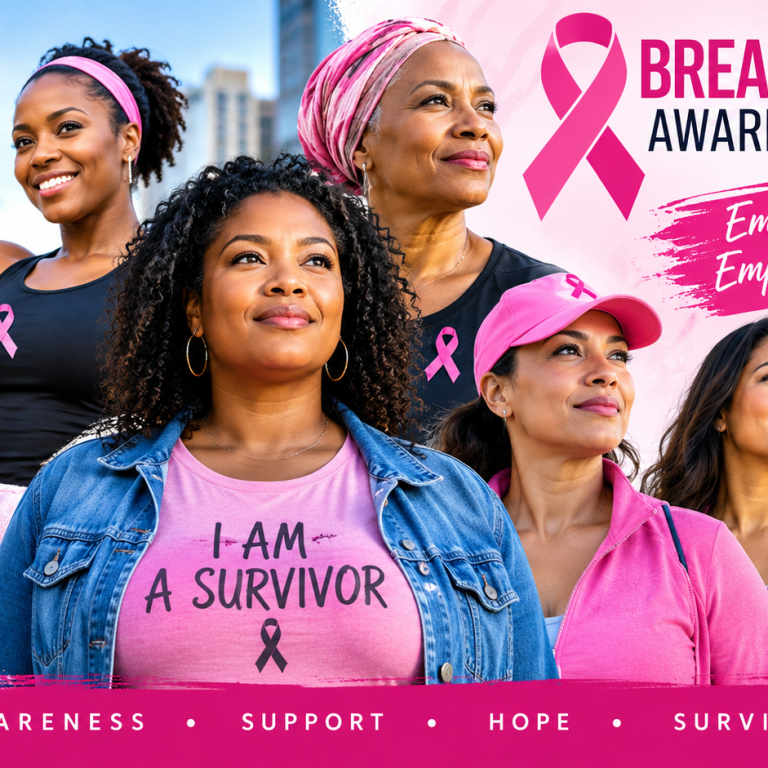

Every October, pink ribbons flood our communities; on storefronts, sports uniforms, and lapels. They represent solidarity, survival, and hope. But while awareness campaigns have broken stigma and saved lives, they have not closed the most pressing gap: equity. While public awareness of breast cancer has grown dramatically, survival still depends too often on race, income, or zip code. Awareness alone cannot solve disparities in screening, treatment, and outcomes.
Breast cancer remains the most commonly diagnosed cancer among women in the United States, representing nearly 30 percent of all new cancers in women each year (American Cancer Society [ACS], 2024). Mammograms are among the most effective tools for reducing mortality, cutting deaths by as much as 40% when cancers are caught early (Myers et al., 2015). Yet access to this lifesaving screening is uneven. Women in rural areas face long travel times to imaging centers. For those without insurance, the cost can rival a month’s rent. In these cases, public awareness campaigns may offer hope, but without the infrastructure and policies to guarantee access, awareness alone is not enough.
The disparities in survival are stark. Black women are about 40 percent more likely to die from breast cancer than White women, despite being diagnosed at similar rates (DeSantis et al., 2019). They are also more likely to develop aggressive forms, such as triple-negative breast cancer, which is harder to treat and more likely to recur. Hispanic and Native American women face unique challenges, from language barriers to delayed diagnoses tied to limited health insurance coverage. Immigrant women often encounter additional layers of difficulty, including fear of navigating a complex health system.
These inequities are not simply the result of biology. They reflect systemic issues: unequal access to quality care, delays in follow-up after abnormal screenings, and the persistent influence of socioeconomic status on health outcomes.
Advances in precision medicine and targeted therapies have revolutionized treatment. But participation in clinical trials still skews heavily toward White patients, raising concerns about whether new therapies are equally effective for all women (Murthy et al., 2004). Without diverse representation, scientific progress risks leaving behind the very populations most affected by disparities.
Even after treatment, inequities persist. Survivorship programs, which offer counseling, rehabilitation, and financial support, are more readily available in major cancer centers than in community hospitals. Many women, particularly in underserved neighborhoods, complete their chemotherapy or surgery only to face crushing medical debt, untreated mental health challenges, and a lack of coordinated follow-up care. For them, survival is not just about beating cancer, it’s about navigating the long shadow it leaves behind.
Breast Cancer Awareness Month has succeeded in destigmatizing the disease and rallying communities. But the next step is clear: awareness must evolve into equity. Three priorities stand out:
Expand access to screening. Insurance coverage, mobile mammography units, and community-based programs can close gaps in early detection.
Ensure equitable treatment. Clinical trials must reflect the diversity of women affected by breast cancer, and therapies must be accessible regardless of income or geography.
Strengthen survivorship care. Emotional, financial, and medical support should be standard parts of recovery, not privileges tied to wealth or zip code.
Behind every data point is a life; a daughter, sister, or mother who deserves more than a ribbon. The true measure of Breast Cancer Awareness Month should not be how much pink fills our streets, but how many women, across every community, have a fair chance at survival.
Awareness has brought us far. Equity will carry us further.
References
American Cancer Society. (2024). Breast cancer facts & figures 2023–2024. American Cancer Society.
DeSantis, C. E., Ma, J., Gaudet, M. M., Newman, L. A., Miller, K. D., Sauer, A. G., Jemal, A., & Siegel, R. L. (2019). Breast cancer statistics, 2019. CA: A Cancer Journal for Clinicians, 69(6), 438–451.
Fedewa, S. A., Wysocki, K., Butler, E. N., & Ma, J. (2020). Uninsurance and cancer screening: Review of U.S. trends and disparities. CA: A Cancer Journal for Clinicians, 70(6), 432–453.
Murthy, V. H., Krumholz, H. M., & Gross, C. P. (2004). Participation in cancer clinical trials: Race-, sex-, and age-based disparities. JAMA, 291(22), 2720–2726.
Myers, E. R., Moorman, P., Gierisch, J. M., Havrilesky, L. J., Grimm, L. J., Ghate, S., … & Sanders, G. D. (2015). Benefits and harms of breast cancer screening: A systematic review. JAMA, 314(15), 1615–1634.
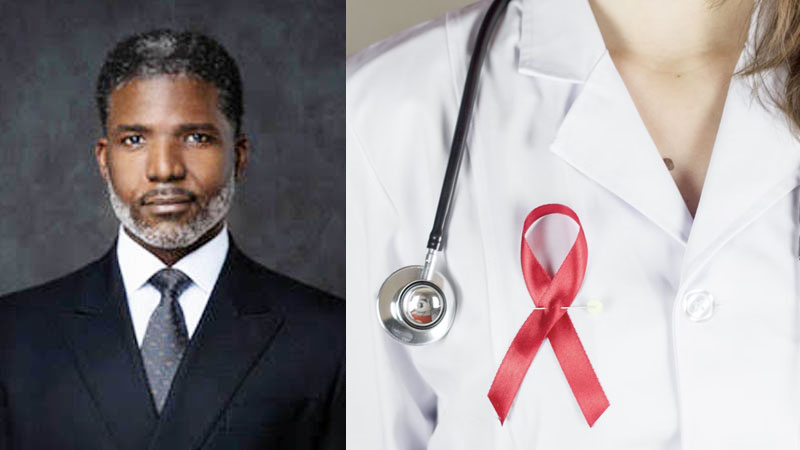
Dr. Frederick Echols, MD, is available as a subject matter expert on public health for press interviews and speaking engagements.
###
About Dr. Fredrick Echols, MD
Dr. Fredrick L. Echols, MD is the founder and Chief Executive Officer of Population Health and Social Justice Consulting, LLC, an Obama Foundation Global Leader, sought-after public speaker, black men’s health advocate, and accomplished physician with over 15 years of experience in public health. He has worked extensively with public and private sectors to address complex health issues through evidence-informed approaches. Dr. Echols is a graduate of the Centers for Disease Control and Prevention Population Health Training in Place program and the ASTHO-Morehouse School of Medicine’s Diverse Executives Leading in Public Health program.
Passionate about health and justice, Dr . Echols’ notable roles include serving as Chief Executive Officer for Cure Violence Global, Health Commissioner for the City of St. Louis, and Director of Communicable Disease and Emergency Preparedness for the St. Louis County Department of Public Health. In these roles, he oversaw public health regulations, led COVID-19 response efforts, managed daily operations, and developed strategic partnerships. Dr. Echols also served as Chief of Communicable Diseases for the Illinois Department of Public Health and as a physician in the U.S. Navy. He continues to contribute to public health research and guides health organizations globally.
For more health tips follow Dr. Fredrick Echols @ Fredrick.Echols@gmail.com
Follow Dr. Echols on socials:
- Facebook: @FredrickEchols
- Instagram: @F.EcholsMD
- LinkedIn: @FredrickEcholsMD ( www.linkedin.com/in/fredrick-echols-m-d-5a2063225)
Contact Dr. Echols for speaking engagements and consultation opportunities: 404-386-1522
#BreastCancerAwareness #HealthEquity #CloseTheGaps