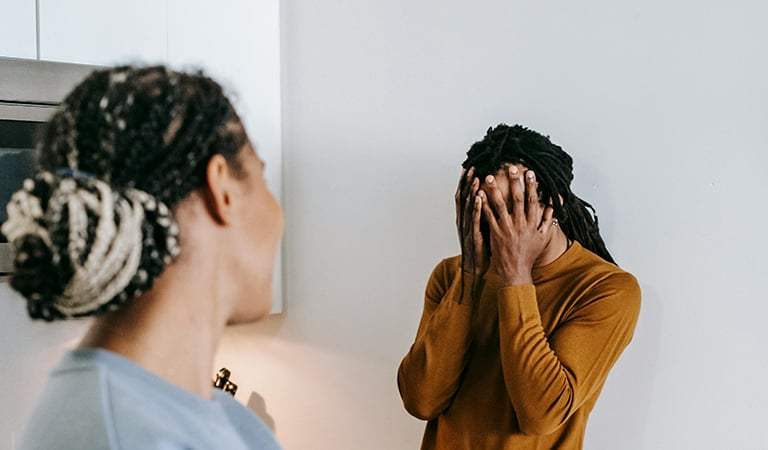

Black lives matter in this crisis — and Black women deserve protection, support, and the full weight of advocacy and resources behind them. Healing is possible. Safety is possible. And no one should have to navigate the path toward either alone.
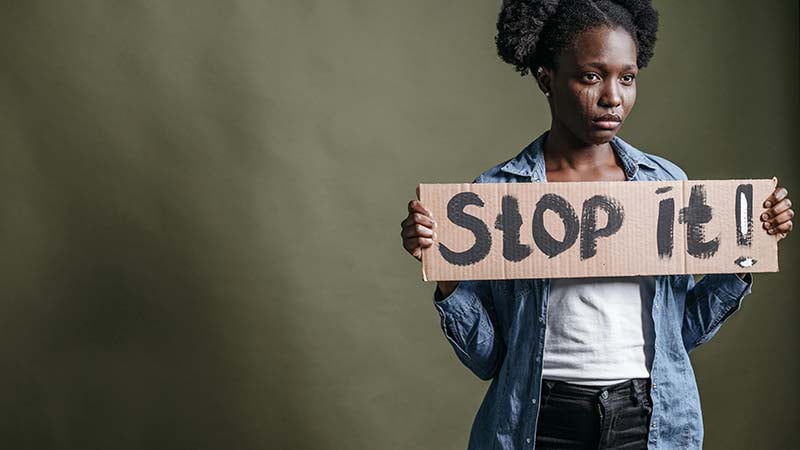
Black women are being killed by the people who are supposed to love them — and the crisis is not receiving the attention it deserves.
Domestic violence affects people of every race, income level, and background. But for Black Americans, the impact is sharper, the barriers are higher, and the consequences are more deadly. More than 40% of Black women and roughly 40% of Black men will experience intimate partner physical violence, sexual violence, and/or stalking in their lifetimes. These are not abstract statistics. They represent mothers, daughters, brothers, and partners whose lives are shaped — and sometimes ended — by abuse.
This article examines why domestic violence disproportionately impacts the Black community, what stands in the way of survivors getting help, how trauma ripples through families and generations, and what real solutions look like.
The Rates and Realities of Domestic Violence in the Black Community
Lifetime Exposure to Intimate Partner Violence
The scale of intimate partner violence (IPV) affecting Black Americans is staggering. Over 40% of Black women and close to 40% of Black men face physical violence, sexual violence, or stalking from an intimate partner at some point in their lives. Black women also experience higher rates of psychological abuse, coercive control, and sexual assault compared to women overall.
These numbers reflect a persistent, structural problem — not individual failure.
Homicide: The Deadliest Outcome
Intimate partner violence is a leading cause of homicide among Black women. In 2020, Black women were murdered at a rate of 11.6 per 100,000 people, compared to 3 per 100,000 for white women. That is nearly four times the rate — a disparity that Dr. Tameka Gillum, an associate professor at the University of New Mexico, has called a full-scale public health crisis.
More than half of Black women murdered in 2020 were killed by a current or former romantic partner. Nine out of ten knew the person responsible. These deaths are not random acts of violence — they are the lethal end of relationship abuse.
The danger intensifies during pregnancy, a time that should be full of anticipation. Homicide became a leading cause of death for Black women both during and after pregnancy in the 19-year period between 2000 and 2019. Studies have also found that 42% of Black women who died from non-childbirth-related causes during that period died from some form of violence.
Black Femicide as a Public Health Crisis
Researchers and advocates now use the term Black femicide to describe the targeted killing of Black women — most often by intimate partners. This is not a trend confined to news cycles. It is a measurable, documented pattern that has intensified since the COVID-19 pandemic.
Recent cases — including a Florida vice mayor, a physician, a pastor, and a pregnant nursing student — brought Black femicide into national headlines. But these deaths represent a much larger crisis that rarely receives the policy response it demands.
“For any other health disparity of this magnitude, we would be drawing due attention and investing appropriate resources,” Dr. Gillum has stated. “But since it is Black women’s lives at stake, the issue fades to the background.”
Root Causes and Contributing Factors
Systemic Racism and Economic Instability
Domestic violence does not exist in a vacuum. For Black survivors, abuse often intersects with economic precarity rooted in decades of systemic exclusion. Limited access to stable housing, employment discrimination, and the racial wealth gap make it significantly harder to leave an abusive relationship. When financial independence is constrained, so is the ability to escape.
These structural disadvantages are not character flaws — they are the direct result of policies and systems that have long denied Black families equitable access to resources.
Historical Trauma and Institutional Distrust
Generations of oppression, over-policing, and institutional racism have created a deep, justified distrust of law enforcement and government agencies within many Black communities. This distrust is not irrational. It is grounded in lived experience and historical record.
For survivors weighing whether to call police, the calculation is complex: Will they be believed? Will their partner be the one protected? Will they themselves be arrested? This fear often leads Black survivors to delay seeking formal help until the abuse has escalated to its most dangerous point.
Cultural and Community Pressures
Cultural expectations around privacy, loyalty, and resilience can also discourage survivors from speaking out. The pressure to protect family reputation, avoid bringing “outside attention” into the community, or “handle things internally” can silence people who desperately need support.
This does not mean community values are the problem — it means that support systems must be built within communities, with cultural understanding at the center.
Barriers to Reporting and Seeking Help
Fear of Police and the Criminal Justice System
Calling 911 carries real risk for Black survivors. There is a documented pattern of Black women who defend themselves being disproportionately arrested, charged, and incarcerated — even when they acted in self-defense. The criminal justice system frequently criminalizes the very people it should protect.
Additionally, data shows that 20% of Black women killed by police between 2015 and recent years were unarmed. When calling for help can itself become a danger, survivors face an impossible choice.
Fear of Losing Their Children
Many Black mothers avoid reporting abuse because they fear child welfare agencies will remove their children from the home. This fear is not unfounded — Black families are disproportionately investigated and separated by child protective services. For a mother already navigating abuse, the threat of losing her children may feel like an equal or greater harm.
Lack of Culturally Specific Support
Traditional domestic violence resources — shelters, hotlines, counseling programs — were largely designed without the experiences of Black survivors in mind. Many lack trauma-informed approaches that account for the intersecting realities of race, gender, economic status, and institutional distrust.
When survivors cannot see themselves reflected in the support available to them, they are less likely to reach out. Culturally specific resources are not a “nice to have” — they are essential.
Economic Barriers to Leaving
Leaving an abusive relationship requires resources: money for housing, transportation, childcare, and legal support. For Black survivors facing economic instability, these practical barriers can feel insurmountable. Abusers frequently use financial control as a tool to keep survivors trapped, and a system that doesn’t account for this reality cannot adequately serve those who need help most.
The Trauma Impact on Survivors and Families
The Psychological Weight of Abuse
Domestic violence causes lasting psychological harm. Survivors often experience post-traumatic stress disorder (PTSD), depression, anxiety, and complex trauma — particularly when abuse has been chronic or severe. Black survivors face the compounded stress of navigating these effects while also managing racial trauma and institutional barriers.
Psychological abuse, coercive control, and sexual assault — all experienced at higher rates among Black women — leave deep wounds that do not heal simply because the physical danger has passed. Recovery requires sustained, culturally responsive mental health support.
Children Left Behind
When a parent is killed or severely harmed by domestic violence, children carry that loss for a lifetime. A generation of Black children is growing up without mothers taken by intimate partner violence — without the nurturing, guidance, and love that can never be replaced.
Children who witness domestic violence also face elevated risks of trauma, behavioral challenges, and future relationship difficulties. The impact of intimate partner violence does not stop at the adults involved. It extends into the next generation.
Community-Wide Harm
Every loss of a Black woman to domestic violence weakens the broader community. Black women are central to family structures, faith communities, workplaces, and civic life. When violence silences them, the effects are felt far beyond any single household.
Solutions: Reducing Trauma and Strengthening Prevention
Invest in Culturally Specific Resources
The single most important shift is directing funding and attention toward organizations that are designed by and for Black survivors. Culturally specific advocacy, legal support, and counseling make survivors more likely to seek help earlier — before abuse reaches its most dangerous point.
Organizations like Safe Sisters Circle exist precisely because mainstream resources often fall short for Black women. These spaces provide not just services but understanding, dignity, and community.
Reform How Survivors Are Treated by the Legal System
Criminalizing survivors who act in self-defense is not justice — it is an extension of the violence they were trying to escape. Legal reform must include:
- Ending the disproportionate prosecution of Black women who defend themselves
- Training law enforcement to identify the primary aggressor accurately
- Addressing racial bias in how domestic violence cases are investigated and prosecuted
Address Economic Inequality at the Root
Long-term prevention requires addressing the economic conditions that trap survivors in dangerous situations. This means:
- Expanding access to affordable housing for survivors leaving abusive relationships
- Increasing financial literacy and employment support programs
- Funding emergency financial assistance that doesn’t require survivors to navigate complex bureaucratic systems
Improve Mental Health Access
Trauma-informed mental health care — accessible, affordable, and culturally responsive — must be part of any real solution. Survivors need support that does not require them to explain their cultural context before receiving care.
Community-based mental health programs, peer support groups, and integration of mental health services within trusted community organizations (churches, community centers, HBCUs) can reduce barriers and improve outcomes.
Name the Crisis Clearly
One concrete step is simple, but consequential: the United States does not have an official crime category for femicide. Without proper tracking, the full scope of the problem remains invisible to policymakers and the public. Advocates are calling for:
- Federal recognition of femicide as a distinct category of homicide
- Consistent, race-disaggregated data collection on intimate partner violence
- Policy protections that prioritize survivor safety over abuser gun rights
Engage the Community in Prevention
Prevention also happens within communities — in schools, places of worship, and families. Teaching healthy relationship dynamics, modeling respect, and creating safe spaces where survivors are believed and supported are all essential parts of a long-term solution.
Men and boys in particular have a role to play. Engaging Black men as active participants in ending domestic violence — not as the problem, but as part of the solution — strengthens the whole community.
Key Takeaways
- More than 40% of Black women and Black men will experience intimate partner violence in their lifetimes
- Black women are murdered by intimate partners at nearly four times the rate of white women
- Barriers to help include police distrust, criminalization of survivors, fear of child welfare, lack of culturally specific support, and economic instability
- The trauma of domestic violence extends to children, families, and the broader community
- Solutions must be culturally specific, economically aware, and rooted in systemic change
Resources and Support
You are not alone, and help is available. If you or someone you know is experiencing domestic violence, reaching out to a culturally competent organization can make a life-saving difference.
Safe Sisters Circle provides culturally specific support for Black women survivors, offering advocacy, resources, and community grounded in an understanding of the unique challenges Black survivors face.
The National Coalition Against Domestic Violence (NCADV) offers national resources, legal support information, and connection to local services. You can reach them at ncadv.org.
If you or someone you know is in immediate danger, call 911.
#ProtectBlackWomen #DomesticViolenceAwareness #BlackFemicide
Related: When Home Hurts: The Lasting Impact of Domestic Violence