
Touré has fundamentally shaped modern cultural journalism over a three-decade career spanning Rolling Stone, CNN, MSNBC, and TheGrio. By introducing groundbreaking sociological frameworks like “Post-Blackness” and conducting definitive, raw interviews with icons like Prince, Beyoncé, and Jay-Z, he dismantled rigid, monolithic definitions of racial identity and elevated Black excellence into mainstream American media.

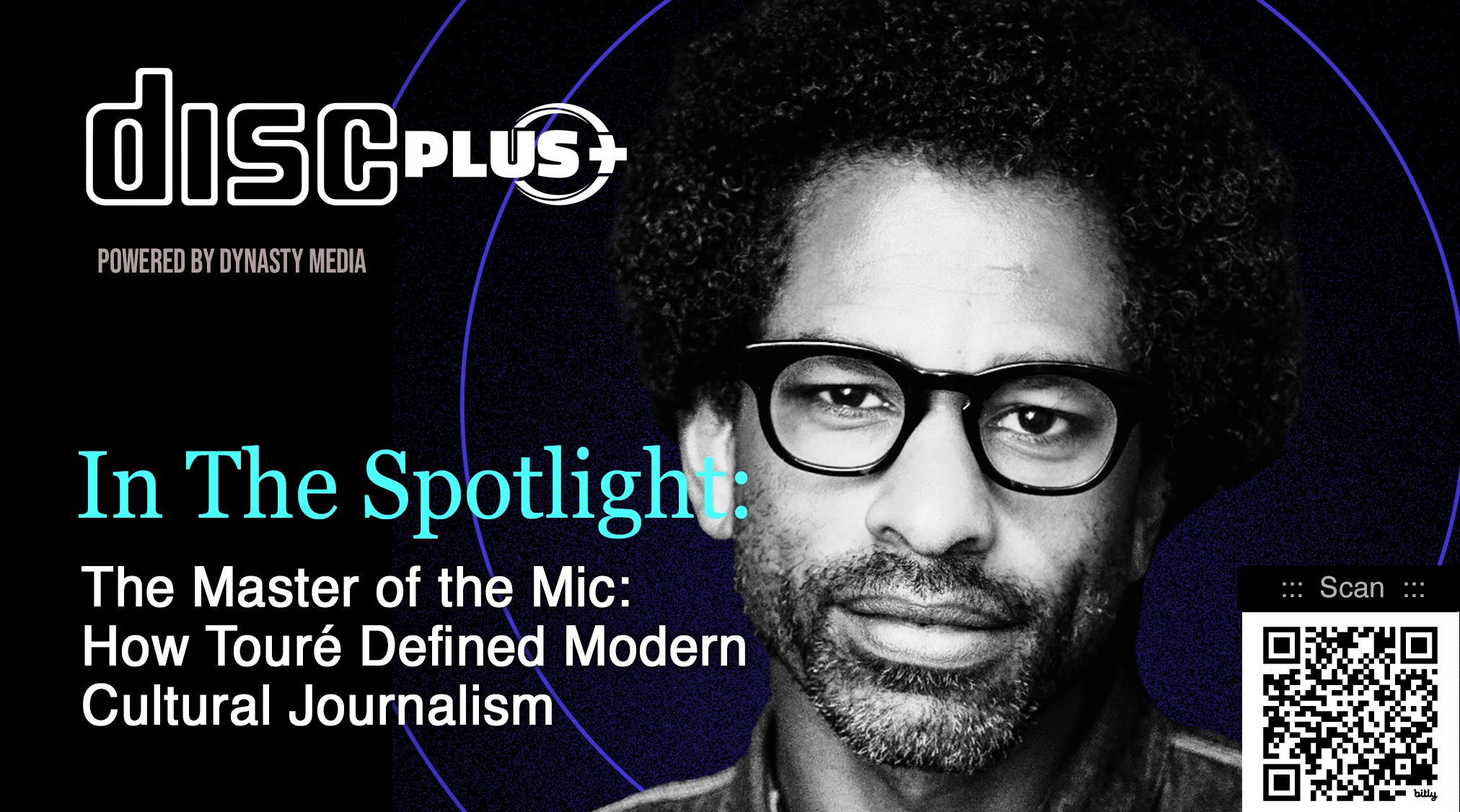
Touré: The Voice Shaping Modern Cultural Journalism and Hip-Hop
If you’ve paid any attention to the intersection of Black culture, music, and American politics over the last three decades, you’ve encountered Touré. Born Touré Neblett, the Brooklyn-based cultural critic, author, and broadcaster has spent his career operating like a master portrait artist—except his canvas is the human voice.
From his early days as a Rolling Stone intern in 1992 to serving as CNN’s first-ever pop culture correspondent, co-hosting MSNBC’s The Cycle, and dominating the digital audio space with the Toure Show and TheGrio, Touré has fundamentally shaped how we talk about identity and entertainment. He doesn’t just interview icons; he contextualizes them, pushing past standard PR talking points to find the raw, human truth underneath the celebrity veneer.
Redefining Blackness: The “Post-Black” Blueprint
Touré isn’t just a chronicler of culture; he is an architect of modern identity theory. His groundbreaking 2011 book, Who’s Afraid of Post-Blackness? What It Means to Be Black Now, challenged the rigid, monolithic definitions of racial identity that often limit Black Americans.
What is “Post-Blackness”? It is the concept of being deeply rooted in, and proud of, one’s Black identity, while absolutely refusing to be restricted or boxed in by it. It argues that Blackness is infinite, and that every expression of it is completely legitimate.
By interviewing over 100 prominent Black luminaries—from custom-tailored scholars to street-level artists—Touré asserted that there is no singular, “correct” way to be Black. It’s a philosophy he has brought into the classroom at NYU’s Clive Davis Institute of Recorded Music and onto the selection floor of the Rock and Roll Hall of Fame Nominating Committee.
10 Definitive Interrogations: Touré’s Top Career Interviews
To understand Touré’s cultural relevance, you have to look at his portfolio. He is a premier conversationalist who creates psychological space for stars to strip away their armor—or, in some cases, completely expose their flaws.
Here is a curated look at ten of his most compelling, iconic interviews that defined eras:
| Icon | Platform | The Crux of the Conversation |
| Jay-Z | Rolling Stone | A masterclass cover story dissecting the transition from Brooklyn kingpin to corporate mogul, tracking the precise mechanics of his lyricism. |
| Prince | Multi-Platform / Biography | Intimate, one-on-one sit-downs with the notoriously reclusive star. Touré’s deep-dive reporting eventually culminated in his acclaimed biographical study, I Would Die 4 U: Why Prince Became An Icon. |
| R. Kelly | BET | A fiercely uncomfortable, nationally discussed television special. Touré fearlessly grilled the singer on his mounting legal troubles, capturing evasive, defensive, and telling non-verbal reactions. |
| Beyoncé | Rolling Stone | A classic snapshot of a superstar at the peak of her powers, exploring the relentless work ethic and total artistic control required to run her empire. |
| Lauryn Hill | Rolling Stone | A brilliant but heartbreaking cover story that captured Hill’s musical genius right around the release of The Miseducation of Lauryn Hill, exposing the staggering weight of sudden global fame. |
| DMX | Rolling Stone | An incredibly raw, close-quarters feature where Touré secured unprecedented access to Dark Man X, painting a deeply empathetic yet unflinching picture of the rapper’s inner demons. |
| Kareem Abdul-Jabbar | Toure Show | A profound look at how the NBA’s most cerebral giant successfully pivoted from dominating the hardwood to becoming a prolific historian, activist, and essayist. |
| Spike Lee | Toure Show | A rapid-fire, wide-ranging dialogue charting Lee’s cinematic legacy, his unyielding activism, and the battles fought to get Black stories onto silver screens. |
| Malcolm Gladwell | Toure Show | A meeting of two analytical minds, breaking down sociology, institutional racism, and Gladwell’s unique perspective on human behavior. |
| Alicia Keys | Rolling Stone | A reflective, early-career feature tracking Keys’ classical piano training and the instant, volcanic ascent to global superstardom. |
The Legacy of the “Toure Show”
Today, Touré continues his streak of capturing Black excellence through his digital audio documentaries (like Being Black: The ’80s) and his flagship podcast, the Toure Show.
What makes Touré’s approach stand the test of time is his innate ability to act as a peer rather than an interrogator. Whether he is talking to hip-hop royalty or literary giants, his goal remains unchanged: to prove that Black culture is not a monolith, but a rich, complex, and beautifully infinite tapestry.
Get more DiSC Plus:
https://thenarrativematters.com/category/discplus
#ModernCulturalJournalism, #ToureShow, #BlackCultureMatters