
Music Therapy: Transforming Lives at St. Louis Center
Music therapy is a transformative tool that nurtures joy, dignity, and meaningful connections. At St. Louis Center, this innovative approach has been making a profound impact on the lives of residents with intellectual and developmental disabilities. Through structured sessions led by skilled therapists, music therapy fosters emotional, social, cognitive, and physical well-being.
What is Music Therapy?
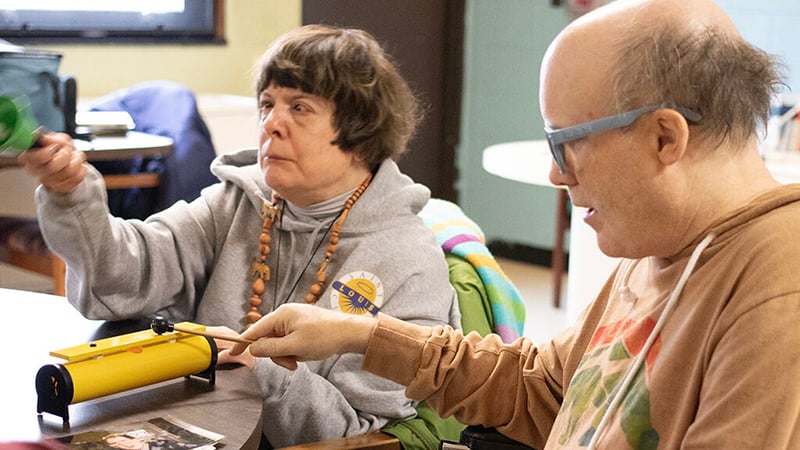
Music is more than just playing instruments or singing songs. It is a clinical and evidence-based practice designed to achieve specific goals. At St. Louis Center, these goals often include improving social-emotional skills like turn-taking, communication, and cooperation. Residents also work on motor skills, cognitive development, and self-expression through activities like songwriting, improvisation, and movement.
The Role of Therapy at St. Louis Center
For over a decade, Harmony Garden Music Therapy Services has been a cornerstone of the St. Louis Center community. Led by experienced therapist Renae Murphy, the program offers both group and individual sessions tailored to the unique needs of each resident. These sessions not only enhance developmental skills but also provide a safe space for emotional expression and mental health support.
The Impact of Music Therapy
The benefits of music are both immediate and long-lasting. Residents who may be hesitant to engage in other activities often find joy and connection through music. Familiar melodies and rhythms help them stay focused, while peer participation encourages involvement. Staff frequently observe improved communication, attention, and mood on music therapy days.
Music therapy also honors individual preferences, whether it’s rock music, 1950s classics, or Lawrence Welk. These personalized touches foster deeper connections and meaningful relationships, bridging generational gaps through shared musical experiences.
Why It Matters
Beyond its developmental benefits, this therapy plays a crucial role in mental health and emotional regulation. As a third-party support, music therapists provide a unique space where clients can simply “be” in the moment. Whether it’s an energetic session or a quiet, grounding experience, music therapy adapts to meet the emotional needs of each individual.
A Pathway to Healing and Growth
Becoming a music therapist requires rigorous training, including a four-year degree, observation hours, and a 1,200-hour clinical internship. This ensures that music therapy is not just recreational but a professional, evidence-based practice. Despite challenges like funding, the value of music therapy is undeniable. It fosters connection, creativity, and growth, enriching the lives of both residents and therapists.
Learn More and Get Involved
If you’re inspired by the power of music, consider exploring related topics like the benefits of art therapy or supporting organizations like Harmony Garden Music Therapy Services. Together, we can create a world where everyone has access to the healing power of music.
For more information, visit St. Louis Center and discover how you can make a difference.
#EmotionalWellBeing #CommunityHealing