
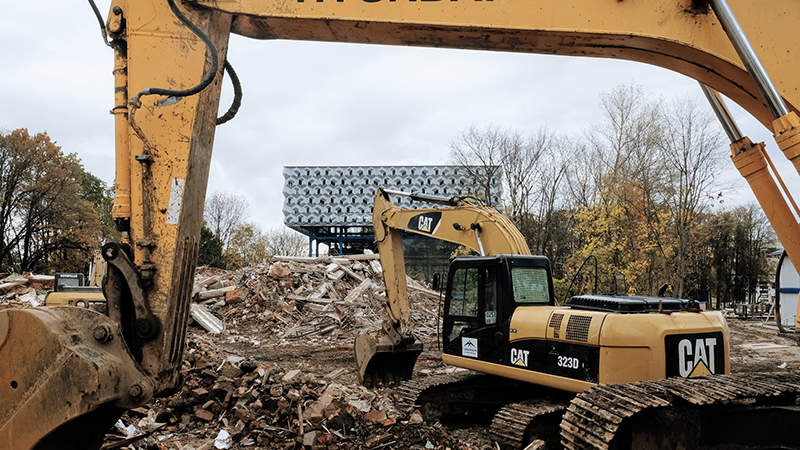
The City of St. Louis has officially moved over 120 tornado-damaged properties into its active demolition pipeline. Supported by a $10 million State SB1 funding grant, this initiative clears vacant, condemned structures ineligible for FEMA assistance. Crews are prioritizing safety and public health to successfully rebuild the affected neighborhoods.
Understanding the St. Louis Demolition Pipeline
The St. Louis demolition pipeline represents a crucial step in community recovery following the devastating May 2025 tornado. Rebuilding devastated neighborhoods begins with visible progress. The city must remove dangerous structures that have no chance of repair. This allows residents to safely repair their homes and move back into their communities.
The City of St. Louis Recovery Office confirmed that the State of Missouri approved over 120 properties for immediate removal. Crews have already started or completed 36 demolitions. Contractors will finish the remaining sites over the next few months. We know that clearing these hazardous areas is essential for long-term urban recovery.
Why SB1 Funding is Critical for the St. Louis Demolition Pipeline
The Senate Bill 1 (SB1) pilot program serves as the specific funding pathway that makes this city-led clearance possible. Federal programs leave a massive funding gap for certain types of damaged real estate. You cannot rely on federal private property debris removal assistance for buildings that were vacant, condemned, commercial, or entity-owned prior to a disaster.
The State of Missouri enacted Senate Bill 1 in late 2025 to create a direct solution. This legislation allocates $10 million directly to St. Louis. The city and state use a direct reimbursement model, which includes a 7% administrative fee paid by the state. Without SB1 funding, these dangerous properties would remain untouched.
FEMA vs. SB1 Funding Comparison
| Program Feature | FEMA Assistance | SB1 Funding Pilot |
|---|---|---|
| Primary Focus | Owner-occupied residential homes | Vacant, condemned, or entity-owned structures |
| Funding Source | Federal Government | State of Missouri |
| Eligibility Condition | Occupied and insured prior to disaster | Ineligible for federal private property assistance |
| St. Louis Allocation | Variable based on applications | $10 Million direct allocation |
Where the Tornado-Damaged Properties Are Located
The St. Louis demolition pipeline focuses heavily on major street corridors. The work spans 12 North St. Louis neighborhoods to maximize community safety. These 120 approved properties represent approximately 362,000 square feet of structures that crews must clear.
The heaviest concentrations of demolition work are located in:
- Greater Ville
- Fountain Park
- Academy
Significant additional work continues in Penrose, O’Fallon, Lewis Place, and Kingsway East. The city estimates that the tornado zone requires up to 1,600 potential demolitions in total.
Examples of Involuntary Demolitions in the Pipeline
About 50% of the current demolitions are involuntary condemnations. In these cases, the property owner did not apply for or qualify for the city’s Private Property Assistance program. The city will ultimately bill these owners for the demolition costs.
A subset of the approved properties includes:
- 1112 N Kingshighway Blvd
- 1245 Walton Av
- 1533 Marcus Av
- 1916 Dick Gregory Pl
- 4445 Page Blvd
Protecting Public Health During the Demolition Process
Public safety remains the top priority throughout the St. Louis demolition pipeline execution. The city integrates strict safety measures and neighborhood notification systems into every single project.
Crews follow a strict health and safety checklist:
- Distribute informational door hangers to surrounding residents at least 48 hours before work begins.
- Pre-wet targeted structures the night before the scheduled demolition.
- Apply continuous water suppression throughout the tear-down process to control hazardous dust.
- Handle and dispose of all asbestos-containing materials according to state and federal requirements
- Partner with local agencies to provide continuous air monitoring at active work sites.
What Comes Next for Neighborhood Recovery
Demolition work will continue on all state-approved properties over the coming months. The Recovery Office may add or swap out additional submissions through the balance of the SB1 pilot program.
Active demolition sites feature branded signage so you know exactly what is happening in your neighborhood. You can also track the progress through the city’s online public tracker. Demolitions led by the State under the FEMA Private Property Debris Removal program will also begin shortly.
Recovery from the May 2025 tornado takes time, but the SB1 funding ensures no dangerous property is left behind. The Recovery Office continues to coordinate across federal, state, and city resources to help families rebuild.
For more insights on how communities effectively rebuild local infrastructure and support displaced families, check out thenarrativematters.com. If you need more information on federal disaster response guidelines, you can visit the official FEMA website.
#StLouisRecovery #SB1Funding #UrbanRenewal