
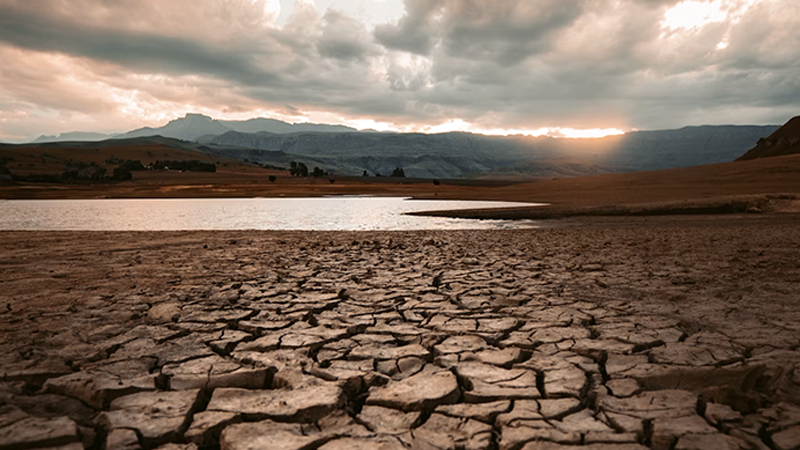
Drought in the U.S. has reached a critical point. As of June 2, 2026, nearly 49% of the country is in drought, affecting 155.8 million people and 250.8 million crop acres across 45 states. Persistent heat, low snowpack, reduced rainfall, and a developing El Niño are driving conditions. Long-term groundwater deficits remain severe even where surface rains have offered short-term relief.
[mcb-block id=235317]
Current Drought Conditions Across the United States
Drought in the U.S. is now one of the most widespread environmental crises the country has faced in years. According to the U.S. Drought Monitor, as of June 2, 2026, 48.78% of the United States and Puerto Rico are in drought, with that figure rising to 58.38% of the Lower 48 states.
Forty-five states are currently experiencing Moderate Drought (D1) or worse. Extreme to Exceptional Drought (D3–D4) remains deeply entrenched across key regions of the West, Plains, and parts of the Southeast.
Who Is Most Affected Right Now?
The hardest-hit areas as of early June 2026 include the following:
- The West and Southwest — Northwestern Colorado, eastern Utah, Nevada, New Mexico, and Arizona face persistent severe to extreme drought, partly due to record-low snowpack from the previous winter.
- Northern Texas and Western Oklahoma — Widespread D3 to D4 drought continues, threatening both agriculture and long-term groundwater supply.
- The Southeast — Georgia, the Carolinas, and the Suwannee River basin in Florida still carry D3 to D4 drought designations despite recent rainfall. Long-term groundwater and lake levels remain critically low.
- The Upper Midwest and Great Lakes — Dry conditions rapidly expanded in recent weeks. Wisconsin, Illinois, Indiana, and northern Minnesota face growing short-term drought risk fueled by heat and high evapotranspiration demand.
- The Mid-Atlantic and Northeast — Groundwater and reservoir levels remain below average in many areas, making the region vulnerable to quick deterioration even after brief wet spells.
Regional Drought Comparison: June 2026
| Region | Current Drought Status | Main Drivers | Major Impacts |
|---|---|---|---|
| West / Southwest | D3–D4 Extreme to Exceptional | Low snowpack, heat, precipitation deficits | Streamflow reduction, water supply strain, wildfire risk |
| Northern Texas / W. Oklahoma | D3–D4 Extreme to Exceptional | Prolonged rainfall deficit, high heat | Crop losses, groundwater depletion |
| Southeast (GA, Carolinas, FL) | D3–D4 with partial D4 removal | Long-term deficit, recent partial relief | Lake levels, groundwater, Suwannee River impacts |
| Upper Midwest / Great Lakes | D0–D1 rapidly expanding | Heat, low rainfall, high evapotranspiration | Topsoil moisture loss, spring crop stress |
| Northeast / Mid-Atlantic | D1–D2 with localized improvement | Below-normal precipitation, reservoir deficits | Groundwater strain, water utility pressure |
What Is Causing the Drought in the U.S.?
Prolonged Precipitation Deficits
The core driver of the current national drought status is simple: large parts of the country have not received enough rain over an extended period. Monthly and seasonal precipitation has come in well below historical averages across most of the West, Plains, Southeast, and parts of the Northeast, creating multi-month moisture deficits that short bursts of rain cannot fully reverse.
Record Low Snowpack in the West
The West entered summer with critically low snowpack following a record-low snow accumulation winter. Snowpack acts as a natural water reservoir, slowly releasing melt into rivers and groundwater through spring and early summer. With that reservoir largely absent, streamflows are low and aquifer recharge has been minimal.
Heat and Elevated Evapotranspiration
Warmer-than-average temperatures sharply increase the rate at which water evaporates from soil and is drawn up through vegetation — a process called evapotranspiration. Parched ground heats up faster than wet ground, which intensifies heat and further depletes available surface moisture. This cycle makes summer drought conditions self-reinforcing.
The Developing El Niño
A developing El Niño is adding pressure to existing drought patterns. NOAA and Weather.com have reported a 62% probability of El Niño developing during June through August 2026. While El Niño can bring some added rainfall to parts of the Southwest through a potentially wetter-than-average monsoon season later in summer, it also tends to intensify summer heat from Texas to the Pacific Northwest and could keep parts of the Gulf Coast region drier than average by late summer.
Summer Outlook
Weather.com’s summer 2026 forecast projects above-average heat across much of the South, the West, and the Northwest and northern Rockies. A hotter-than-normal summer will accelerate evaporation and continue to stress already dry soils. The Southwest monsoon may run wetter than average, potentially offering some relief in Arizona and New Mexico, but that signal remains uncertain.
What This Means for Ecosystems
American drought conditions carry deep and lasting ecological consequences that go well beyond crop fields.
Soil Moisture Stress and Vegetation Decline
Soils across drought-impacted regions are at some of their lowest moisture percentiles in decades. Dry, depleted soils support less plant life, cause grasses and crops to yellow early, and create conditions where vegetation stress can trigger forest health decline over seasons and years.
Streamflow Reduction
Rivers and streams across the West and Plains are running at below-normal levels as snowmelt recharge disappears and rainfall remains scarce. Low streamflows threaten aquatic species, reduce water temperature buffering, and affect navigation and recreation in affected watersheds.
Wildfire Risk
Dry fuels — grasses, shrubs, and trees — become far more flammable under drought. The combination of low soil moisture, heat, and dry vegetation significantly raises wildfire ignition risk and rate of spread. The West is currently at elevated risk heading into peak fire season.
Groundwater and Aquifer Strain
Groundwater levels have dropped substantially in areas like the Suwannee River basin, coastal Georgia and the Carolinas, and parts of the Southern Plains. These deficits take months to years to recover, even after surface-level rainfall returns. Aquifer strain affects drinking water, irrigation, and freshwater ecosystems that depend on baseflow from groundwater.
Habitat Pressure
Reduced water availability forces wildlife into smaller, competing spaces around remaining water sources. Fish populations in low-flow rivers face thermal stress and habitat compression. Migratory bird routes that depend on wetlands and river systems face degraded conditions.
Human and Agricultural Impacts
155.8 Million People Affected
The scale of American drought conditions in 2026 is staggering in human terms. Roughly 155.8 million people currently live in drought-affected areas. Water utilities across dozens of states face supply pressure, and some communities are already operating under conservation restrictions.
250.8 Million Crop Acres at Risk
Agriculture is absorbing enormous stress. 250.8 million acres of crops are experiencing drought conditions as of early June 2026. Spring wheat in the High Plains, corn and soybeans in the Midwest, and fruit and vegetable crops in the West are all under pressure from dry soils and heat stress. Hay and pasture conditions have sharply deteriorated in the Plains and Upper Midwest, driving up costs for livestock producers.
Water Supply and Energy
Drought strains hydroelectric power generation, reduces water availability for cooling at power plants, and forces utilities to manage competing demands between municipal use, agriculture, and industrial supply. Communities near depleted reservoirs and low-flow rivers face the most direct pressure.
What Can Be Done About Drought in the U.S.?
What Governments and Institutions Can Do
The national drought status demands coordinated action at every level of government. Here are the most impactful steps:
- Invest in water infrastructure — Upgrade aging systems, repair leaks, and build storage capacity that can capture water during wet periods for use during dry ones.
- Fund drought early warning systems — Support and expand tools like the U.S. Drought Monitor and NOAA’s Climate Prediction Center to give farmers and water managers more lead time.
- Update water law and allocation frameworks — Many Western water rights systems were designed for a wetter era. Modernizing those frameworks can reduce conflict and improve efficiency.
- Expand drought assistance programs — Farmers and rural communities need fast-access relief funding when drought pushes them past the point of self-recovery.
- Plan for long-term climate adaptation — Drought is becoming more frequent and more severe. State and federal agencies need drought resilience built into infrastructure planning and land use policy.
What Farmers and Agricultural Producers Can Do
- Adopt drought-tolerant crop varieties better suited to reduced rainfall and heat stress.
- Use precision irrigation technologies to apply water only where and when crops need it, reducing waste.
- Implement cover cropping and no-till practices that improve soil moisture retention and organic matter.
- Diversify crop rotations to reduce the financial risk of losing a single drought-vulnerable crop.
- Monitor soil moisture data through USDA and cooperative extension resources to make real-time irrigation decisions.
What Communities and Households Can Do
- Follow local water conservation ordinances and avoid discretionary water use during peak demand periods.
- Fix leaks in home plumbing — a dripping faucet can waste thousands of gallons per year.
- Replace thirsty lawns with drought-tolerant native plants adapted to local conditions.
- Collect rainwater where permitted for garden and outdoor use.
- Stay informed through the U.S. Drought Monitor (droughtmonitor.unl.edu) and local water authority updates.
Conclusion
The scale of U.S. drought in June 2026 — nearly half the country affected, 45 states under moderate drought or worse, and over 155 million people living inside drought boundaries — makes this one of the most pressing environmental and economic challenges the nation faces right now. The causes are layered: persistent rainfall deficits, abnormally low snowpack, relentless heat, and a developing El Niño that could intensify summer conditions across large portions of the country.
Some recent rainfall in the South and Southeast brought short-term relief to areas like Alabama and Georgia. But the groundwater deficits, depleted lakes, and stressed aquifers in the Suwannee River basin, coastal Carolinas, northern Texas, and the West will take sustained, above-normal precipitation over months to meaningfully recover.
The actions available — from federal infrastructure investment to household water conservation — are real and meaningful. The question is whether the urgency of the current drought drives action fast enough to matter for the communities and ecosystems that need it most.
🔗 More info: Visit the U.S. Drought Monitor to check current conditions by state and region.
Frequently Asked Questions
Q: How much of the U.S. is currently in drought?
As of June 2, 2026, 48.78% of the United States and Puerto Rico are in drought, with 58.38% of the Lower 48 states affected. Forty-five states are experiencing Moderate Drought (D1) or worse, according to the U.S. Drought Monitor.
Q: What is causing the drought in the U.S. in 2026?
The primary drivers are prolonged precipitation deficits, well-below-normal snowpack across the West, above-average temperatures that increase evapotranspiration and dry out soils faster, and a developing El Niño that forecasters expect to intensify summer heat across the South, West, and Northwest.
Q: What can households do to help during a drought?
Households can reduce water use by fixing leaks, avoiding discretionary outdoor watering, installing drought-tolerant plants, and following local conservation guidelines. Staying informed through tools like the U.S. Drought Monitor and local water utility updates helps residents make timely decisions during drought watches and restrictions.
#USDrought #DroughtMonitor #ClimateImpacts