
Overview:
Climate change is increasingly shaping Black life through extreme heat, flooding, pollution, and rising costs. But a new study suggests the language advocates use to describe those inequities may not resonate with many of the people most affected, raising questions about how climate movements communicate with vulnerable communities.

Climate activists have spent years arguing that climate change is also a civil rights issue.
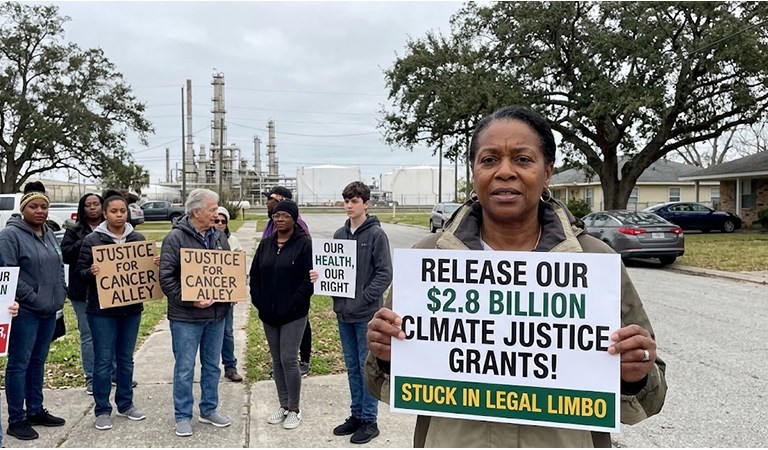
But a new study suggests one of the movement’s most popular phrases — “climate justice” — may not be connecting with many of the people it is meant to reach, including residents of Black and low-income communities that face some of the greatest environmental risks.
The findings raise a challenge for advocates: if communities understand the dangers of climate change but not the language used to describe them, the movement may need a different way to make its case.
Just 36% of respondents were familiar or very familiar with the term “climate justice,” while two-thirds were not, according to the paper, recently published in the journal PLOS Climate. The results illustrate that the lack of familiarity with climate justice is not just an academic concern.
“Of course, our findings should not be interpreted as a lack of interest in ‘climate justice’ in Los Angeles County and its low-income communities,” the authors of the study wrote.
“People living on low incomes do tend to be more aware that climate change disproportionately affects their communities and are more supportive of climate policies, provided they are combined with economic policies such as affordable housing and raising the minimum wage,” according to the study. “Responses to the term ‘climate justice’ may therefore have been more positive among low-income respondents if it had been accompanied by a more detailed elaboration.”
Get more Word In Black stories.
#ClimateJustice #EnvironmentalJustice #ClimateEquity