
What defines true safety in the modern workplace? While modern organizations heavily invest in employee belonging and diversity metrics, a critical gap remains: the distinction between being welcomed and being protected. True workplace safety requires systemic protection where leadership actively steps in to ensure employees, especially those from historically marginalized backgrounds, are never left isolated or vulnerable during professional duties.

Articulated Insight – “News, Race and Culture in the Information Age”

The tragic death of 18-year-old Nolan Xavier Wells has sparked difficult conversations across the country. As investigators work to uncover what happened, one question keeps echoing in news stories, on social media, and in daily conversations:
Who was looking out for him?
It is a heartbreaking question, but one that extends far beyond this single tragedy. It forces us to rethink what true safety really means.
Safety is not just about physical security. It is about the fundamental human need to know that being “the only one” in a group does not mean you are alone. Real safety is knowing someone will:
- Notice if you are isolated.
- Pay attention when something doesn’t seem right.
- Feel genuinely responsible for your well-being, not just your participation.
Strangely, this is a conversation we rarely have in the workplace.
The Gap Between Belonging and Protection
Over the past two decades, organizations have invested significant time and resources into measuring diversity, equity, inclusion, and employee engagement. We deploy annual surveys, celebrate representation, and ask employees if they feel valued, respected, and connected to their teams.
These efforts absolutely matter. A growing body of research shows that when employees feel they belong, they report better well-being, stronger engagement, and deeper organizational commitment (Blau et al., 2023; Prysmakova & Lallatin, 2023).
But there is a critical question we are still failing to ask: Do your employees feel protected?
“Protection is fundamentally different from belonging. You might feel welcomed by your coworkers, but still wonder if anyone would actually stand up for you if something went wrong.”
📢 Community Impact Spotlight: Shape the Future of Chicago Resources
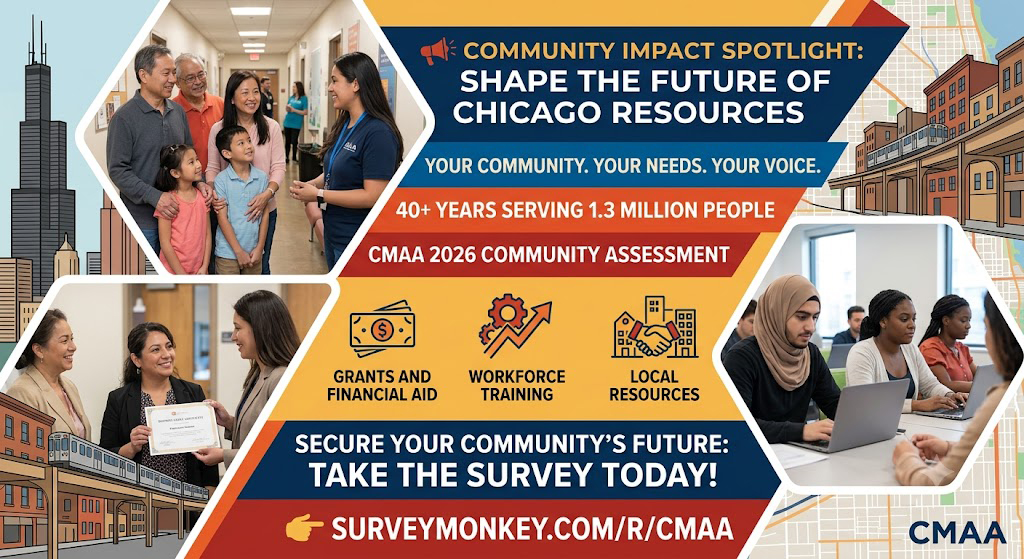
Are you tired of business programs and neighborhood initiatives that don’t quite fit your day-to-day realities? For over 40 years, the Chinese Mutual Aid Association (CMAA) has been a cornerstone for Chicago-area families and entrepreneurs, serving over 1.3 million people across Uptown, West Ridge, and Elgin. Now, heading into the second half of 2026, CMAA is launching a brief community assessment to find out exactly what kind of financial assistance, workforce training, and local grants your neighborhood needs most right now.
That experience has stayed with me for years. The fear was not simply about the hostile environment; it was about the heavy, isolating feeling of being fundamentally alone and unprotected.
The Everyday Reality of Isolated Employees
Many employees experience subtle versions of this fear every single day.
These moments of vulnerability often occur during standard professional activities:
- Networking receptions that run late into the night.
- Client dinners where the conversation crosses professional boundaries.
- Business travel that requires walking back to a hotel alone in an unfamiliar city.
- Day-to-day isolation, such as being the only woman in the boardroom, the only Asian employee on a project team, the only LGBTQ+ employee at an industry event, or the only person with a disability in an inaccessible environment.
In those high-stress moments, employees are not thinking about corporate inclusion initiatives. They are asking much more basic, survival-oriented questions:
- Is anyone looking out for me right now?
- Will someone notice if I am isolated, and step in before a situation escalates?
- Will my leadership believe me if I report misconduct?
- Will someone stand beside me if doing the right thing comes with personal or professional risk?
These are not questions about workplace culture. They are questions about protection.
When “Belonging” Isn’t Enough: A Personal Reflection
I know this distinction because I have lived it.
Early in my career, my employer sent me to collect data in a rural community locally regarded as a “sundown town.” As a young Black woman, I was already acutely aware of my surroundings.
However, what made the experience truly unsettling was not just the hostility I encountered from some of the local residents. It was the realization that some of the staff members I had been sent to work alongside made me feel just as unwelcome.
I distinctly remember thinking: If something happens to me out here, who is actually looking out for me?
That experience has stayed with me for years. The fear was not simply about the hostile environment; it was about the heavy, isolating feeling of being fundamentally alone and unprotected.
The Everyday Reality of Isolated Employees
Many employees experience subtle versions of this fear every single day.
These moments of vulnerability often occur during standard professional activities:
- Networking receptions that run late into the night.
- Client dinners where the conversation crosses professional boundaries.
- Business travel that requires walking back to a hotel alone in an unfamiliar city.
- Day-to-day isolation, such as being the only woman in the boardroom, the only Asian employee on a project team, the only LGBTQ+ employee at an industry event, or the only person with a disability in an inaccessible environment.
In those high-stress moments, employees are not thinking about corporate inclusion initiatives. They are asking much more basic, survival-oriented questions:
- Is anyone looking out for me right now?
- Will someone notice if I am isolated, and step in before a situation escalates?
- Will my leadership believe me if I report misconduct?
- Will someone stand beside me if doing the right thing comes with personal or professional risk?
These are not questions about workplace culture. They are questions about protection.
Moving Beyond Surveys: Building a Culture of Active Protection
For many employees—particularly those from historically marginalized groups—these risks are top-of-mind. They directly impact professional decisions, influencing:
- Whether to attend after-hours networking events.
- Whether to accept travel assignments.
- Whether to report toxic behavior or organizational problems.
- Which projects to take on, and ultimately, whether to stay at a job.
Perhaps the next frontier of workplace inclusion is not another survey measuring belonging. Instead, organizations must focus on building cultures of active allyship—where employees know without a doubt that someone will notice, step in, and speak up for them.
True protection tells employees they do not have to face difficult, vulnerable moments alone. It is time for organizations to start measuring, prioritizing, and guaranteeing that protection.
References
- Blau, G., Goldberg, D., & Kyser, D. (2023). Organizational belonging: Proposing a new scale and its relationship to demographic, organization, and outcome variables. Journal of Workplace Behavioral Health.
- Prysmakova, P., & Lallatin, N. (2023). Perceived organizational support in public and nonprofit organizations: A systematic review and directions for future research. International Review of Administrative Sciences.


#WorkplaceSafety #CorporateCulture #BeyondBelonging