

Articulated Insight – News, Race and Culture in the Information Age

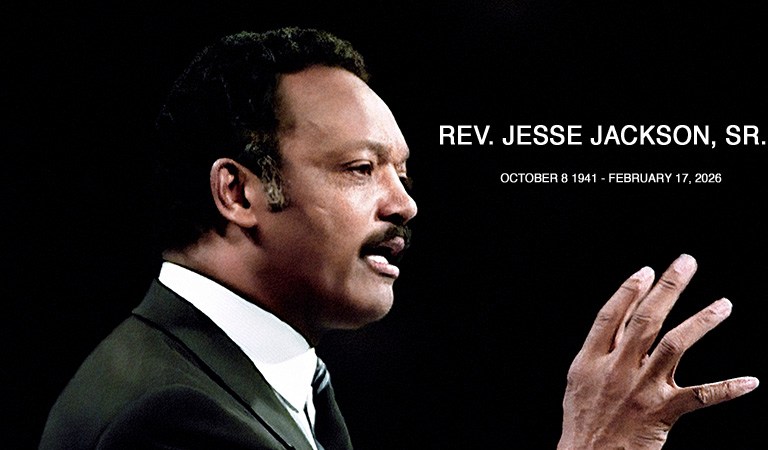
The Long Arc of Civil Rights: Honoring Rev. Jesse Jackson Sr.
Rev. Jesse Jackson’s life is a poignant reminder that the civil rights movement was never just a historical event. It was people improvising, advocating, failing, and trying again over decades. When viewed through a scholarly lens, his path shows how social movements, electoral politics, and economic struggle are intertwined. They are not separate spheres of activity.
Forged in the Jim Crow South
Born in 1941 in South Carolina, Jackson experienced the harsh reality of the Jim Crow era. Segregation determined access to public spaces and shaped societal expectations. This environment profoundly influenced his development. Analytically, his upbringing established the perspective from which he later viewed both opportunity and exclusion. To understand his persistent advocacy for jobs, contracts, and political power, we must recognize the formative impact of this early exclusion.
Early Steps into Activism
As a student, Jackson did not ease into activism; he walked straight into conflict. He joined sit-ins at a whites-only library, making a public claim that segregation was both unreasonable and unfair. These early actions were small in scale but carried a big message. They taught him that ordinary people—students, church members, and neighbors—could push powerful institutions to change. They also showed, in miniature, how local disruption could reshape the opportunity for political change.
Promena Set The Standard: Celebrating Leadership Trailer Blazers

PROMENA MEDIA Issue 1, 2026: Honoring Reginald Miller’s legacy and celebrating leadership trailblazers.
Future-ready leadership is a necessity in 2026. Explore how adaptability, data fluency, and inclusion are reshaping leadership for success.
An Apprenticeship with Dr. King
His time with the Rev. Martin Luther King Jr. was a political apprenticeship. In Selma and later in Chicago, he absorbed not just King’s moral language but also the strategy underneath it. He learned to use public pressure to make maintaining an unjust status quo more costly than changing it. In Operation Breadbasket, you can see Jackson beginning to put his own stamp on that strategy. He targeted corporations, banks, and employers, not just sheriffs and politicians. He understood that who gets hired and promoted is as much a civil rights question as who can sit where. In modern terms, he treated racial justice as inseparable from political economy.
Building a Rainbow Coalition
King’s assassination was a profound shock for Jackson, as it was for many others. He did not withdraw. Instead, he responded by building new initiatives. Operation PUSH and the subsequent Rainbow Coalition reflected his conviction that the movement should not be limited to a single leader or issue. He sought to unite diverse groups, including Black communities, farmworkers, poor whites, immigrants, and peace activists. He framed their struggles as interconnected. The Rainbow project thus served as an experiment in multiracial coalition building, long before such terms became common in social justice conversations.
Audacious Presidential Campaigns
His presidential runs in the 1980s were risky and audacious. A Black minister from the South stepping into a national race at that time was never a safe bet. But Jackson was not just chasing office. He was testing a hypothesis: that a multiracial, working- and middle-class coalition could form around shared interests in jobs, health care, peace, and dignity. His campaigns expanded the electorate and stretched party agendas. He showed how movement actors can enter formal politics and, in doing so, alter what counts as viable policy and leadership.
There is also the quieter side of his story. Families registered to vote because they heard Jackson speak. Young organizers learned their craft at Rainbow PUSH. Workers saw management tracks open to them after sustained pressure. These changes do not always make headlines, but they accumulate over time. They are part of why his passing feels, to many, like the loss of a bridge between generations. It marks the closing of a particular chapter in Black political life.
An Elder Statesman Who Still Showed Up
In later years, Jackson lived with Parkinson’s disease and watched younger movements like Black Lives Matter take center stage. He did not retreat into elder-statesman nostalgia. He showed up at protests, at trials, and at community meetings. He knew he was not the main voice anymore but understood that presence itself is a form of mentorship. His body, aging and unsteady, still made a statement: I am not done caring about what happens to you.
His passing on Feb. 17, 2026, at 84 carries particular weight. It means one more person who stood in the heat of Southern marches is no longer here. One more person who sat across from chief executives and presidents, who tried to convince skeptical voters that democracy could include them, cannot tell those stories in the first person. It also means his generation is handing over the work more fully to people who grew up with different reference points, such as Ferguson instead of Selma, and student debt instead of Jim Crow.
To say Jackson mattered to the civil rights movement is to say he helped stretch its boundaries. He pushed it beyond the courtroom and the ballot box toward boardrooms, global diplomacy, and coalition politics. He showed that civil rights could mean food on the table, a job that leads somewhere, and the ability to move through the world with safety and dignity.
On a human level, his legacy is not only in institutions or policy shifts. It is also in the countless people who saw Jackson and thought, “I am not asking for too much. I am allowed to expect more.” Analytically, his story presses us to ask how charismatic leadership, multiracial coalitions, and deep structures of inequality interact over time. His death closes a chapter, but it does not resolve the questions he spent his life asking: Who gets to belong? Who gets to decide? And what are we willing to risk to change those answers?
In honoring Jackson, we acknowledge a life that was not only historically significant but also morally serious. He spent his life in persistent pursuit of a more just and generous democracy. The Rev. Jesse Jackson, in every meaningful sense, lived a life well lived.

Dr. Andrea Davis, Chief Insights Officer, Promena Insights
#RevJesseJackson #CivilRights #SocialJustice