

Articulated Insight – “News, Race and Culture in the Information Age”
Making Happiness Cheaper: Affordable Joy Through Micro-Moments
At a dinner party, someone once told me that AI will make the cost of something expensive much cheaper. That idea stuck with me. So much so that I’ve spent the last five years trying to make happiness cheaper.
Why Happiness Feels Expensive
Today, we try to buy happiness at spas, on luxury bikes, or through miracle diets. We believe that when we’re skinny or rich, we’ll be happy. But that’s all wrong. You can’t change your mood until you change the chemicals in your brain. None of those quick fixes work. Worse, many companies unintentionally design stress into everyday life. Think about those endless automated phone systems that make you want to throw your phone across the room. The angrier customers get, the less they spend.
No one had ever put a price on happiness—until now.
The Global Happiness Crisis
Bloomberg recently reported that Americans are the saddest they’ve ever been. The World Health Organization says 66% of the global population is stressed. That’s two-thirds of humanity living in fight-or-flight mode.
The Cost of Stress
Stress drains over $300 billion annually from the global economy. Yet when people feel good, they spend more—three to five dollars more per visit on average. They stay longer, return more often, and trust the brand that makes them feel safe.
How We Made Happiness Cheaper
Using a simple AI model inspired by Netflix’s recommendation engine, my team and I at the Digital Wellness Center created a commercial ecosystem for happiness. And it really works.
After five years of testing, we now understand why: your brain needs to be reconditioned to expect joy.

Unlock Your Potential: Negotiation Strategies for Career Growth
Take control of your career with proven negotiation skills that can impact your income, job title, and opportunities. Join our upcoming webinar with Emilia Linardakis—MBA and career development expert—for actionable tips to ask for what you deserve and accelerate your career.
View Emilia’s background here: https://www.linkedin.com/in/emilia-linardakis-mba-75605715/. Don’t miss this chance to equip yourself for success—register now:
The Science Behind Happiness
Classical conditioning, the same principle Pavlov discovered, teaches the brain to associate two events. Ring a bell when you feed a dog, and soon the bell alone makes the dog salivate. In our case, we paired short, joyful moments with digital routines people already had. Over time, they began to associate our micro-moments with relief.
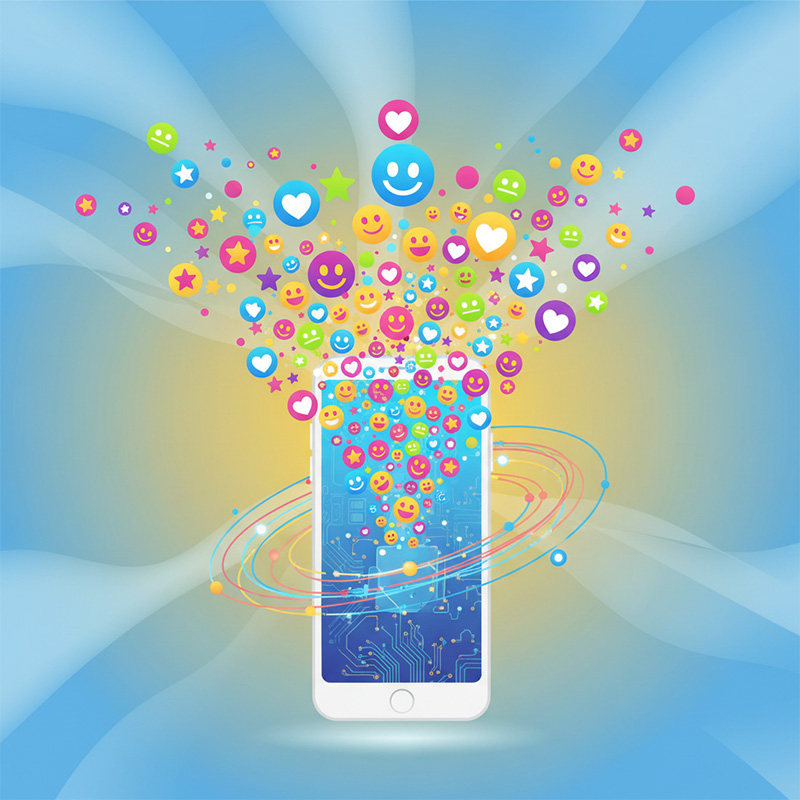
We delivered these experiences through familiar marketing infrastructure: emails, QR codes, links on websites, and later, TikTok.
Case Study: Happiness in Action
Here’s how one of our first online community experiments played out, using renamed participants from a digital bingo forum.
Phase 1: Curiosity
- Chris: I sure did—played for about an hour.
- Jan: Not really the biggest fan of the link. I always guess wrong.
- Val: Some don’t look like anything!
At first, players were unsure. They joked, tested, and explored. Curiosity sparked dopamine, just enough to keep them engaged.
Phase 2: Social Proof
- Chris: I played it the last three nights.
- Tina: Just took the match!
- Nate: I got one point!
Soon, play became contagious. Each small success triggered recognition and belonging, classical conditioning in motion.
Phase 3: The Reward Loop
- Chris: I play till I get at least 100 points.
- Tina: It’s fun!
- Lara: Some of those drawings are definitely sketchy!
Achievement, amusement, and shared laughter released dopamine. The brain began linking fun with calm.
Phase 4: Anticipation
- Jan: What do you get when you hit 100?
- Val: A warning that you need to get off the computer!
- Jan: That’s what it feels like.
- Lara: Hilarious!
Connection deepened through humor. Oxytocin sealed the experience as a social and emotional reward.
Phase 5: Conditioning Complete
Within days, a microbreak became a micro-habit. Players returned not for points but for the feeling of reset, reward, and relief.
The Unexpected Results
Our campaign lasted just two weeks. Out of 1,200 participants, we saw 815 views and 360 plays. Then something unexpected happened. People bookmarked the link and kept returning, often after midnight, playing quietly on their own. They had conditioned their own happiness.
When we moved onto TikTok, it happened again. Our exploratory post was meant to test engagement, but people began bookmarking it, revisiting our microbreaks six months later. The comments kept coming. The algorithm wasn’t keeping them there—emotion was.
The Financial and Emotional Impact
Over the last year, more than 5,000 individual interactions have been studied. Independent researchers at Aarhus University found that 55% of users move from an annoyed or stressed state to a happy one in less than three minutes. No apps. No data collection. No lectures. Just instant relief, delivered through the systems people already use.
Why Happiness Matters for Business
Nordstrom built its reputation on one guiding principle: make people feel good. When you do that, everything else follows. We’re doing the same thing, using data, empathy, and design to rewire the digital experience for emotional safety.
A System for Happiness
At the Digital Wellness Center, we call them microbreaks, but one of our clients recently said it better: “You’ve built a Get People Happy System.” I like that. It’s simple, true, and it captures what we’ve learned: people want permission to pause. They want a moment to breathe, to laugh, to reset. And when we give them that moment, they reward us with loyalty, trust, and something deeper: belief.
That’s what I’ve been trying to prove all along. Happiness isn’t a luxury product. It’s a human right. And it can be delivered, one micro-moment at a time.

Dr. Mary Donohue, founder of the Digital Wellness Center and a leader in neuroscience-based emotional regulation, shares how her team has made happiness more accessible and affordable. Using AI models and classical conditioning, they’ve created micro-moments of joy delivered through familiar digital platforms like emails, QR codes, and TikTok. These moments help recondition the brain to expect happiness, reducing stress and boosting emotional well-being. With over 5,000 interactions studied, their system has proven to increase happiness by 55% in under three minutes.
Promena Media, a key partner in amplifying this message, highlights how this innovative approach not only improves lives but also drives business success by fostering trust, loyalty, and increased spending.
#HappinessRevolution #AIForGood #EmotionalWellBeing