

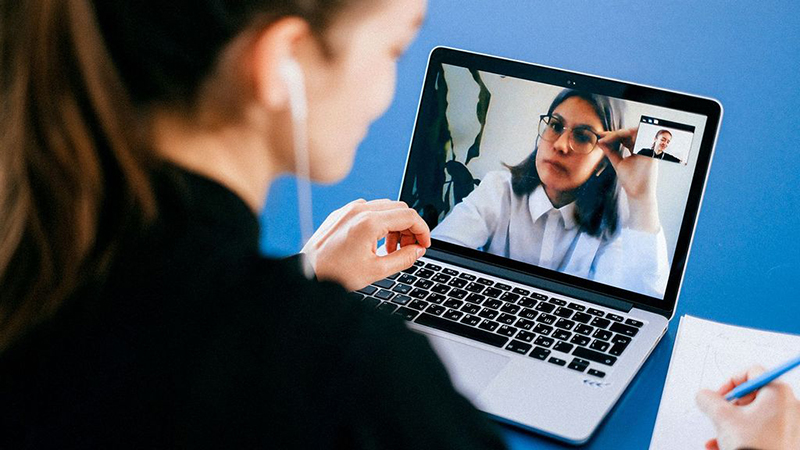
How Turning Cameras Off Boosts Engagement in Virtual Meetings
Virtual Meetings Fatigued: WASHINGTON — Keeping your camera on during virtual meetings increases “Zoom fatigue.” This feeling of exhaustion and low energy often follows a day of virtual calls, according to a new study.
The “Journal of Applied Psychology” published these findings. The study is titled “The Fatiguing Effects of Camera Use in Virtual Meetings: A Within-Person Field Experiment.”
Many employees shifted to remote work over a year ago due to the pandemic. Now, virtual meetings are a daily habit.
Allison S. Gabriel led this new research. She is the McClelland Professor of Management and Organizations and a University Distinguished Scholar. She works in the Eller College of Management at the University of Arizona. Her work suggests cameras may cause much of this “Zoom fatigue.”
The Pressure of Being On Camera
Gabriel’s team examined how cameras impact employee fatigue. They also explored if these feelings hit certain employees harder than others.
“There’s always this assumption that if you have your camera on during meetings, you are going to be more engaged,” said Gabriel.
However, being on camera creates pressure. You worry about self-presentation. You feel the need to have a professional background. You might stress about looking ready. Keeping children out of the room adds even more pressure.
Gabriel and her colleagues ran a four-week experiment. It involved 103 participants and over 1,400 observations. They found that keeping your camera on during a virtual meeting really does tire you out.
“When people had cameras on or were told to keep cameras on, they reported more fatigue than their non-camera using counterparts,” Gabriel explained. “And that fatigue correlated to less voice and less engagement during meetings.”
Rethinking Engagement and Autonomy
The results show a surprising reality. Those with cameras on participated less than those who kept them off. This counters the belief that cameras are necessary for engagement.
Gabriel also found these effects were stronger for certain groups. Women and newer employees felt the strain more. This is likely due to higher self-presentation pressures.
“Employees who tend to be more vulnerable in terms of their social position in the workplace, such as women and newer, less tenured employees, have a heightened feeling of fatigue when they must keep cameras on during meetings,” said Gabriel.
Women often feel pressure to look effortlessly perfect. They also face a higher chance of interruptions from childcare. Newer employees feel they must stay on camera to prove they are working.
Gabriel suggests that mandatory camera use is not the best approach.
Instead, employees should choose whether to use their cameras. Others should not assume someone is distracted or unproductive just because their camera is off.
“At the end of the day, we want employees to feel autonomous and supported at work in order to be at their best,” said Gabriel. “Having autonomy over using the camera is another step in that direction.”
Several researchers co-authored this work. The team included Eller doctoral student Mahira Ganster and Kristen M. Shockley from the University of Georgia. Daron Robertson with BroadPath Inc., Christopher Rosen with the University of Arkansas, Nitya Chawla with Texas A&M University, and Maira Ezerins with the University of Arkansas also contributed.
(With inputs from ANI)
Edited by Anindita Ghosh and Nikita Nikhil
The post All Zoom Much: Study Finds Turning Cameras Off In Virtual Meetings Can Reduce Stress appeared first on Zenger News.
#ZoomFatigue #RemoteWork #VirtualMeetings