
Overview: DiSC Health and Howard University Hospital have released three practical, high-impact wellness strategies designed to overcome daily workout resistance, optimize nutrition, and reduce workday stress. The guide emphasizes adopting the 5-minute rule to lower psychological exercise hurdles, packing lunch ahead to regulate dietary ingredients and prevent midday fatigue, and deploying 30-to-60-second high-intensity movement bursts like jumping jacks to rapidly discharge physical tension and restore mental focus.

DISC Health Equity Action Lab
How Howard University Hospital and DiSC Health are breaking down daily fitness and nutrition hurdles with simple, science-backed micro-habits.
Building long-term vitality rarely requires sweeping life overhauls. Instead, sustainable wellness takes root in everyday micro-habits—small, intentional choices that bypass mental resistance. In addition, these practical adjustments nourish your body consistently while breaking up prolonged physical stagnation. Consequently, DiSC Health and Howard University Hospital have partnered to spotlight three actionable habits: mastering the 5-minute rule, packing a nutrient-dense lunch ahead, and using rapid movement intervals to relieve daily tension.
1. Master the 5-Minute Rule to Crush Workout Resistance

The hardest step of any fitness routine is simply getting started. When an exercise session feels like an intimidating, hour-long chore, your brain naturally defaults to procrastination. Fortunately, the 5-minute rule resets that psychological hurdle. You merely commit to moving your body for five brief minutes.
Once you begin moving—whether through brisk walking, light dynamic stretching, or gentle mobility drills—your circulation improves rapidly. Endorphins circulate through your bloodstream, which helps dissolve initial hesitation. Furthermore, that early mental resistance gives way to natural physical momentum. More often than not, this gentle entry carries you through a full training session. Even if you stop after five minutes, you still keep your daily consistency chain intact.
- Lower the threshold: First, set a gentle five-minute timer with zero internal pressure to continue past the beep.
- Remove friction: Next, keep your running shoes and workout clothes visible beside your bed or workspace.
- Celebrate momentum: Finally, acknowledge even five minutes of light activity as a genuine victory for habit formation.
2. Plan Ahead: Pack Your Lunch to Control Ingredients

Demanding schedules frequently make fast-food convenience feel unavoidable. However, relying on takeout counters, vending machines, or office treats introduces hidden sugars and excess sodium into your daily diet. These low-nutrient foods spike blood sugar and trigger sluggish afternoon crashes. Taking time to pack your meal beforehand puts you back in charge of your daily nutrition.
Preparing a clean lunch container ensures you know every single ingredient that enters your body. Moreover, pre-portioning quality proteins, complex whole grains, and crisp produce completely eliminates impulsive, hunger-driven decisions. As a result, you safeguard both your physical vitality and your wallet throughout the workweek.
- Batch cook staples: To start, prepare balanced grains and roasted vegetables over the weekend for quick weekday assembly.
- Balance your plate: Meanwhile, aim to fill half your glass container with colorful, fiber-rich greens and seasonal produce.
- Store backup items: Additionally, keep olive oil, sunflower seeds, and canned legumes at your desk for flavorful mid-week additions.
3. High-Intensity Bursts: Quick Movement to Release Tension
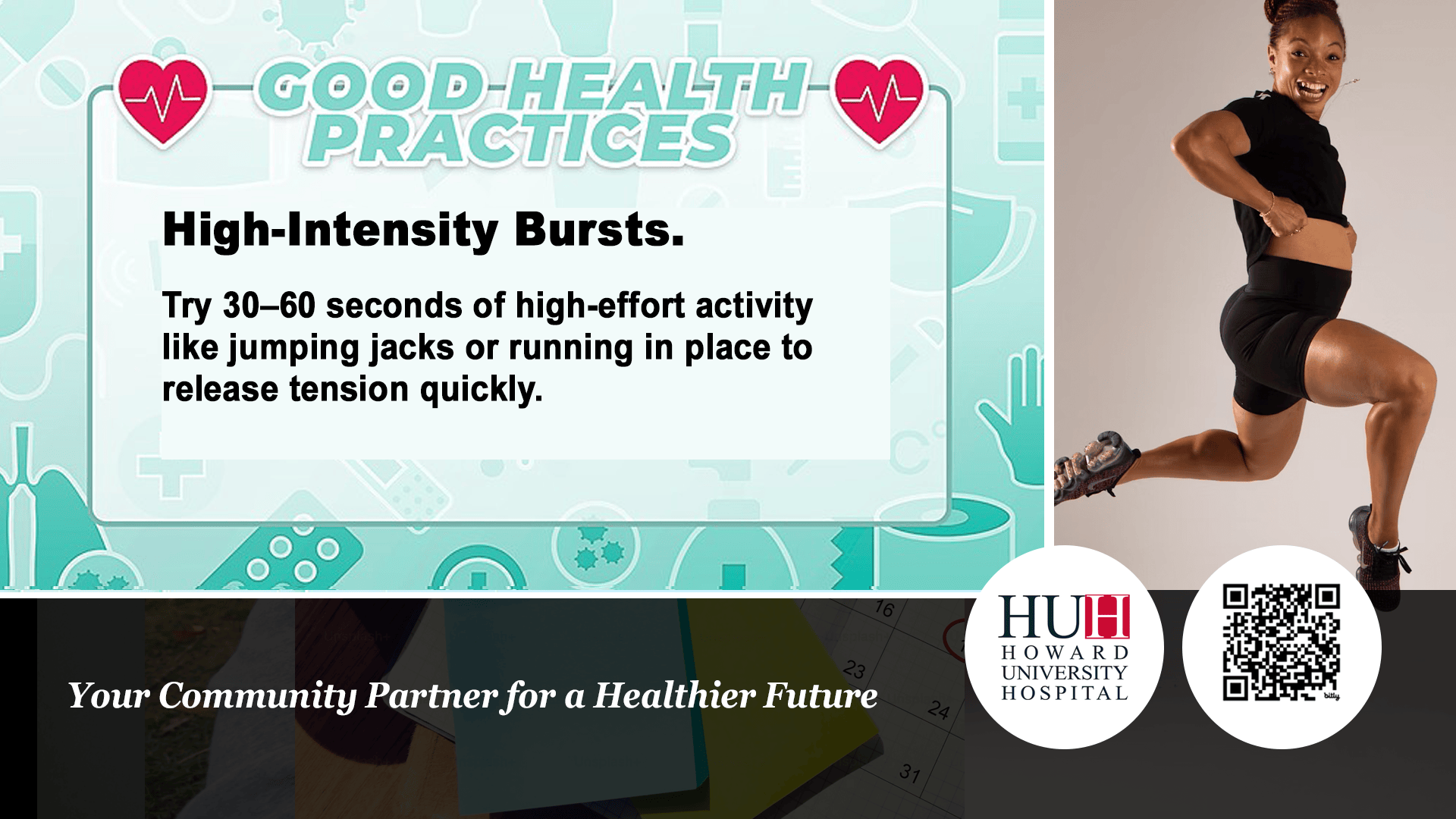
Sedentary office habits place substantial physical stress on your spine, neck, and nervous system. Yet, you do not need an extensive gym session to undo hours of sitting behind a screen. Instead, incorporating brief high-intensity intervals—ranging between 30 and 60 seconds—provides immediate musculoskeletal relief.
Engaging in brief bodyweight drills triggers rapid cardiovascular stimulation. For instance, dynamic calisthenics like jumping jacks, stair climbing, or stationary jogging quickly open tight hip flexors. Similarly, this short physical stimulus surges oxygen directly to your brain. This quick burst resets your autonomic nervous system, washing away accumulated desk fatigue and restoring sharp mental focus.
- Keep intervals tight: Dedicate 30 to 60 seconds of vigorous effort right before your major afternoon meetings.
- Select simple movements: Next, cycle through straightforward bodyweight drills like high knees or jumping jacks.
- Regulate your breathing: Afterward, take four slow diaphragmatic breaths to settle your heart rate and restore calm concentration.
Weekly Implementation Schedule
Putting these micro-habits into daily practice works best when mapped out across your week. On Monday, focus on nutritional preparation by packing a whole-food lunch container Sunday night to eliminate the temptation of midday takeout runs. On Tuesday, tackle workout resistance by applying the 5-minute rule immediately after closing your laptop, allowing simple momentum to defeat procrastination.
By Wednesday, counteract your afternoon slump by completing 45 seconds of energetic jumping jacks right around 2 PM to clear physical stiffness and restore sharp mental clarity. Thursday reinforces healthy fuel choices through another pre-packed lunch assembled with mixed whole grains, lean protein, and crisp garden produce. Finally, wrap up Friday by prioritizing cardiovascular circulation, breaking up back-to-back calls with two 30-second bursts of running in place to ease tension and prevent seated fatigue.
Immediate Verification Checklist
- Sneaker staging: Place your training footwear beside your workspace before your morning shift begins to initiate your 5-minute routine without friction.
- Lunch composition audit: Confirm that your packed container contains a clean protein source alongside colorful, fiber-rich vegetables before commuting.
- Movement timer activation: Schedule a calendar reminder for 1:30 PM to execute your first 45-second high-intensity movement interval between tasks.
About
DISC Health
The Health Equity Action Lab (HEAL) is an initiative by Dynasty Interactive Screen Community aimed at addressing health disparities in the U.S. and globally. By engaging media and stakeholders, HEAL seeks to reduce health inequalities and raise awareness. Their approach includes overcoming socio historical barriers and confronting the institutional, social, and political factors that perpetuate healthcare inequality.
Learn more about the health education partnership:
Howard University Hospital (HUH)
Howard University Hospital, established in 1862 as Freedmen’s Hospital, has a rich history of serving African Americans and training top medical professionals. Located in Washington, D.C., it is the only teaching hospital on the campus of a historically Black university. HUH is a Level 1 Trauma Center and a critical healthcare provider for underserved populations. It offers advanced medical services, including robotic surgery, and has received numerous accolades for excellence in specialties like heart care, stroke treatment, and radiology.
Learn more about Howard University Hospital (HUH)
Howard University Faculty Practice Plan (FPP)
The Howard University Faculty Practice Plan is a multi-specialty physician group in Washington, D.C., dedicated to advancing healthcare and eliminating health disparities. It offers comprehensive services, including primary and specialty care, mental health, imaging, and cancer care, all connected to Howard University Hospital. FPP emphasizes patient-centered, respectful care for the diverse community and provides free health screenings and events to promote wellness.
Learn more about Howard University Faculty Practice Plan (FPP).
Get more Disc Health Weekly Tips:
#DiSCHealth #CommunityWellness #HealthyHabits