Overview: Sixty-two years after civil rights workers Andrew Goodman, James Chaney, and Michael “Mickey” Schwerner were murdered in Neshoba County, Mississippi, while registering Black voters, Mississippi voters elected Scott Colom as the state’s first popularly elected Black U.S. Senator on November 11, 2026. This personal reflection honors Andrew Goodman’s mother, Dr. Carolyn Goodman, her quiet courage in 1964, her decades of civil rights advocacy, and the ultimate harvest of Freedom Summer.
Sixty-two years after Freedom Summer volunteers Andrew Goodman, James Chaney, and Mickey Schwerner were murdered in Mississippi, a mother’s quiet courage and a 1964 postcard echo in a historic U.S. Senate milestone.
From a 1964 Postcard to the U.S. Senate: Remembering Dr. Carolyn Goodman and the Long Road to Mississippi History
On Sunday, January 9, 2005, I was stuck in Atlanta, changing planes on my way home from Raleigh to Newark. I was living in New Jersey then. Heavy snow across the Northeast had grounded flights along the coast. Frustrated and with time to kill, I picked up the New York Times.
A front-page story stopped me. It was about Dr. Carolyn Goodman, Andrew Goodman’s mother. Andrew was one of three young civil rights workers murdered in Neshoba County, Mississippi, on June 21, 1964. Andrew and Michael “Mickey” Schwerner were white New Yorkers. James Chaney was a Black Mississippian from Meridian. They had gone to investigate the burning of a Black church that had opened its doors to voter registration. Their bodies were found buried in an earthen dam that August.
I read the article with fascination and deep admiration for Dr. Goodman’s resilience. She discussed the Andrew Goodman Foundation, which continues her son’s work. Given my background in public relations, I knew right away I wanted to help.
A Cold Call to the Upper West Side
I didn’t know how to reach her. I considered calling my former boss, Rep. Charles B. Rangel (D-NY), but it was Sunday, and I didn’t want to bother him. So, I did something that now feels like it belongs to another era: I dialed directory assistance at (212) 555-1212. Carolyn Goodman was listed on the Upper West Side. I wrote down the number and made a cold call.
When she answered, I introduced myself. To put her at ease, I mentioned that I had worked for Rep. Rangel and former New York City Mayor David N. Dinkins, and I told her I wanted to volunteer with the foundation named for her son. She was gracious and warm, and she invited me to dinner at her home later that week.
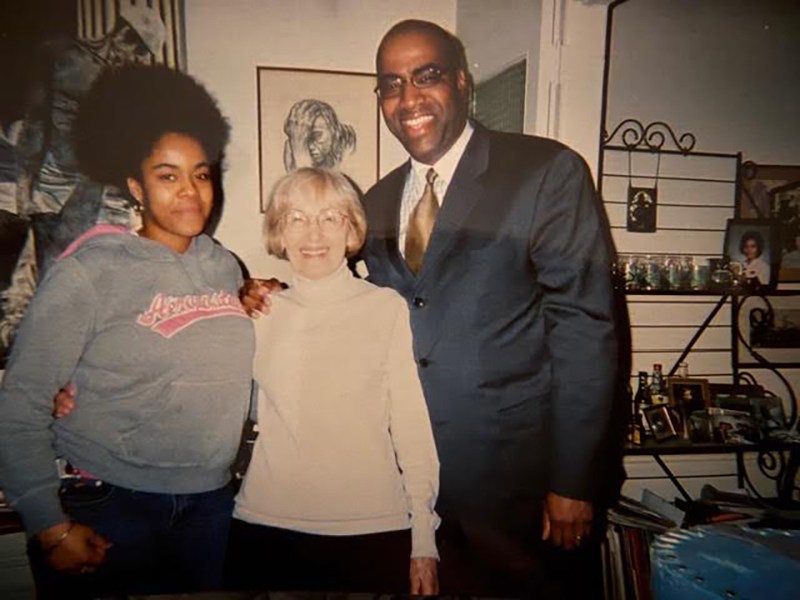
When I arrived, we embraced. I was struck right away by this small woman’s kindness and resolve. She had soft blue eyes and a smile that seemed to come from deep within, sincere. We talked over dinner for almost three hours. At one point, she showed me Andrew’s old room, which, as I recall, had become her study.
Freedom Summer and a Mother’s Quiet Courage
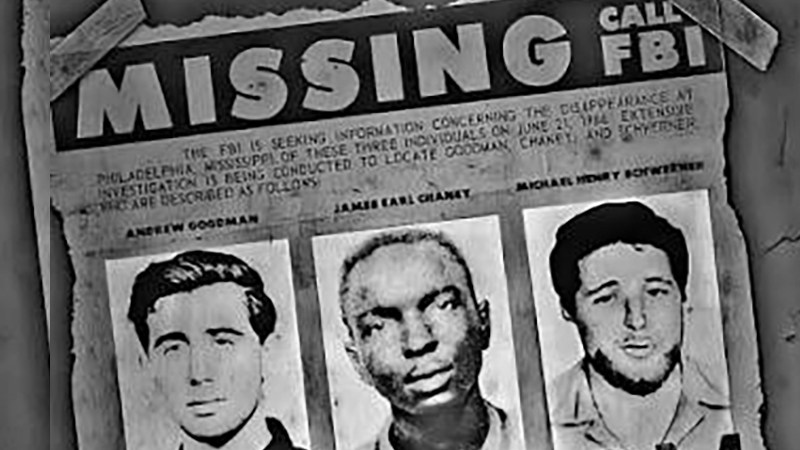
In the summer of 1964, Andrew was 20 and a student at Queens College. Dr. Goodman and her late husband, Robert, had raised Andrew and his brothers, Jonathan and David, to believe that all people are equal. The family supported the Civil Rights Movement in the South and donated to the NAACP.
A few weeks before he left, Andrew announced at the dinner table that he wanted to go South to help register Black voters. Dr. Goodman told me that she and her husband were surprised and immediately worried. But they also knew they couldn’t forbid him from going without betraying the values they had taught him, so they kept their fears to themselves.
She remembered helping Andrew pack. Dr. Goodman went to the drugstore and bought him several items, including a small first-aid kit. When Andrew asked what it was for, she said it was just in case he fell and scraped himself. At worst, she told me, she imagined her son might come home with a cut, a black eye, a broken arm, or a skinned knee from a hostile encounter. Never murder.
The family put Andrew on a bus at the New York Port Authority, expecting him back in New York by summer’s end. That evening, she also showed me a copy of a postcard Andrew had mailed home. The postmark read June 21, 1964, Meridian, Mississippi.
“Dear Mom and Dad, I have arrived safely in Meridian, Mississippi. This is a wonderful town and the weather is fine. I wish you were here. The people in this city are wonderful, and our reception was very good. All my love, Andy.”
Within hours of writing those words, Andrew Goodman, James Chaney (21), and Mickey Schwerner (24) were murdered by the Ku Klux Klan.
Seeking Justice and Keeping the Legacy Alive
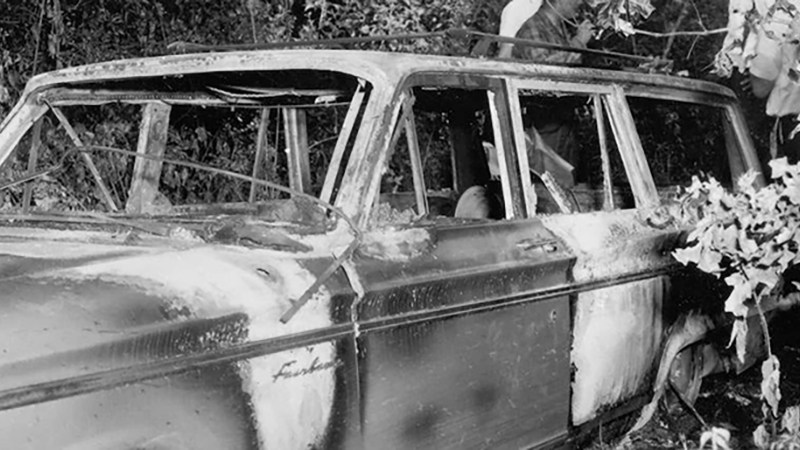
Remarkably, Dr. Goodman lived to see a measure of justice. The trial of Edgar Ray Killen opened on June 13, 2005, at the Neshoba County Courthouse in Philadelphia, Mississippi. She testified. On June 21, 2005, exactly 41 years to the day after the murders, the jury convicted Killen of three counts of manslaughter. Killen died in prison at age 92 on January 11, 2018.
Dr. Goodman invited me to attend the trial, and I still regret that work travel kept me from attending.
We stayed in touch until she died on August 17, 2007, at age 91, in the same Manhattan home where we first met. She devoted much of her remaining life to civil rights and social justice.
One of my most cherished blessings is that I was able to introduce my daughter, Ashley, to her in her home.
Sixty-Two Years Later: History in Mississippi
On the night of November 11, 2026, I watched Scott Colom be declared the winner of Mississippi’s U.S. Senate race. He is the first Black American elected to the U.S. Senate by Mississippi voters.
I thought of the little first-aid kit, the postcard, and a mother who, despite her fears, sent her son South, with her blessing. I thought of Andrew, James, and Mickey, who gave their lives so Black Mississippians could vote.
Sixty-two years later, those ballots helped send one of their own to the U.S. Senate.
I like to imagine Andrew, James, and Mickey, along with Dr. Goodman, Fannie Lou Hamer, Medgar Evers, Emmett Till, and countless others, beaming with pride as they look down from Heaven.
Key Historical Context & Takeaways
On June 21, 1964, during the Mississippi Freedom Summer voter registration drive, civil rights workers Andrew Goodman (20), James Chaney (21), and Michael “Mickey” Schwerner (24) were murdered by members of the Ku Klux Klan in Neshoba County, Mississippi, after investigating the burning of a Black church. Forty-one years later, on June 21, 2005, Klan organizer Edgar Ray Killen was convicted on three counts of manslaughter following testimony from Goodman’s mother, Dr. Carolyn Goodman (1915-2007), who led the Andrew Goodman Foundation. On November 11, 2026, Scott Colom became the first Black American elected to the U.S. Senate by Mississippi voters, fulfilling the voting rights legacy for which Goodman, Chaney, and Schwerner gave their lives.
#FreedomSummer #VotingRights #CivilRightsHistory