

In media coverage, much attention is given to nearly every country and issue while the continent of Africa is often excluded, even within African-American publications and outlets. We, the Argus will begin featuring tidbits of news and information from our brothers and sisters across the Atlantic. We believe this is important for sensitizing readers to events, fostering opportunities, and reshaping the narrative of Africa.
In spirit of Argus Synapotes, the mythological sentinel with a thousand all-seeing eyes, The Argus extends its vision to the heart of the African continent. With a gaze that connects the lived experiences of the African diaspora to the aspirations of a rising Africa, this column explores the seismic leadership shift embodied by Captain Ibrahim Traoré.the

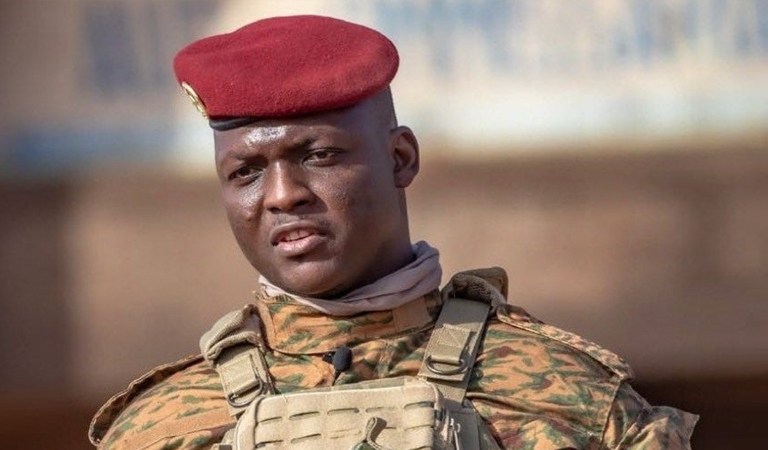
A new movement is taking shape across the African continent—one defined by courage, sovereignty, and a bold rejection of neocolonial domination. At the forefront stands Captain Ibrahim Traoré, the young leader of Burkina Faso, whose emergence signals a generational shift in African politics. In a time when the global order is being re-evaluated, Traoré represents a revival of Pan-African ideals that once burned brightly in the hearts of revolutionaries like Thomas Sankara, Patrice Lumumba, and Muammar Qaddafi.
Born in 1988 in Bondokuy, a town in western Burkina Faso, Captain Ibrahim Traoré graduated from the University of Ouagadougou with a degree in geology before joining the military. His rise through the ranks was swift, marked by discipline, intelligence, and a strong rapport with the rank-and-file soldiers. In September 2022, amidst growing discontent with the government’s failure to curb jihadist violence, Traoré led a popular coup d’état that ousted interim president Paul-Henri Sandaogo Damiba. At just 34 years old, Traoré became the world’s youngest head of state.
But Traoré is not merely a military man—he is a symbol of resistance against foreign interference, corruption, and Western dependency. Under his leadership, Burkina Faso has begun implementing a series of ambitious reforms focused on national self-reliance. Schools, hospitals, roads, and energy infrastructure have become priority investments. His administration has redirected public funds away from elite privileges toward public services, echoing the revolutionary policies of Thomas Sankara.
Burkina Faso, formerly known as Upper Volta, gained independence from France in 1960. In 1983, Thomas Sankara seized power and renamed the country “Burkina Faso,” meaning “Land of Upright People” in the local Mossi and Dioula languages. Sankara’s government launched a transformative program of social, economic, and environmental reforms, including mass vaccination campaigns, women’s rights initiatives, and land redistribution. Sankara also famously rejected foreign aid and denounced the imperialist structures that kept African nations dependent and impoverished.
Many draw striking comparisons between Traoré and Sankara. Both young, charismatic, and unapologetically Pan-Africanist, their rhetoric and reforms reflect a shared vision of African self-determination. Traoré’s speeches often invoke the spirit of Sankara, calling for unity, justice, and dignity. He has expelled French military forces, distanced the country from Western alliances, and strengthened ties with other African nations and non-Western powers.
In a telling move that underscores his anti-imperialist stance, Traoré refused an invitation from former U.S. President Donald Trump, rejecting symbolic gestures of diplomacy that he viewed as patronizing or self-serving. This bold decision sent a clear message: Burkina Faso will no longer be dictated to by foreign powers.
Traoré’s leadership is part of a broader wave across West and Central Africa, where coups and political upheavals reflect growing frustration with Western-backed elites. Citizens are demanding sovereignty, control over natural resources, and governance rooted in African values and realities. Traoré’s popularity among young Africans speaks to a hunger for change—not just in Burkina Faso, but across the continent.

His challenge to Western hegemony is not without danger. The ghosts of assassinated African leaders loom large. Patrice Lumumba, the Congo’s first prime minister, was murdered with the complicity of Belgian and American operatives. Muammar Qaddafi, who proposed the creation of a continental currency and the United States of Africa, was toppled and killed during a NATO-backed intervention. Thomas Sankara was betrayed and gunned down by his own comrades, allegedly with foreign support. Steve Biko, the South African Black Consciousness leader, died at the hands of apartheid police.
Given these precedents, concerns for Traoré’s safety are real. He has already survived at least one reported assassination attempt. But despite the risks, he continues to galvanize a continent eager to reclaim its voice and destiny.
As the global balance of power shifts, Africa stands at a crossroads. The resource-rich continent is poised for transformation if it can break free from exploitative systems. Captain Ibrahim Traoré’s leadership raises urgent questions:
Can he succeed where others were stopped? Could he resume Qaddafi’s dream of a United States of Africa? Could he help ignite a wave of regional cooperation to finally free Africa from its dependency on the West?
Only time will tell. But one thing is clear: Africa is rising, and with it, a new generation of leaders who dare to dream of liberation, unity, and a future forged by Africans, for Africans.
#AfricaRising #Leadership #IbrahimTraore