

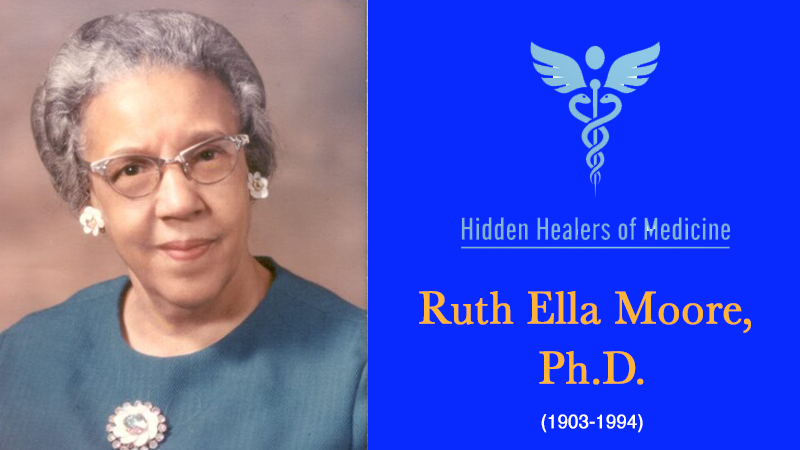
Hidden Healers: A Celebration of Historical Black Figures in Medicine: Breaking Barriers: Dr. Ruth Ella Moore’s Legacy in Microbiology
Dr. Ruth Ella Moore was a trailblazer in the field of microbiology. As the first Black woman to earn a PhD in natural sciences, she made groundbreaking contributions to tuberculosis research. Her work focused on understanding bacterial transmission, which played a key role in early public health efforts to control infectious diseases. Through her dedication, she not only advanced science but also saved countless lives.
Beyond her research, Dr. Moore was a passionate educator. She worked tirelessly to expand access to graduate education for Black students at historically Black colleges and universities. By doing so, she helped diversify the biomedical field and strengthened the nation’s public health workforce. Her dual role as a scientist and educator left a lasting impact on both science and society.
A Legacy of Excellence
Dr. Moore’s achievements were not limited to her laboratory. She believed in the power of education to create opportunities and break down barriers. Her efforts opened doors for many aspiring scientists, ensuring that future generations could follow in her footsteps. This commitment to education and equity remains an inspiration today.
Her work is a reminder of the importance of representation in science. By overcoming challenges and excelling in her field, Dr. Moore paved the way for others to succeed. Her story is a testament to the resilience and brilliance of Black scientists throughout history.
References
Moore, R. E. (1933). Doctoral dissertation, Ohio State University.
National Academy of Sciences. (2021).
About
DISC Health
The Health Equity Action Lab (HEAL) is an initiative by Dynasty Interactive Screen Community aimed at addressing health disparities in the U.S. and globally. By engaging media and stakeholders, HEAL seeks to reduce health inequalities and raise awareness. Their approach includes overcoming socio historical barriers and confronting the institutional, social, and political factors that perpetuate healthcare inequality.
Howard University Hospital (HUH)
Howard University Hospital, established in 1862 as Freedmen’s Hospital, has a rich history of serving African Americans and training top medical professionals. Located in Washington, D.C., it is the only teaching hospital on the campus of a historically Black university. HUH is a Level 1 Trauma Center and a critical healthcare provider for underserved populations. It offers advanced medical services, including robotic surgery, and has received numerous accolades for excellence in specialties like heart care, stroke treatment, and radiology.
Learn more about Howard University Hospital (HUH)
Howard University Faculty Practice Plan (FPP)
The Howard University Faculty Practice Plan is a multi-specialty physician group in Washington, D.C., dedicated to advancing healthcare and eliminating health disparities. It offers comprehensive services, including primary and specialty care, mental health, imaging, and cancer care, all connected to Howard University Hospital. FPP emphasizes patient-centered, respectful care for the diverse community and provides free health screenings and events to promote wellness.
Learn more about Howard University Faculty Practice Plan (FPP)
#BlackHistory #Microbiology #Trailblazer