

Articulated Insight – “News, Race and Culture in the Information Age”

There was a time in America when injustice didn’t whisper, it shouted. Jim Crow’s reach could be seen and felt in every corner of daily life. It was the hand that guided the “Whites Only” signs above water fountains, the law that dictated who could vote, and the unspoken rule that said a Black child’s laughter was welcome only on one side of town. Families were forced to live divided lives; one for survival, another for dignity. The system didn’t just separate people; it separated futures. It made inequity lawful, cruelty normal, and silence acceptable.
We’d like to believe that era ended. But what if it only changed its language? What if today’s barriers are written not on storefronts but into budgets, policies, and bureaucratic decisions? What if the promise of equality is still rationed, not by color this time, but by income, nationality, and access?
Like its predecessor, today’s version builds invisible walls through law and policy. Then, poll taxes and literacy tests kept Black citizens from voting; now, voter ID laws, gerrymandering, and the closure of polling sites in minority neighborhoods achieve the same outcome. Then, segregated schools and hospitals locked quality services behind color lines; now, ZIP codes still predict life expectancy and access to care with eerie precision. The faces have changed, but the framework remains.
Over time, we have learned to accept quieter forms of injustice. Instead of water fountains, inequity now hides in health-insurance applications, healthcare access, student-loan systems, zoning maps, and political debates that turn compassion into controversy. What was once enforced by signs and sheriffs is now perpetuated by algorithms, red tape, and indifference. And perhaps the most dangerous shift is that so many have stopped noticing.
The ongoing federal shutdown has made this question unavoidable. Across the country, millions of families are facing uncertainty as critical safety-net programs hang in the balance. The Supplemental Nutrition Assistance Program (SNAP), which supports about one in eight Americans, could soon run dry. According to Feeding America, more than 44 million people (including one in five children) currently face food insecurity in the United States. Without congressional action, children, seniors, and working parents will lose access to food assistance, not because they’ve done anything wrong, but because politics has stalled compassion.
Healthcare, too, stands on a fault line. Subsidies connected to the Affordable Care Act remain frozen, putting millions at risk of losing coverage. Hospitals that serve low-income and rural populations are preparing for devastating cuts. For families already struggling with rising costs, the possibility of losing healthcare isn’t a policy debate; it’s a matter of survival. According to the CDC, the gap in life expectancy between America’s richest and poorest ZIP codes can exceed 15 years.
Meanwhile, the shutdown has silenced paychecks for hundreds of thousands of public servants, including members of the military. Many are still reporting for duty, ensuring national security and public safety while uncertain when, or if, they’ll be paid. These are not abstract economic consequences; they are direct blows to working-class Americans who keep the nation running.
And as many households tighten their belts, another system continues at full strength: immigration-enforcement efforts across the nation have intensified, sometimes taking on a militarized tone that blurs the line between public safety and humanitarian concern. Families are being separated, and individuals detained without timely access to due process; realities that should trouble all who believe in fairness and the rule of law.
Some may find the comparison to Jim Crow uncomfortable, and it should be. Discomfort is the first step toward recognition. The systems may differ in form, but both rely on the same machinery: exclusion by design and indifference by default.
Unlike its 20th-century predecessor, Jim Crow 2.0 does not need “Whites Only” signs or segregated schools. It works through bureaucracy and policy, determining who eats, who heals, who works, and who belongs. It punishes poverty, penalizes difference, and normalizes inequality under the guise of governance.
Even those who once believed they were immune (farmers, small-business owners, and conservative families who trusted that their alignment with certain political ideologies would shield them) are now feeling the consequences. Many rural farmers depend on federal programs for crop insurance, disaster relief, and nutrition assistance for their own households. As the shutdown stretches on, payments are delayed, loans go unpaid, and entire communities built on agriculture face uncertainty. This is the quiet revelation of Jim Crow 2.0: exclusion is no longer confined to color lines; it follows economic ones.
When families are forced to choose between rent and food because benefits are withheld, workers protect the nation without pay, farmers can’t access the aid that sustains their land, and immigrants live in fear of midnight raids, we must ask ourselves what values we are truly defending.
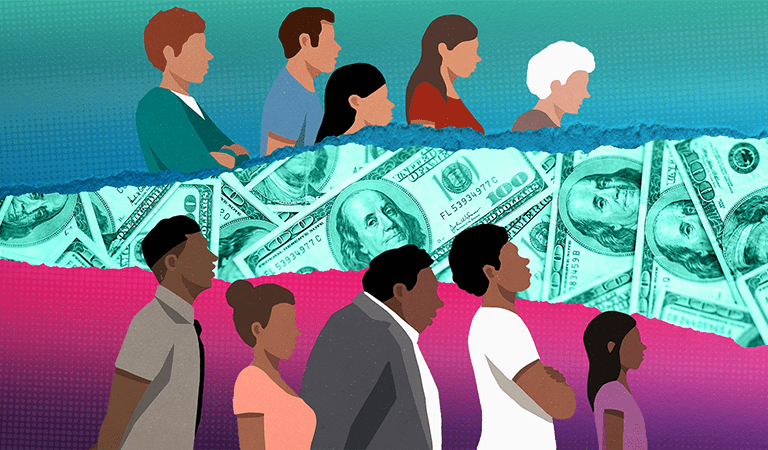
These are not isolated crises. They are interconnected strands of systemic exclusion that disproportionately affect those already on the margins (the poor, the immigrant, the uninsured, the unseen) and now even those who once saw themselves as protected. History has shown that when inequity is allowed to thrive, it eventually reaches everyone’s doorstep. The same system that starves cities will one day bankrupt farms. The same laws that silence immigrants will one day erode the freedoms of citizens.
The question, then, is not simply whether Jim Crow 2.0 exists, but whether we are willing to recognize it and respond. Recognition is not enough. Silence is not neutrality; it’s consent. Will we use our voices, our votes, and our platforms to confront the injustices hiding in plain sight? Will we hold elected leaders accountable not for their slogans, but for their track records?
As congressional districts are redrawn to preserve partisan advantage and restrict fair representation, the challenge grows steeper. Yet democracy demands vigilance, not despair. Every citizen, regardless of party or background, bears an obligation to vote, to research candidates, and to choose leaders who prioritize the collective good over individual gain. Our responsibility extends beyond our own households to include those whose voices are often unheard, the have and the have-nots alike.
Using our voices means more than voting every four years. It means showing up at school boards, city halls, and community meetings, to insist that compassion and fairness guide public policy. Democracy is not preserved by silence; it’s sustained by participation.
We can no longer treat hunger, healthcare, and human rights as partisan issues. They are moral ones. Justice delayed by policy is still justice denied by design.
Jim Crow once told Americans where they could sit. Jim Crow 2.0 tells them what they’re worth. Whether that remains true depends on what we choose to do next.
#JimCrow2Point0 #SocialJustice #SystemicInequity