
Héctor Alejandro Arzate, Mississippi River Basin Ag & Water Desk
Libby Reuter watched the creek flow slowly, like she had done dozens of times before.
Mallard ducks rested on stones and cattails sprang out of the creek. The water ran parallel to a street busy with traffic and joggers, pooling behind the art museum in Springfield, Mo.
Fassnight Creek is hundreds of miles from the banks of the Mississippi River, but that’s exactly what drew Reuter, an artist, there with her creative partner, Joshua Rowan. They wanted to tell a story about the creek and its changing environment. More importantly, the pair wanted to highlight its place in the larger story of the Mississippi River watershed.
Here in Springfield, Reuter saw “an opportunity to show both the urbanization and the way the natural environment can contribute to it.”
Rowan, meanwhile, studied the scene. As a photographer, he was looking for a composition that could serve as a “gateway” into the themes surrounding water resources — in Fassnight Creek’s case, erosion, flooding.
“Even in the background, the tall grass is the diversity of vegetation,” Rowan said. “If we can include even this rigid piece of concrete, forming at the far end of the photograph — that goes far to tell the story.”
The pair have followed this process more than 400 times over the past 15 years in states across the Mississippi River Basin, from Iowa to Wisconsin and Tennessee to Louisiana.
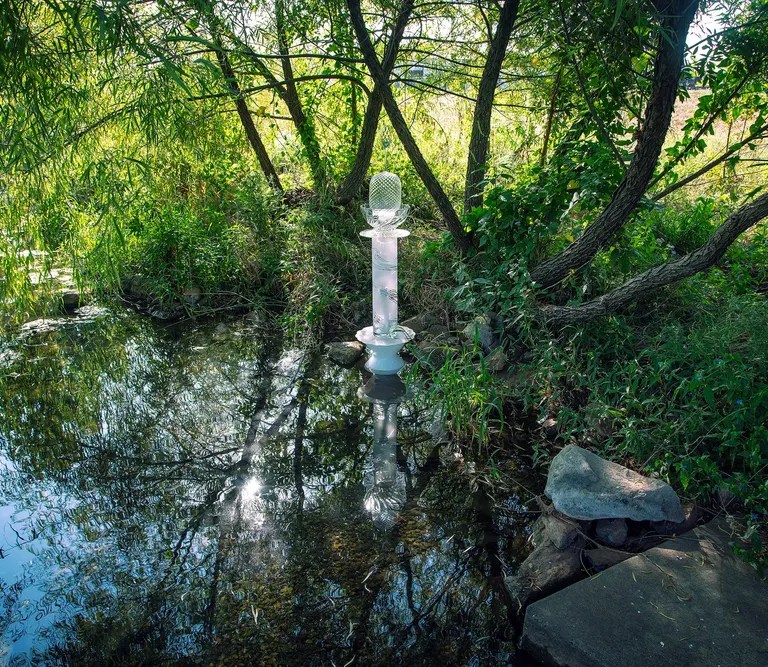
The artists build cairns, which are normally stacks of stones raised to mark trails or a place of significance. But theirs are delicate, fleeting sculptures made out of found glassware, often recycled vases or antique dishes. Each one is custom-made to its location — rivers, creeks and wetlands in the basin — and placed at 40-mile intervals from one another.
The goal is to spark conversation about the state of the watershed and how each location is impacted by both nature and human activity. “There’s the common things,” said Reuter. “About stormwater, about flooding, about the soil and what it supports, and the history of the place.”
Each cairn’s construction and placement is inspired by the story of water the artists uncover there. For example, one of their many cairns sat on top of a levee in Rohwer, Ark., while another stood in the shadow of a grain silo in Warsaw, Ill., rising from an overgrown flowerbed on a no-till farm.
We’re “trying to get a new metaphor of how we’re connected to the water and land and each other,” Reuter said.
Before the cairns are built, the pair meet with local stakeholders to get a better sense of the location’s past, present and future. In Springfield, they talked to Caleb Sanders, a parks supervisor for the city.
Sanders told them that, before colonization, the area surrounding Fassnight Creek was likely a prairie with a series of buffalo wallows — places where native wildlife could find watering holes and rest. While this creek might not ever return to what it once was, he said, the city is making improvements to help the creek better manage stormwater and protect its soil from washing away.
“It’s a space that, like an art installation, challenges expectations and norms and really serves to give that same feel that you would have when you’re walking into an art space,” Sanders said.
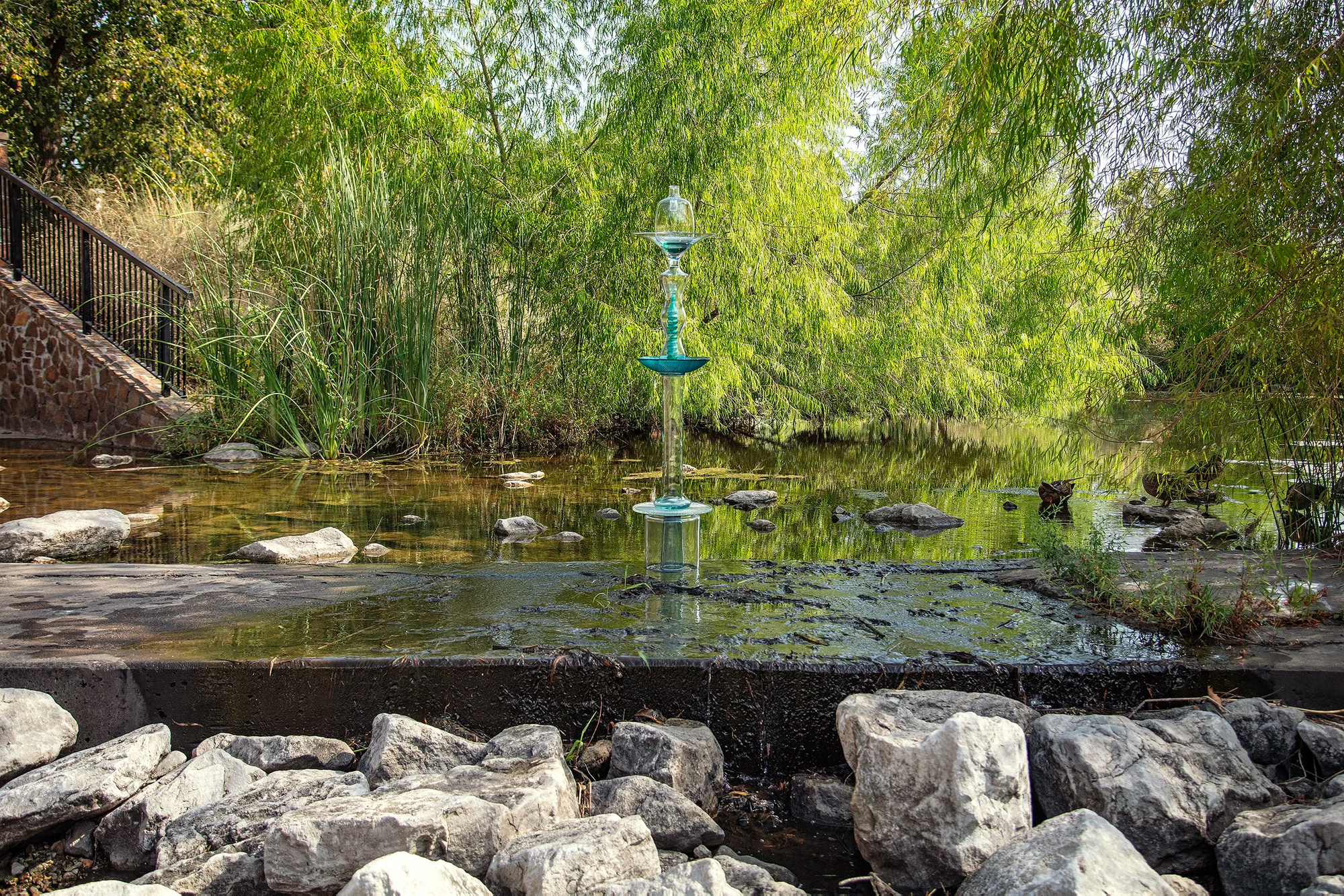
That mindset of connecting art and nature is why Joshua Best, museum educator at the Springfield Art Museum, commissioned the artists to create three cairns in a special series for the city. They met last year at an environmental conference and decided to work together on the local project.
“Naturalization projects have been at the forefront of our civic thinking in Springfield,” Best said. “So it was one way that I saw to connect art with what we’re doing.”
After viewing the site, the artists headed back to their cargo van. Inside were milk crates and plastic tote bags full of fragile glassware, cushioned with packing paper and styrofoam. The containers were labeled with descriptions like “swirly.”
With help from Rowan, Reuter unboxed a long cylindrical vase with a small illustration taped to it: blueprints for the cairn that the artists would build.
The final product was a deep blue-green glass tower made of stacked platters and vases, its mismatched pieces evoking an otherworldly tea party set. For a brief moment, it rose from the bubbling Fassnight Creek, marking the many paths that intersected here across time: that of the buffalo, rainwater and visitors to the art museum.
True to the artist’s goal of sustainability, the sculptures are not meant to stay. “The photograph and the sculpture are both capturing a moment, and that moment doesn’t exist beyond that,” Reuter said.
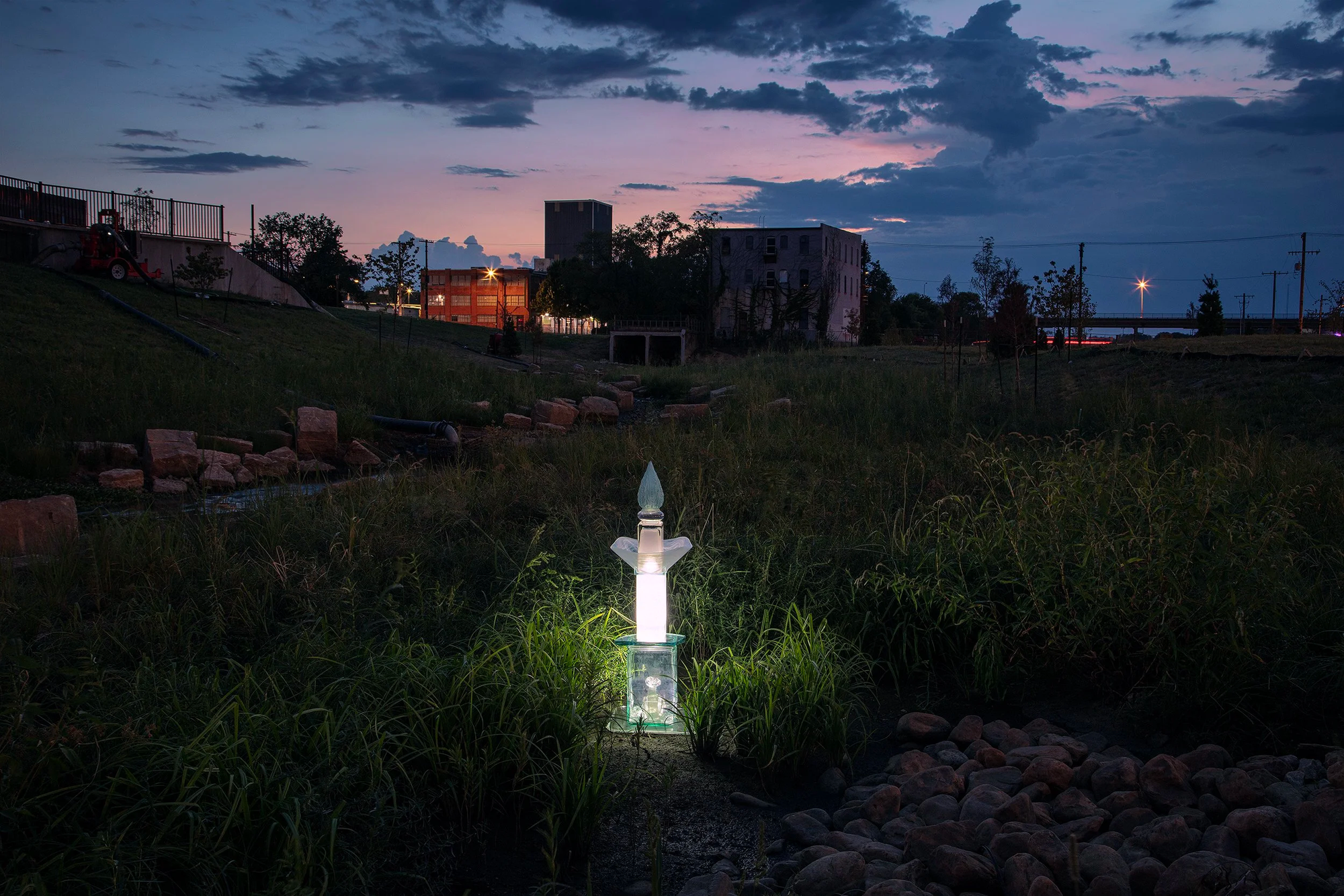
After they’re photographed, the artists take the cairns apart, storing the pieces for possible reuse elsewhere in the basin. The artists log each cairn’s location and add the photos to their interactive map.
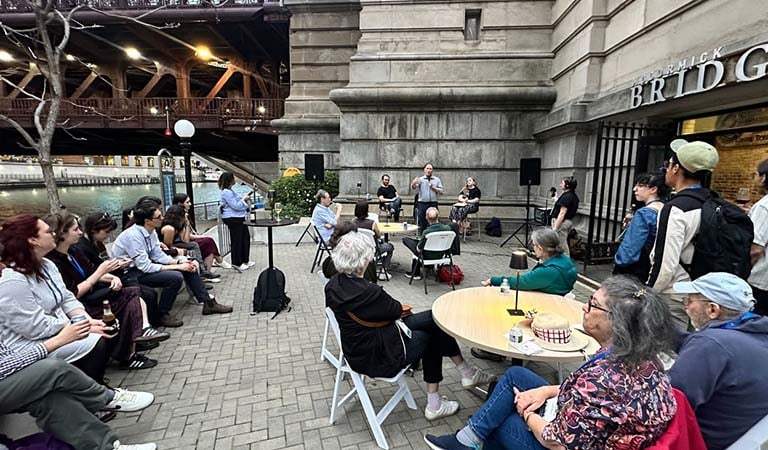
Occasionally, the glass sculptures might find themselves reconstructed at an art exhibition alongside Rowan’s photographs. In Chicago, the Watershed Art and Ecology Center is currently hosting the pair’s artwork through Oct. 31.
For Reuter, the connection between each community and the Mississippi River is why they’ve kept this project going.
“That’s what we’re trying to mark with the cairns,” Reuter said. “Not only the biological, ecological, but the history and the dynamics of the place. And the culture — the human culture — and how we all interact. None of it is independent of it.”
This story is a product of the Mississippi River Basin Ag & Water Desk, an independent reporting network based at the University of Missouri