
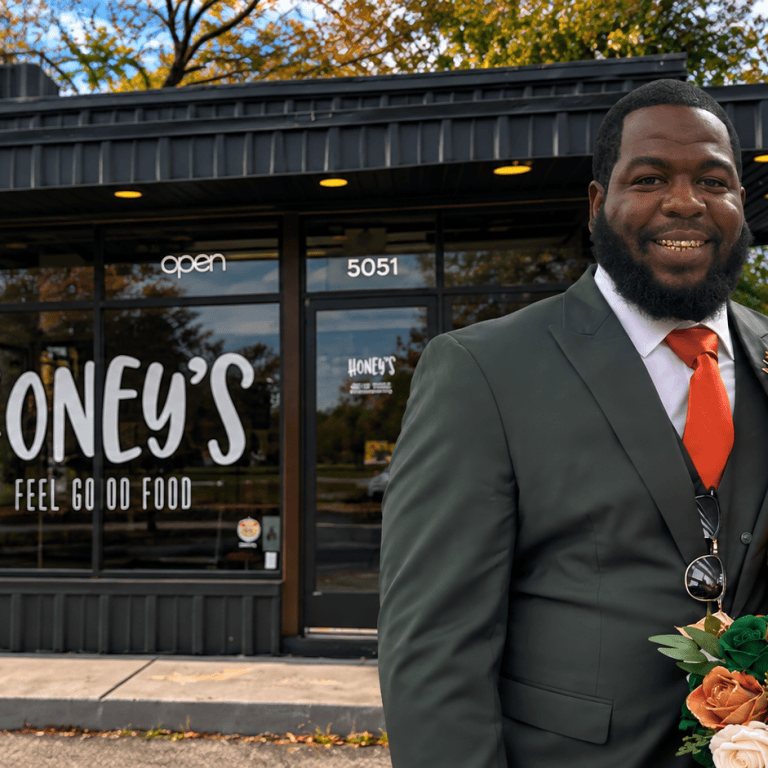
Opening a restaurant is one thing. Finding the money, securing a building, and navigating the process of getting the doors open is another. For Honey’s Angelise and James Latimore, the journey started in their own kitchen, selling plates to family, friends, and customers they reached through social media.
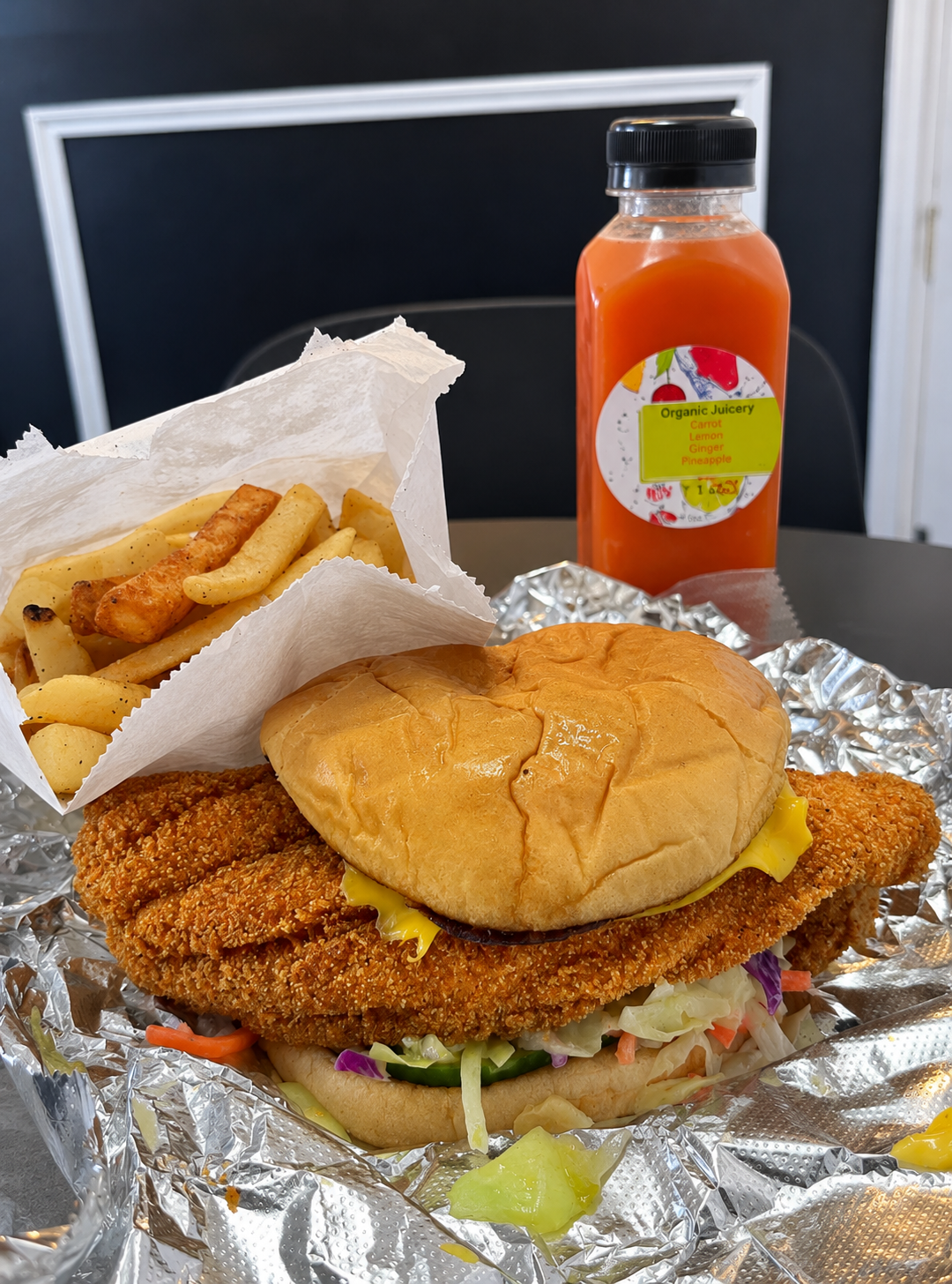
The food is served fresh and delicious. Image by Curtrell Mc Cann
During my visit, I learned that their story involved much more than cooking burgers. It was about figuring out how to build a business without having all the resources readily available and taking a chance on a neighborhood where others questioned whether a restaurant could succeed.
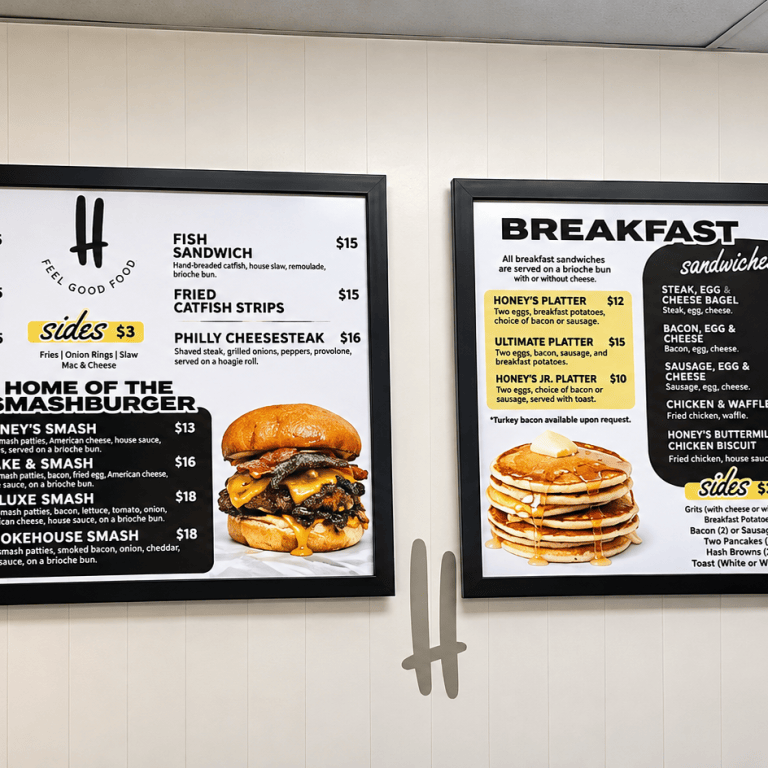
Angelise already had a culinary degree and enjoyed cooking, but she wasn’t particularly fond of the culture she experienced at other jobs. Instead of continuing to work in environments she didn’t enjoy, she decided to put her skills to work for herself. The couple began selling plates from home, eventually moving into pop-up events. One of their earliest took place at a car wash near Euclid Avenue, where they sold burgers. Those early experiences helped them develop a customer base while learning the business.
What I found interesting was how naturally their business grew. They didn’t start with a large restaurant or a major financial investment. They started with what they knew how to do and built from there.
One thing the Latimores were intentional about was owning their building. They researched property opportunities, including the land tax sale process, rather than immediately committing to leasing a commercial space. Not everyone believed their chosen location was a good idea. Some questioned whether the surrounding area could support the business, but the couple saw an opportunity, and according to them, customers have responded positively.
Their challenges didn’t end after securing the property. They described navigating City Hall as a frustrating experience, particularly when trying to understand requirements and find assistance. According to the Latimores, information wasn’t always easy to obtain, adding another layer of difficulty to an already expensive process. It’s something I believe deserves more attention when we talk about attracting businesses to St. Louis neighborhoods. We often discuss wanting more investment, but we should also examine what entrepreneurs experience when they actually try to invest.
Like many small business owners, the Latimores faced challenges accessing capital. They relied on crowdfunding, private donations, pop-up sales, and other financing resources to help move the business forward. They also found Square to be a useful financing resource. Their experience reminded me that entrepreneurship isn’t always as glamorous as it looks on social media. Behind the finished plates and restaurant photos are business owners trying to figure out how to pay for equipment, maintain operations, and cover expenses while building a customer base.
While smash burgers are one of the restaurant’s specialties, I decided to try the chicken sandwich topped with slaw and cheese, served with fresh fries. I enjoy getting to experience the food firsthand when telling a restaurant’s story. It gives me a better understanding of what customers can expect beyond the business owner’s perspective.
The restaurant also offers fresh juices prepared by Monica, a 62-year-old woman who makes them without refined sugars. It’s a detail that caught my attention, especially as more conversations around food involve giving customers additional choices. For a neighborhood restaurant, having different offerings creates opportunities to reach customers with different tastes and preferences.
The Latimores understand that running a restaurant today requires more than preparing good food. They have embraced TikTok, social media, loyalty programs, and catering as ways to connect with customers and expand their reach. Their catering experience includes opportunities connected to Pepsi, Procter & Gamble, and Saint Louis University. Those relationships demonstrate how a neighborhood restaurant can reach customers beyond its immediate surroundings.
I appreciated hearing how they approached growth because restaurant owners today have to understand marketing, customer retention, and how to create opportunities beyond daily walk-in traffic. The Latimores have found ways to do that while continuing to build their presence in the community.
Angelise grew up in South St. Louis before moving to North St. Louis, giving her a personal connection to different parts of the city. Family remains an important part of the business. The Latimores have worked together throughout their entrepreneurial journey, and Angelise brings years of experience as a lead cook.
Looking ahead, they aren’t limiting themselves to one restaurant concept. Over the next ten years, they envision expanding their footprint, potentially through different food concepts or a food truck. Their long-term plans reflect something I hear frequently when interviewing restaurant owners. The goal isn’t always to become the biggest restaurant in town. Sometimes it’s about creating something your family owns and can continue building.
One of the most important points Angelise raised during our conversation was the need for a Black restaurant association in St. Louis. After hearing about their experience with financing, property ownership, and navigating city requirements, I understood why she felt that way. An organization focused on Black restaurant owners could create opportunities to share resources, provide mentorship, and help entrepreneurs better understand the process of opening and maintaining a business.
St. Louis has plenty of talented cooks and restaurant owners, but talent alone doesn’t eliminate the challenges of running a business. There is value in having people who have already navigated those obstacles help the next generation avoid some of the same frustrations.
What stood out to me about Angelise and James wasn’t just their food or their plans for expansion. It was their decision to invest in a building and a location that others questioned. They started by selling plates at home, built a following through pop-ups, found ways to finance their business, and continued moving forward despite the challenges.
Their story is also a reminder that neighborhood investment doesn’t always come from large developers or national restaurant chains. Sometimes it comes from people who already have roots in the community and are willing to invest their own time, money, and energy into creating something.
For the Latimores, their restaurant is another chapter in a journey that started at home. And with plans for additional concepts in the years ahead, it’s clear they aren’t finished building.
Honey’s 5051 Riverview Blvd St. Louis, MO 63120
Curtrell Curtis McCann is a contributing writer for The Narrative Matters, covering restaurants, neighborhood development, and the people shaping St. Louis communities.