
Overview: The November 2026 midterm election cycle sparked a political realignment across the Washington metropolitan region. In the District of Columbia, Democratic nominee Janeese Lewis George captured the mayoral office with over 82% of the vote across all eight wards, ending a 12-year administration and swiftly launching a transition team alongside an active search for a new police chief. Robert White secured the D.C. Delegate seat with over 87% of the vote, prompting immediate council shakeups as At-Large Councilmember Christina Henderson changed her affiliation to Democrat. Incumbent Attorney General Brian Schwalb won re-election with over 92% of the ballot.
Across state lines, Maryland Governor Wes Moore secured re-election, while Virginia voters approved three landmark constitutional amendments safeguarding reproductive rights, marriage equality, and automatic restoration of voting rights for citizens who completed felony sentences, while returning Senator Mark Warner to Capitol Hill. In regional courts, the high-profile murder trial of Naresh Bhatt saw the defendant take the witness stand in Manassas, Virginia, a federal judge dismissed a Justice Department case against former FBI officials in D.C., and municipal leaders across D.C. and Virginia filed joint legal actions to halt a proposed federal arch monument project.
A progressive sweep takes the Wilson Building, constitutional amendments transform Virginia, and pivotal courtroom battles reshape regional power across the DMV.
The Mid-Week Rundown: The DMV Just Flipped the Script: Historic Mayoral Landslide and Major Regional Upheavals You Cannot Afford to Ignore
The political map across Washington, D.C., Maryland, and Northern Virginia just saw a massive realignment. Recent election results, rapid leadership changes, and intense court fights are driving this regional reset. As a result, local policy and economic priorities are shifting fast.
A Historic Shift in the District
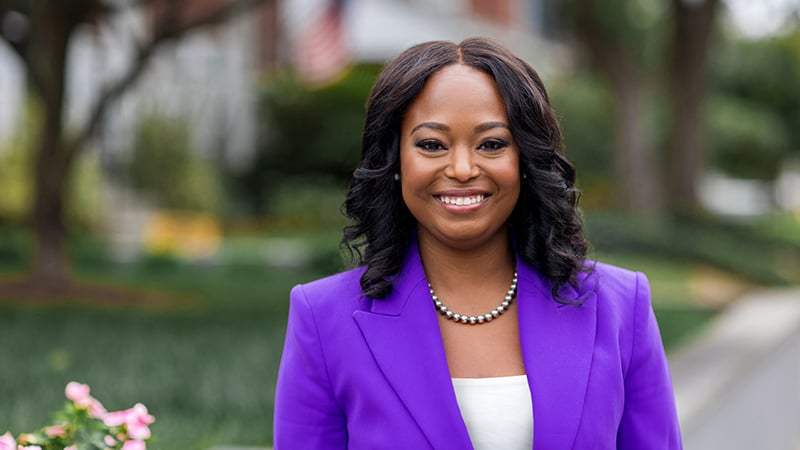
First, Janeese Lewis George won the mayor’s office in an unmistakable landslide. She captured over 82 percent of the vote across all eight wards. Because of this decisive win, D.C. now welcomes its first new mayor in twelve years.
Consequently, her team moved into action right away. Lewis George launched her official transition efforts immediately. At the same time, she opened a search for a new police chief. Her upcoming agenda will emphasize public safety, community services, and equitable housing.
Meanwhile, Robert White dominated the race for D.C. Delegate to Congress. He won over 87 percent of the ballots cast. However, his departure from the D.C. Council created an immediate ripple effect.
Following his exit, At-Large Councilmember Christina Henderson changed her affiliation to Democrat. Therefore, council dynamics shifted ahead of the vote to fill White’s open seat. In addition, Attorney General Brian Schwalb won re-election with over 92 percent of the vote, locking in four more years of continuity.
Sweeping Moves Across Virginia and Maryland
Beyond the District lines, voters delivered major mandates on state policy.
In Virginia, voters approved three separate constitutional amendments. First, they protected reproductive healthcare rights. Second, they codified marriage equality into the state constitution. Third, they established automatic voting rights restoration for citizens who completed felony sentences. Additionally, incumbent Senator Mark Warner defeated challenger Bert Mizusawa to retain his seat.
Similarly, Maryland voters chose continuity in their top office. Governor Wes Moore won his re-election campaign against Republican challenger Dan Cox. Consequently, Moore will continue to lead the state’s economic and workforce initiatives.
High-Stakes Courtrooms and Border Disputes
At the same time, regional courthouses faced intense drama.
In Prince William County, the murder trial of Naresh Bhatt reached a critical point. Bhatt took the stand to testify in his own defense on November 4. He faces charges of first-degree murder and concealment of a dead body connected to his wife, Mamta Kafle Bhatt.
Meanwhile, federal proceedings in downtown D.C. took an unexpected turn. U.S. Magistrate Judge Zia M. Faruqui dismissed a high-profile case against former FBI officials. Specifically, the judge threw out the charges because the government filings were insufficient.
Finally, regional leaders united against a federal construction project. Officials from D.C. and Virginia filed joint lawsuits to block a proposed federal arch monument. Ultimately, local leaders argue the project ignores community input and disrupts major travel corridors.
#DMVNews #DCElections #LocalGovernment