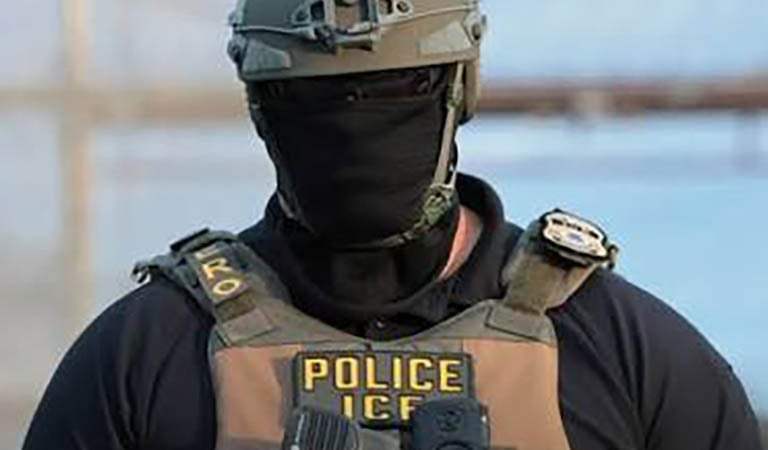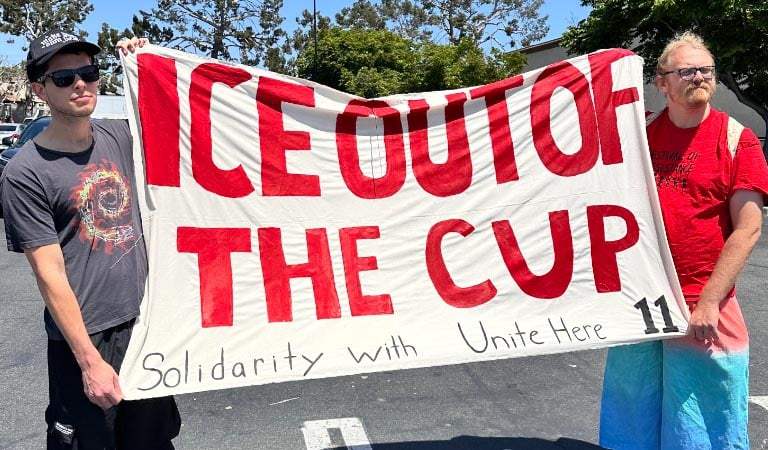

Los Angeles residents and labor advocates say fears around ICE activity during the World Cup could overshadow what is usually a joyful, community-wide celebration, especially for immigrant families who see soccer as a cultural gathering point.
ICE Presence in Los Angeles During the World Cup Sparks Fear Among Residents
As the World Cup comes to Los Angeles, some residents worry immigration enforcement will overshadow a celebration that has long meant everything to immigrant communities.
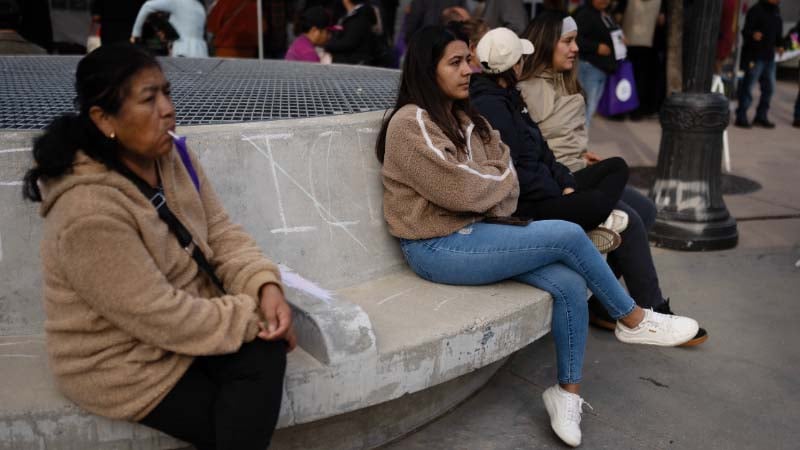
ICE presence in Los Angeles during the World Cup is casting a long shadow over what should be one of the city’s most joyful summers in years. Across neighborhoods from South Central to Inglewood, residents — particularly those from immigrant communities — say the fear of immigration raids is already changing how they plan to experience the tournament.
Since the Trump Administration took office, Immigration and Customs Enforcement has conducted raids across the greater Los Angeles area. Those actions have left many residents feeling unsafe, fueling concerns about racial profiling and overreach. Now, with the World Cup arriving at SoFi Stadium, that fear is reshaping what the event means for the people who live here.
Why Immigrant Communities Fear This World Cup Is Different
For many Angelenos, the World Cup has never just been a soccer tournament. It has been a cultural touchstone — block parties, jerseys, food, and family, all centered around the beautiful game.
Jacqueline Talavera, a Los Angeles resident and daughter of immigrants, remembers what the World Cup felt like growing up in South Central.
“The World Cup used to be a celebration in L.A., especially for the Hispanic/Latinx community,” she said. “It almost felt like a big block party when it would come around — no matter who you are, where you come from, or what team you cheered for.”
That sense of community, she said, has dimmed.
“It was always the norm in my family to invite folks to eat good food, wear a jersey that represents your hometown, and enjoy the game live as a community,” Talavera said. “The World Cup now coming to LA is not going to be the same — it is being used as a way to kidnap, bring fear, and abuse the hardworking people of this city with ICE agents’ presence and little to no protection for the people who have lived and loved this city.”
Talavera’s concerns echo what many residents and advocates are saying: soccer is one of the few sports where immigrant identity is front and center, and the threat of enforcement activity near venues and public celebrations puts that representation at risk.
What’s Happening on the Ground at SoFi Stadium
The World Cup kicks off in Inglewood on June 12, when the U.S. Men’s National Team faces Paraguay at SoFi Stadium. The city will host another match on June 25, with 39 days of continuous events surrounding the tournament.
Los Angeles is one of 11 U.S. cities hosting World Cup matches, alongside venues in Mexico and Canada. The scale of the event is enormous — and so are the economic expectations.
Mayor Gavin Newsom’s office projects the tournament will generate approximately $594 million in economic impact for Los Angeles and welcome around 180,000 visitors to the region.
But while city officials are focused on those numbers, many residents are focused on a different kind of impact.
Union Workers Push Back on Immigration Enforcement Near the Stadium
The concerns go beyond individual residents. Union Local 11, which represents more than 2,000 SoFi Stadium employees, has come out directly against immigration enforcement activity at or near the venue during the World Cup.
This week, the union is holding a two-day strike vote. Workers are calling for higher wages, limits on subcontractors, and restrictions on artificial intelligence replacing human jobs. But opposition to ICE activity near the stadium is part of that larger fight.
Co-president Kurt Petersen made clear what a strike could mean for the tournament’s opening day.
“If a strike is approved during the two-day vote, the 70,000 expected fans arriving for the June 12 World Cup opener between the U.S. and Paraguay will be greeted by hundreds of picketing workers,” Petersen said in a statement released Tuesday.
Members are set to vote on June 4 and 5.
What Federal Officials Are Saying
Federal officials have not backed away from enforcement plans. Markwayne Mullin, Secretary of the Department of Homeland Security, posted a video on the ICE official X account stating that agents will be active throughout the tournament.
“ICE and HSI will be out there every day,” Mullin said. “Fighting against counterfeit tickets, human trafficking, drug smuggling, counterfeit products. They’re going to be working hand-in-hand along with CBP along the way.”
The statement was framed around criminal enforcement. But for many residents, the line between targeted enforcement and broad community surveillance feels blurry — and that lack of trust is driving people away from public events.
“While ICE claims its main focus is enforcement of the law, community observers say they don’t trust that message,” Talavera said.
A Celebration at Risk
What Residents Say They’re Losing
The stakes here are not just about stadium attendance or economic projections. They are about who feels safe enough to celebrate in their own city.
Many residents have said they are already planning to stay away from the stadium and from public World Cup events — not because they don’t want to be there, but because they don’t feel protected if they go.
That shift matters. The World Cup in Los Angeles was supposed to be a moment of arrival for a city that has long been the heart of U.S. soccer culture. Instead, immigration enforcement concerns around the World Cup in Los Angeles are threatening to turn a historic event into a source of anxiety for the very communities that have made the sport meaningful here.
What Comes Next
Union members vote on June 4 and 5. The tournament opener is June 12. The next several days will likely determine whether the summer plays out as a citywide celebration or something far more complicated.
For residents like Jacqueline Talavera, the outcome matters deeply — not for the economic numbers, but for what it says about who this city chooses to protect.
“Soccer is one of those sports where representation really comes in for those immigrant families and communities around the world,” she said. “That used to mean something here.”
Ariyana Griffin is a reporter based in Los Angeles who graduated from the School of Global Journalism and Communication
The MSU Digital News Ecosystem Powered by MMCxchange Digital Platform Copyright © 2025 The MSU. All rights reserved.
#LosAngelesWorldCup #ImmigrationNews #WorldCup2026