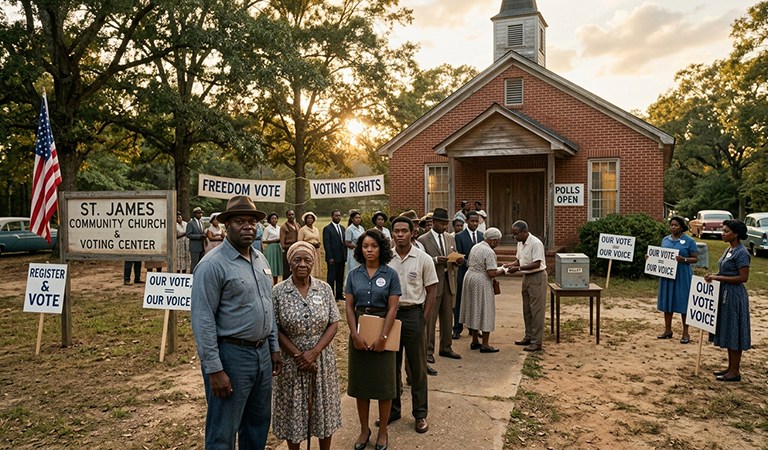


Every February, we honor Black History Month with speeches, proclamations, and celebrations. We reflect on the struggles of our ancestors and the progress we’ve made. But if we’re going to have an honest conversation about Black history in America, we need to talk about more than just the past—we need to talk about power.
Too often, Black leadership in this country is expected to be symbolic, not substantive. We are celebrated when we fit into pre-approved roles, welcomed as long as we don’t disrupt the status quo. But the moment we challenge systems that fail our communities, we become a problem. The reality is that Black voices are often embraced for optics, but not for influence—a dynamic that has persisted across political, corporate, and social spaces for generations.
And let’s be honest—this system is upheld not just by those in power but also by some Black leaders who willingly play along. There are those who prioritize staying in good graces over fighting for the people who elected or entrusted them. They accept positions with no real influence rather than demanding a seat at the table where decisions are made. They allow themselves to be used as proof of diversity while doing little to challenge policies that keep our communities struggling. This isn’t leadership—it’s compliance. And it only reinforces the very structures that have long kept us on the margins.
Black communities are the backbone of this country’s electoral power, economic strength, and cultural influence. Our votes deliver victories, our labor drives industries, and our innovation shapes global culture. Yet when it comes to decision-making, appointments, and major policy choices, we are too often present but not empowered. That is not equity, that is control.
If we truly want to honor Black history, we need more than just words—we need action. We need leaders who are unafraid to speak truth to power, even when it’s inconvenient. We need a political and economic landscape where Black officials, executives, and decision-makers are valued for their leadership, not just their loyalty. And we need institutions that respect Black voices not just during election season or Black History Month, but every single day.
This Black History Month, I urge us all—elected officials, business leaders, community organizers, and voters—to reflect on whether we are pushing for meaningful progress or merely preserving the status quo. Black leadership should not be conditional, nor should our voices only be valued when they align with the agendas of those already in power. True inclusion means empowering Black leaders to make real decisions, not just serve as placeholders. If we continue accepting a system where influence is only granted in exchange for obedience, then we haven’t moved forward at all—we’ve just found a new way to stand still.
Councilwoman Shalonda Webb
St. Louis County, District 4
Keywords: Black history, Power dynamics, Cultural significance, Societal impact, Historical celebration
#BlackHistory #CulturalPower #SocietalImpact