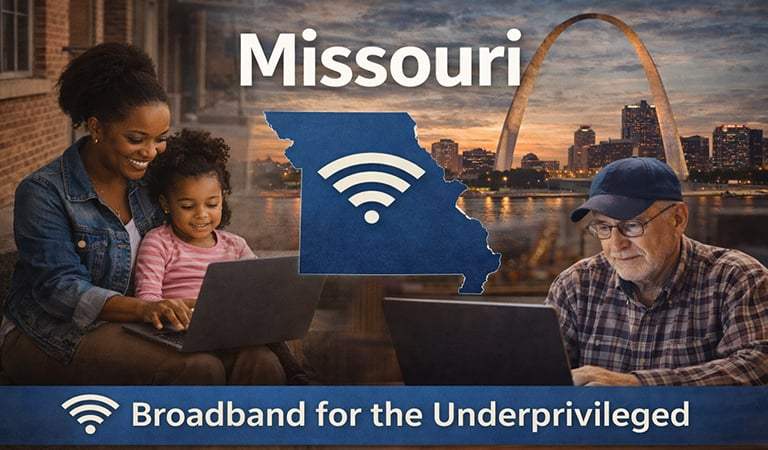


But while 93% of people in wealthy countries have internet access, the figure drops to 27% in poor countries. This lack of connection affects personal development, economic growth, and social inclusion worldwide.
Everyday tasks such as paying, making medical appointments, making bank transfers, conducting paperwork, or communicating require a smart device and an internet connection. Although this seems obvious, data shows that there are still inequalities in access to technology. It is important to pay attention to people with limited resources, the elderly, or people with disabilities, who may be excluded.

Worrying technological inequality
In a post-pandemic world, the World Economic Forum’s 2021 Global Risks report had already highlighted technological inequality. This means that many people lack access to the resources and skills necessary to navigate the digital environment.

Furthermore, the Digital Skills Gaps: A Closer Look at the Digital Skills Index (DSI 2.0) study indicates that 36% of European adults still lack basic digital skills and 8% rarely or never use the internet.
Age and the digital divide
The decline in birth rates and the increase in life expectancy, according to United Nations forecasts , will reach 80 years or more by 2050. This means that the world’s population will become increasingly older.
Do you like what you read? Want more?
Subscribe to the newsletter
In this context, older adults’ difficulties with technology are a factor that must be taken into account to prevent their digital exclusion.
In Spain, according to 2024 data from the INE (National Institute of Statistics and Census), less than half of people over 75 use the internet . They do so primarily for instant messaging services, while the percentage decreases for issues related to making a medical appointment or accessing health records.
Digital ageism and stereotypes
While it’s true that the pandemic accelerated the penetration of smart devices and internet use among older adults, the emergence of generative Artificial Intelligence and the rapid development of technology require constant updating.
In fact, many of these older adults experience “digital ageism,” a form of discrimination based on age-related stereotypes that limits their active participation in digital life . This is compounded by the failure of digital platforms to adapt to the specific needs of this population and the lack of adequate training.
Disability and digital divide
The United Nations Convention on the Rights of Persons with Disabilities states that persons with disabilities include those who “have long-term physical, mental, intellectual, or sensory impairments which, when combined with various barriers, may impede their full and effective participation in society on an equal basis with others.”
In the digital sphere, Eurostat data for 2024 show that people with disabilities use the internet less regularly, and that this use varies depending on the severity of their disability and their age. They face significant barriers in terms of accessibility to online content and services, which can negatively impact their employment, social, and leisure opportunities.
To address this obstacle, there are numerous initiatives from institutional, academic, and business spheres aimed at promoting effective digital inclusion by providing specific training resources and technological adaptations.
This is the case of Accessverse, funded by the International University of La Rioja, as part of the initiatives of the International Observatory “Brandignverse .” Its purpose is to analyze the current ecosystem that defines the metaverse and, thereby, define accessibility possibilities and how to eventually correct or increase them to reduce the digital divide caused by various physical and intellectual disabilities.
Likewise, the network of Digital Divide Chairs at Valencian public universities aims to analyze the problem from different perspectives. Within this framework, a recent study by the Polytechnic University of Valencia addresses accessibility on metaverse platforms for people with disabilities .
Four groups are important for bridging the digital divide: the government, social organizations, the educational system, and the family. We must get used to learning and adapting to technological changes, as they affect many areas of life.
#DigitalDivide #InternetAccess #TechForAll