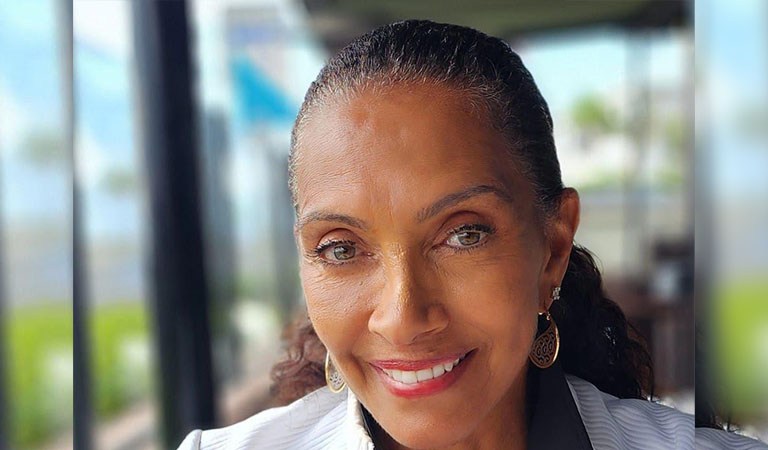


Ananda Lewis has died at 52, and it’s hard to explain what she represented unless you were there—especially if you were an alternative Black girl growing up in the ’90s. She meant the world to those of us who didn’t fit a mold. She showed up on our screens at a time when television recycled stereotypes and erased the full spectrum of what it meant to be young, gifted, and Black in America.
Lewis wasn’t performing for approval. She wasn’t trying to be shocking. She didn’t need to dress wild, say outrageous things, or chase attention. She was smart. She was gorgeous. And that was enough. That alone made her different. Born in Los Angeles in 1973 and raised by a single mother alongside her sister, Ananda exuded creativity, strength, and self-determination. She studied at Howard University, graduating with a degree in history, and later trained in broadcast journalism.
Before MTV, Lewis first caught national attention on BET’s Teen Summit, where she served as a host and steady voice in the middle of chaotic conversations about race, identity, self-worth, and survival. While most networks avoided those topics, Lewis brought them into focus with ease. She helped rewrite what youth programming could be. That show mattered, and she was a big reason why.
At MTV—a network with a long history of centering whiteness and sidelining Black artists—Ananda’s presence felt like a shift. Slowly but clearly, the culture started turning in real time. By the time 1999 hit, she had already helped reshape what MTV looked like and who it claimed to speak for.
At the height of MTV’s reach, Ananda Lewis was interviewing everyone who defined th era and Lewis maintained the same integrity and focus that defined her earlier work. She entered a media space that rarely prioritized substance and proved it could be done without compromise. Her interviews covered everything from Biggie’s legacy to Wyclef Jean’s political ambitions. She challenged artists on industry contradictions and engaged Lauryn Hill in conversations that felt intentional, not manufactured. She wasn’t chasing moments. She was creating space for real dialogue on a national platform.
For me, as an aspiring journalist who was published in my teens, Ananda was my hero. I studied the way she asked questions. Her tone. Her demeanor. She didn’t talk like she was trying to be on TV—she talked like someone who knew exactly who she was. That made her credible.
Lewis was the reason I showed up in New York for the first time with my signature blue lipstick and club kid clothing to audition for Wanna Be a VJ. I didn’t win, but I ended up in the first issue of Teen People magazine. I was there because I had seen what was possible.
Ananda spoke to girls like me—Black, different, expressive, and not easily labeled. She didn’t need to explain herself, and she didn’t filter her identity to fit a corporate narrative. She just showed up fully. That example shaped how I saw myself. It was the first time I felt like someone on TV had a mind like mine. She knew culture. She knew history. She had heart and range and represented a section of society for those like me.
Even after she left MTV, she kept her purpose intact. She hosted The Ananda Lewis Show, worked in mainstream media, and later became an advocate for health and wellness, particularly around breast cancer. She kept speaking out even after her own diagnosis. She made sure her voice remained useful.
She mattered to us. Especially to girls who didn’t see themselves but dared to imagine it anyway.
Ananda Lewis was the reference point. The reason I wanted to communicate with the world and immerse myself in reporting on culture. She didn’t explain her presence—she owned it. And because of that, I learned how to do the same.
To the girls who never saw themselves until they saw her—we’re still watching.
Rest well, Ananda. The Blueprint, The Earth Angel. Fly High.
#AnandaLewis #GenerationY2K #MTVMemories