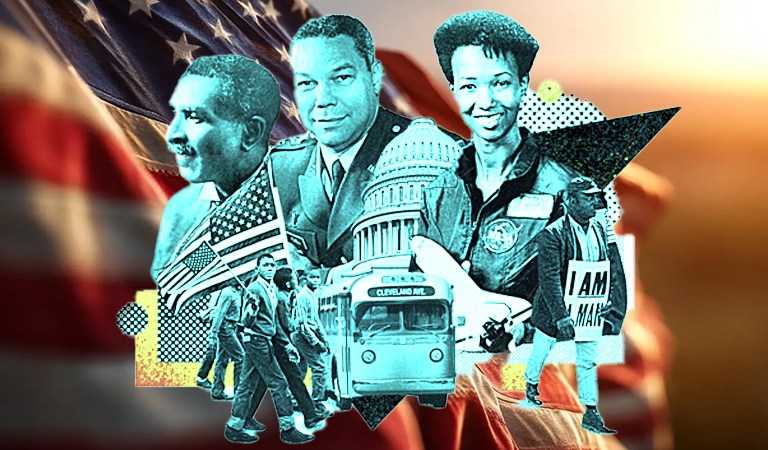

The Takeaway: As America approaches its semiquincentennial, historians are challenging the sanitized versions of the country’s founding. By exposing the direct links between systemic early laws, national symbols like the anthem, and Supreme Court rulings, scholars aim to dismantle “the propaganda of history” and build a foundation for genuine, truth-based national unity.

Articulated Insight – News, Race and Culture in the Information Age

It is incredibly uncomfortable to question the stories we’ve been told since childhood. From early elementary school, Americans are taught a clean, inspiring narrative of our nation’s founding—one filled with brave patriots, unyielding liberty, and the pursuit of happiness.
But as America approaches its 250th anniversary, a difficult question looms over our collective consciousness: Can we handle the truth about our own historical record?
The reality is that America at age 250 is eerily similar to America at age 1. We pretended to be something we weren’t then, and in many ways, we are still pretending today. To move forward together, we have to look past the myths and look directly at the math, the laws, and the historical connections we were never taught in school.
The Founding Math: Liberty for Some
To understand the present, we have to stop romanticizing the past. The foundational era of the United States was built on a dual reality: the language of universal freedom paired with the law of human subjugation.
- 8 of the original 13 states had laws actively protecting chattel slavery.
- All 13 states had legal frameworks rooted in racial hierarchy—valuing and devaluing humans based on the mythological construct of race—and white male supremacy.
- 41 of the 56 signers of the Declaration of Independence were slaveholders.
Even Thomas Jefferson, who penned the words “all men are created equal,” explicitly detailed his belief in racial hierarchy in his Notes on the State of Virginia. These weren’t just private thoughts; they were foundational ideologies that echoed through generations of American law.
The Hidden Thread: From the Anthem to the Supreme Court
We are taught to compartmentalize our history. We learn about Francis Scott Key in music class and Roger Taney in social studies. What we aren’t taught is that these two men were brothers-in-law, best friends, and ideological partners.
To trace how systemic exclusion was woven into our national identity, we have to look at how these historical moments connect over time.
The 1790 Naturalization Act
1790
Congress passes its first rules for citizenship, explicitly declaring that only “free white persons” of good character can become American citizens.
The National Anthem is Penned
1814
Francis Scott Key, a staunch defender of racial hierarchy, writes the poem that would become the national anthem. The rarely-sung third stanza contains a direct threat of death toward Black people who fought for their own freedom.
The Dred Scott Decision
1857
Supreme Court Chief Justice Roger Taney (Key’s brother-in-law) rules that Black people are not citizens and have “no rights which the white man was bound to respect.” To justify this, Taney directly cites the 1790 Naturalization Act and colonial-era laws.
The Anthem is Codified
1931
An all-white, all-male Congress officially codifies Key’s poem as the national anthem—at the absolute height of the Jim Crow era and rampant racial violence.
Why Don’t We Know This? “The Propaganda of History”
If these facts are matters of public record, why do they feel so paradigm-shifting when we first hear them?
In 1935, the legendary sociologist and historian W.E.B. Du Bois published a groundbreaking book, Black Reconstruction in America. In its final chapter, titled “The Propaganda of History,” Du Bois warned that our education systems, churches, and media would systematically omit, distort, and replace difficult historical truths with comforting national mythology.
The result? Parents, teachers, preachers, and journalists cannot teach what they themselves were never taught. The propaganda becomes the default setting.
Choosing Truth Over Comfort
The truth cannot be destroyed. It can be ignored, locked out of classrooms, and drowned out by the noise of modern political chaos—but it will always follow us, whispering through the noise of every generation.
Unmasking this history isn’t about dividing us; it’s about building a foundation of actual common ground. True unity cannot be built on shared myths. It can only be built on shared truth.
This article is adapted from the Common Ground Conversations (CGC) Journal, a monthly publication dedicated to providing paradigm-shifting, deeply researched historical context to help Americans see past the veil of propaganda.
#AmericaAt250 #UnmaskingHistory #CommonGround