
A proposal to close up to 22 St. Louis Public Schools (SLPS) buildings risks triggering an irreversible mass enrollment exodus to charter schools, severe localized economic declines, and community instability without delivering its promised financial savings. This deep-dive analysis demonstrates why sweeping school closures act as community killers rather than sustainable budget solutions.
The Real Cost of Right-Sizing: What SLPS School Closures Mean for Neighborhoods
On Saturday, June 13, 2026, hundreds of alumni gathered for the 15th Annual Beaumont High School All Class Reunion Picnic. It was a celebration of a century of history, drawing generations of graduates from 1967 down to the final class of 2014. The air was thick with pride, laughter, and decades of shared memories.
But beneath the celebration was a sobering ghost. Beaumont High School is closed.
For those who grew up in these neighborhoods, the story is entirely too familiar. Public education is supposed to be a community anchor. Yet, in St. Louis and cities across America, these anchors are being cut loose—particularly in low-income neighborhoods.
The latest proposal to close 15 to 22 St. Louis Public Schools (SLPS) in a single year isn’t a strategic “right-sizing” budget correction. It is a sweeping, rushed decision that threatens to trigger a mass exodus, devastate local economies, and ultimately push the district toward complete collapse.
The Phantom Savings of School Closures
The driving narrative from “influencers” and district leadership positions school closures as a painful but financially necessary step to balance the budget and manage a shortage of certified staff. They call it “right-sizing.”
But history tells a completely different story.
When a school building closes, the neighborhood doesn’t inherit a clean slate or a modern development. Instead, a familiar cycle takes over:
- Immediate Property Depreciation: Teams of professional vultures strip the vacant buildings of copper and valuable materials.
- Vandalism and Safety Hazards: Unprotected structures face vandalism and break-ins, occasionally becoming fire hazards that put neighboring homes at risk.
- Economic Collateral Damage: When a school disappears, the foot traffic that sustains small local businesses vanishes with it, forcing neighborhood corner stores and services to shutter.
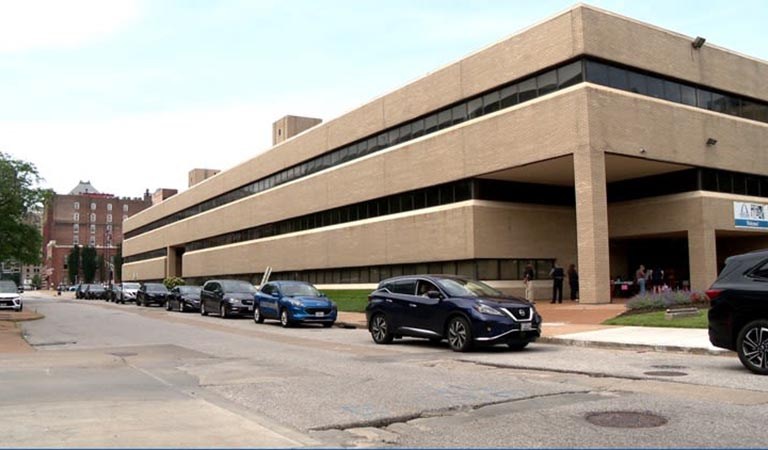
We are told these closures will result in wads of cash and fully staffed, resource-rich mega-schools. But looking at past closures like Farragut Elementary, Williams Middle, Marshall, Simmons, Harrison, and Turner, those promised windfalls never materialized. The financial savings are largely a myth, swallowed up by the cost of maintaining—or abandoning—massive, vacant brick hulls.
The Impending Mass Exodus: Feeding the Charter Machine
Proponents of the cuts argue that it makes no sense to keep buildings open for 100 to 200 students. What they fail to realize is that those 100 to 200 families are actively choosing SLPS right now.
If you strip away their neighborhood school, you break that trust. You do not force them into a different SLPS building miles away; you force them to look outside the district entirely.
1. The Charter School Marketing Blitz
St. Louis already has over 30 charter schools. Many of them face their own low enrollment numbers in the low hundreds. However, instead of closing doors, they pivot. They are actively marketing themselves on social media and billboards, bragging about “small class sizes” and “individualized learning opportunities.” They are waiting on the sidelines, ready to absorb displaced SLPS families with promises that often fall flat only after it is too late to turn back.
2. County Migration
Families who have the means won’t just change schools—they will leave the city altogether. A sweeping closure policy acts as a direct incentive for working-class families to migrate to St. Louis County or across the river, further eroding the city’s tax base and child population.
3. Severe Job Loss
A mass closure doesn’t just impact children; it cuts the legs out from under hundreds of certified and support staff members who keep these buildings running, damaging the local economy from the inside out.
A Rushed Timeline in the Dark of Summer
One of the most dangerous aspects of this proposal is its timing. Pushing a final decision through by the end of August means the entire debate is happening during the summer months—a period when parents, teachers, and community stakeholders are least able to organize and participate effectively.
An organizational change of this magnitude requires radical, revolutionary collaboration, not a rushed vote while classrooms are empty.
If you want to kill a community, close the schools. And because of the cascading enrollment losses this will cause, we will find ourselves having this exact same heartbreaking conversation again in five to ten years to close even more.
The Alternative: A Phased Consolidation Pilot
No one disputes that SLPS faces complex, gargantuan structural challenges, including a strained pipeline of high-quality certified staff. But a nuclear option is not the answer.
Instead of a reckless, single-year sweep, the district should pivot to a slow, multi-year consolidation pilot defined by intense community engagement:
- Targeted Pilot Programs: Test consolidation slowly over several years in specific zones rather than implementing an all-at-once shutdown.
- True Community Engagement: Hold authentic town halls with the specific families directly impacted by potential moves, rather than general audiences who won’t feel the sting of a closed neighborhood anchor.
- Aggressive Retention Marketing: Instead of playing defense, SLPS must match the marketing energy of local charters, actively selling the benefits of staying within the traditional public school framework.
We need to keep working through this crisis rather than racing toward a final decision this August. It’s time to pause, look at the ghosts of our already closed schools, and choose a path that rebuilds St. Louis instead of dismantling it.
#SaveSLPS #RebuildSLPS #RestoreSLPS
#SaveSLPS #RebuildSLPS,#RestoreSLPS