

As data center proposals grow across Missouri and the U.S., communities face critical decisions impacting their economy, environment, and way of life. Explore the implications and how residents are responding.
Max Quinn, Sophie Rentschler and Sterling Sewell, Missouri Business Alert
As communities in Missouri and across the United States wrangle with multibillion-dollar data center proposals, they’re forced to make quick decisions that can affect their economy, natural resources and way of life for generations.
How can communities with no prior experience navigate these mega-sized industrial facilities driven by the rapid buildout of cloud computing and artificial intelligence?
Experts say it comes down knowing what to ask for when a development comes knocking. Data centers tout jobs and benefits for their neighbors, but communities need clear goals and transparent guarantees.
Data centers can provide benefits if done right, said Lauren Withycombe Keeler, a researcher at Arizona State University.
“It doesn’t have to just be, ‘yes’ to hosting a data center, or ‘no,’” Keeler said. “‘No’ is certainly an option, but negotiations with data center operators also present an opportunity to distribute some of the wealth of the AI economy, and well-developed community benefits agreements that have monitoring and have teeth can make housing a data center worthwhile.”
We’ve collected expert advice to help residents and elected officials handle the spread of data centers. We interviewed more than 50 experts from the data center industry, local and state elected officials, national policy experts, researchers, residents and others with data center experience to compile this toolkit.
This is only a menu of options — each community is different, and what works for one will not work for all. Communities should decide if these recommendations fit their situation.
Planning
The best time to plan for a data center is before it arrives. Community members and leaders should be engaged in a planning process to determine what kind of development they want. The NAACP’s Stop Dirty Data report recommends calling for moratoriums when needed to develop sufficient regulations and oversight.
- Big needs: Cities often begin planning by considering needs. In Festus, roads, water and stormwater infrastructure were immediate priorities, former interim city manager Michael Christopher said. In Columbia, where the city provides electricity, officials must consider potential strain on the power grid, sustainability manager Eric Hempel said.
- Don’t reinvent the wheel: Look to other cities, counties and states for model regulations, experts advised. For example, when defining data centers for planning and zoning purposes, Columbia considered definitions from hotspots like Loudoun County, Virginia, and nearby communities like Kansas City, Missouri.
- Regulations: Columbia city planner Pat Zenner recommended a “conditional use process” for data centers, which requires more documentation, upfront data and public hearings than other processes. Establishing data centers as a dedicated land use can also discourage data centers from building on farmland.
Community Benefit Agreements
Experts recommend using these legally binding contracts between communities and data centers to create clear, measurable and accountable goals. This ensures communities reap the benefits of the new development while mitigating risks.
- Basic components: According to a Brookings Institution report, communities need to know the cost of data centers, who pays for what, local benefits and risks, and long-term plans as the AI industry grows.
- Take inspiration: Localities with strong data center agreements named in the Brookings Institution report include Cedar Rapids, Iowa; Des Moines, Iowa; El Paso, Texas; and Huntsville, Alabama.
- Flexible options: Agreements can have many requirements depending on the area’s needs. For example, Lancaster, Pennsylvania, negotiated an agreement requiring data center campuses to use 100% renewable energy, comply with noise standards, cap daily water use at 20,000 gallons and pay a $10 million donation to the city’s sustainability and economic development funds.
- Other ideas: Community benefit agreements can include “infrastructure improvements, construction and operating jobs, electric rates, water usage, noise levels, light pollution, workforce training, health and well-being services, digital access for the underserved, and public dashboards with key metrics,” according to the Brookings report.
Tax Incentives, Jobs and Financial Benefits
Data centers can present an opportunity for job creation and taxable revenue. But many experts recommend that states and localities carefully manage tax incentives or exemptions for data center developers.
- Incentives: AI Now’s North Star Data Center Toolkit recommends that communities repeal current tax incentive programs and avoid creating new ones. It argues that these limit the amount of tax revenue that could benefit things like public schools and city infrastructure.
- Job creation: Some in the construction industry, including some labor unions, have supported data center development as a meaningful short-term job creator. But AI Now’s toolkit warns that data centers need relatively few people to operate and do not create a meaningful number of long-term jobs.
Financial benefits: A study from PricewaterhouseCoopers outlines some of the economic benefits of data centers, including the creation of $914 million in tax revenue for state and local governments in Missouri in 2023.
Energy
It’s estimated that data centers will use 8% of U.S. power by 2030, up from 3% in 2022. These technology hubs largely use fossil fuels to generate electricity. Though data centers are resource-hungry, energy researchers from the Deep Tech Initiative at Duke University’s Sanford School of Public Policy said data centers can be a force toward a global shift to renewable energy use.
- Polluting diesel generators: Ian Hitchcock, a research associate focused on sustainability at Duke, said data center developers should strive for on-site battery storage instead of using diesel generators for backup power. Diesel generators release fine particles, carbon monoxide and other pollutants, according to a report by the Better Data Center Project.
- Energy protections: AI Now’s Toolkit recommends prohibiting data centers from producing their own energy off the grid. The group recommends that states regulate purchase agreements between data centers and utility companies, increase renewable energy infrastructure, require large users to pay the upfront cost to join the grid, and cap energy use from individual large users.
Water
Data centers are rampant consumers of water. According to the Environmental and Energy Study Institute, hyperscale data centers can use up to 5 million gallons of water per day, equivalent to a town of 10,000 to 50,000 people. Duke University’s Hitchcock said data centers located in water-stressed areas have the potential to exacerbate water shortages.
- Location: Hitchcock said the first and most important decision regarding data center sustainability is where a developer chooses to site it in the first place. He said developers should consider location-specific factors like renewable energy potential and water availability during the siting process.
- Direct vs. indirect water usage: Data centers drink up water directly to cool the air in the building, keeping the servers cool. Shaolei Ren, associate professor of electrical and computer engineering at the University of California, Riverside, said direct water usage is the most important water-related metric for local communities to monitor because it often uses drinking water. Data centers also use water indirectly in the process of generating electricity.
- Tradeoffs: The way that a data center is cooled could present a tradeoff between electricity and water use. Data centers equipped with evaporative cooling are water-intensive, and those that use air cooling are electricity-intensive, according to a MOST Policy Initiative fact sheet.
- Water protections: AI Now’s Toolkit recommends requiring data centers to conduct water-quality testing, prepare conservation plans and implement strong enforcement mechanisms for violations. The developments should report projected water usage and sources for continued oversight, and they should pay for all upfront costs for water infrastructure.
Transparency
Many residents who oppose data centers cite a lack of transparency as a main reason for their opposition. For local and state governments to plan for future data center development, it is important to provide as much information as possible about what the development would entail.
- No nondisclosure agreements: AI Now’s toolkit and other experts advise local government officials not to sign NDAs and to ban the use of NDAs during data center development within their jurisdiction.
- Transparency during approval: AI Now’s toolkit recommends requiring data centers to provide the following information before it can be considered for approval:
- Water and energy usage
- Noise study
- Estimated on-site emissions
- The value of any tax exemptions the developer may be receiving for the project
- A list of the names of all companies involved in a data center project, including developers, shell companies, operators and financers
- Jobs (short-term and permanent, hiring efforts, permanent employee wages); and
- A broader environmental impact study
- Community hearings and public meetings: AI Now’s toolkit also recommends instituting a minimum number of public meetings, which should be well-advertised and held at a time when the majority of working people are available.
- Public dashboards: The Brookings Institution recommends data center companies create a public information dashboard, including water and power use, along with job creation and tax revenue.
- Make information public: State and local officials have the power to require public reports. For example, Missouri requires major water users who use over 100,000 gallons of water daily, such as data centers, to file an annual report of their average daily water use and state where the water is coming from. Local municipalities are required to keep monthly records of the amount of energy bought by the city to meet demand.
Civic Engagement
Residents faced with data center proposals have taken action on their own, including demanding information, rallying for more protections and even voting out elected officials. Here are some actions residents have taken to address developments close to home.
- Vote: Voters in Festus and Independence, Missouri, ousted incumbent local officials who supported data center proposals, replacing them with candidates who ran on pro-transparency and anti-data center platforms.
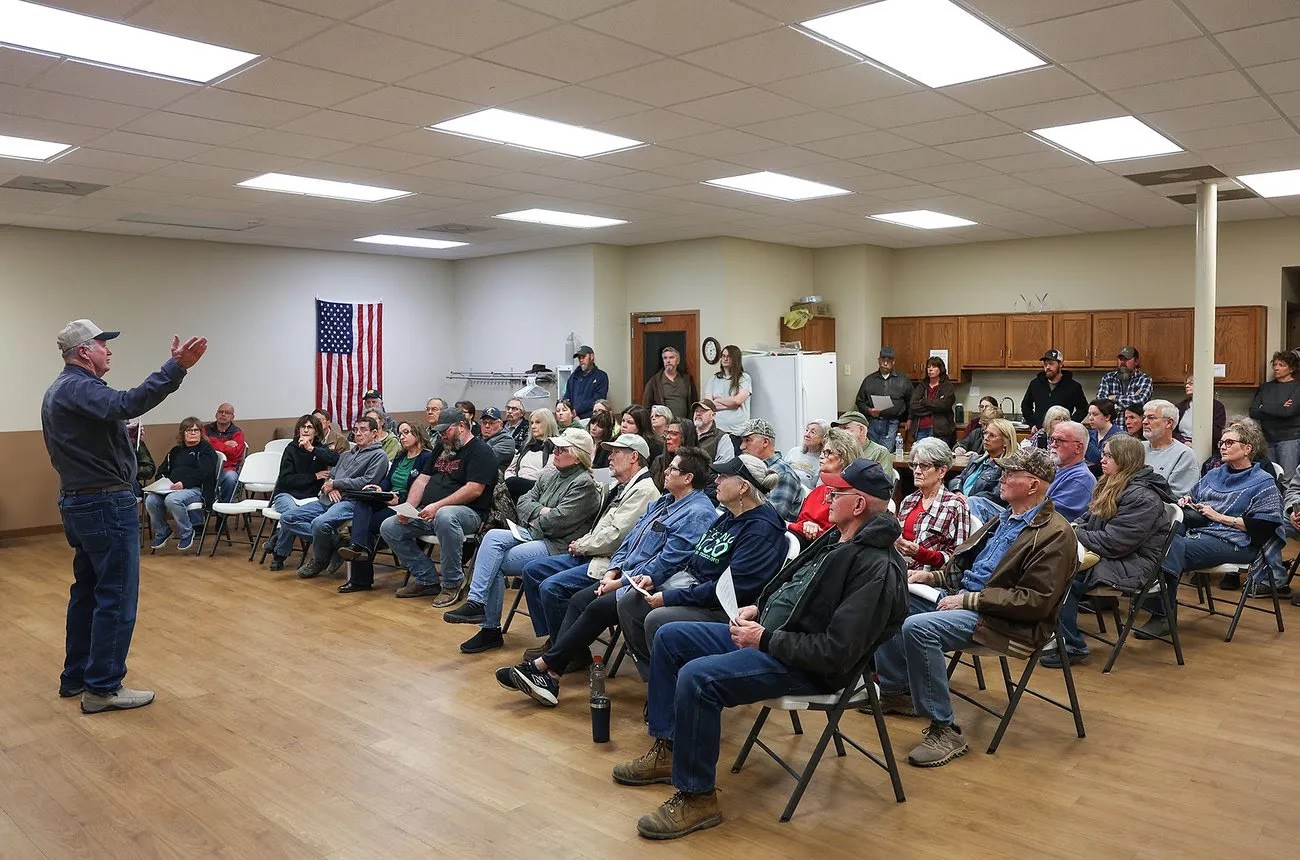
- Attend public meetings: Dozens of regular public meetings around the country have seen increased attendance over data center development. Public meetings can be a useful outlet for residents to voice their concerns to elected representatives.
- Address equity: To protect vulnerable communities, the NAACP’s Frontline Framework principles demand public health protections, independent monitoring, healthcare access and harm prevention. “Those directly impacted by pollution, displacement, or job loss from data centers must be the primary voices at the table,” read the principles, which aim to guide communities facing data centers.
- File public records requests: Residents in Warren and Montgomery counties filed public records requests with city, county and state agencies to learn more about potential data centers, even when they had yet to be announced. Group leaders shared their findings on Facebook groups, such as Preserve Montgomery County.
- Play to people’s strengths. In Festus, residents divided up tasks such as communication, event planning, public speaking, legal research and outreach. Playing to individual strengths helps people feel more purposeful.
- Support each other. Änna Farrar helped organize a group, Warren County Citizens for Responsible Development, over a data center in Warrenton, Missouri. “A huge aspect of gathering everybody in this space was just all of us looking at each other, saying, ‘We need buy-in,’” she said. “We want to make sure that this benefits everybody in the community, not just these tech billionaires.”
Resources:
For information on community benefit agreements: https://www.brookings.edu/articles/why-community-benefit-agreements-are-necessary-for-data-centers/
For information on protecting communities:
https://naacp.org/campaigns/stop-dirty-data-centers
For planning:
https://www.sciline.org/energy/data-center-construction/#video-transcript
For information on comprehensive steps for local and state government:
For more on how data centers affect communities:
https://www.wri.org/insights/us-data-center-growth-impacts
Jacob Tukker, Abby Cornell and Finn Belleau contributed to this story.
This story is a product of the Mississippi River Basin Ag & Water Desk, an independent reporting network based at the University of Missouri in partnership with Report for America, with major funding from the Walton Family Foundation.
#DataCenters #Missouri #CommunityImpact #EconomicGrowth #EnvironmentalProtection #TechExpansion #LocalGovernments #UrbanDevelopment #SustainableGrowth #FuturePlanning