
St. Louis legislative update is the strongest focus keyphrase for this story because it naturally covers the article’s central themes: the Missouri state budget, the $190 million K-12 school funding shortfall, $17.7 million in unclaimed property, grant opportunities, constitutional amendments, and the St. Louis police board funding fight. For Google News and search, the article should lead with that phrase in the opening paragraph, use close synonyms in subheads, and reinforce related search terms like Missouri state budget 2027, St. Louis school funding, and Missouri unclaimed property throughout the piece.
What You Need to Know from the 77th District
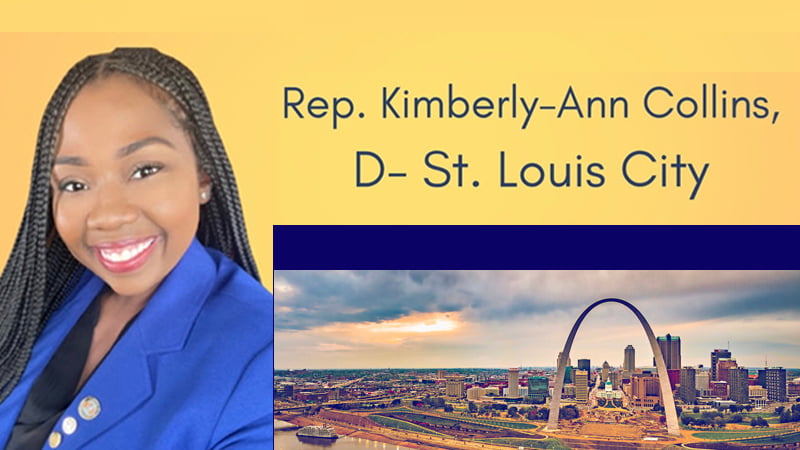
The 2026 Missouri legislative session has wrapped up, and the work done in Jefferson City will have real consequences for St. Louis families, schools, and neighborhoods. Rep. Kimberly-Ann Collins of the 77th District is bringing that work directly to the community — with a clear breakdown of what was won, what was lost, and what comes next.
This article covers everything in the latest 77th District update: the $55.41 billion Missouri state budget for FY 2027, community grant opportunities, millions in unclaimed property waiting to be claimed, upcoming constitutional amendments, and key local legislative news. Whether you live, work, or raise a family in St. Louis, this update directly affects you.
Missouri State Budget 2027: What House Democrats Protected
The Missouri General Assembly passed a $55.41 billion state budget for fiscal year 2027. House Democrats came into the process with a list of 10 priorities they wanted to shield from cuts. They successfully protected eight of those ten priorities — a significant outcome in a divided political environment.
Here is a breakdown of the key wins:
Self-Directed Services and Day Habilitation Programs
Cuts to Self-Directed Services and Day Habilitation provider rates were restored. These programs allow Missouri’s most vulnerable residents — including people with disabilities — to remain at home with their families rather than being placed in institutional care. Protecting this funding keeps those individuals where they belong.
Child Care Subsidies
The budget restored $51 million in Child Care Subsidies that had been proposed for elimination. Lawmakers also struck language that would have prevented payments from being made in advance and upon enrollment — a commitment Governor Kehoe had made in the prior year that the caucus held him to.
Higher Education Funding
House Democrats successfully fought to restore funding for both two-year and four-year universities across Missouri. Colleges and community colleges in the St. Louis region and statewide will maintain their state support.
Family Resource Centers and Naloxone Funding
Rep. Kimberly-Ann Collins, D-St. Louis, led the fight to restore a $25 million cut to Family Resource Centers. She also secured $5 million in additional Naloxone funding to support statewide NARCAN distribution — a critical resource for Missouri first responders dealing with the ongoing opioid crisis.
Domestic Violence Shelters and Workforce Apprenticeships
Rep. Raychel Proudie of Ferguson amended and retained $1 million for domestic violence shelters and $400,000 for workforce apprenticeships — investments that support safety and economic opportunity for St. Louis area residents.
Public Transportation
Rep. Melissa Douglas of Kansas City fought to restore a $5 million cut to public transportation. The final conference agreement landed on a $2.5 million compromise — a partial win that preserves essential transit services.
The Biggest Budget Loss: K-12 Public School Funding
Despite sustained efforts from House Democrats, K-12 public school funding was not fully restored.
The final budget follows Governor Mike Kehoe’s recommendation, which freezes public school funding at the FY 2026 level. As a result, local school districts across Missouri will receive $190 million less than what state law requires for FY 2027.
This shortfall has direct consequences for St. Louis schools — fewer resources, stretched staff, and reduced services for students who need support the most. It remains one of the most significant unresolved issues heading into the next legislative cycle.
Town Hall: Bringing the Budget Home to St. Louis
Rep. Collins is hosting a high-level, neighborhood-based town hall this month to explain exactly how the state budget affects St. Louis communities, schools, public services, and local priorities.
The goal is straightforward: St. Louis residents deserve to know where their tax dollars are going, what was invested, and what these decisions mean for the future. Details on the town hall location and time are available through the Office of the 77th District.
Unclaimed Property in Missouri: $17.7 Million Belongs to 77th District Residents
Here is something many St. Louis residents may not know: the state of Missouri may be holding money that belongs to you.
Each year, the Missouri State Treasurer’s Office receives unclaimed funds from financial institutions, businesses, government agencies, and other organizations. Those funds are held until the rightful owners claim them — at no cost.
Key Facts About Missouri Unclaimed Property
- The state currently holds more than $1.5 billion in unclaimed assets statewide
- The 77th District alone has approximately $17.7 million belonging to roughly 109,068 owners
- An estimated 1 in 10 Missourians has unclaimed property
- The average claim totals about $300
- The Treasurer’s Office never charges a fee to return unclaimed property
Searching is free and takes only a few minutes. Visit the Missouri State Treasurer’s Unclaimed Property database to see if your name appears.
Grant Opportunities for St. Louis Nonprofits and Organizations
Several funding opportunities are currently open for St. Louis-area nonprofits, schools, and community organizations. Below is a summary of each, including deadlines.
Gateway Children’s Charity Grant — Due July 31, 2026
Gateway Children’s Charity supports early childhood programs in underserved St. Louis communities. Two grants are available:
- Expansion Grant: Up to $100,000 for capital expenses that help high-quality programs serve more children. Examples include classroom construction and new equipment.
- Capacity Building Grant: Up to $50,000 for one-year quality improvement projects, such as implementing research-based curriculum or funding professional development for teachers and administrators.
Greater St. Louis Book Fair Literacy Grant — Due June 30, 2026
The Greater St. Louis Book Fair awards annual grants to programs focused on education and literacy for underserved populations.
Funding priorities include:
- Programs that encourage educational achievement in areas of documented need
- Literacy initiatives targeting low- to moderate-income individuals and families
- Support for nonprofits working to strengthen literacy capacity in the St. Louis area
America 250 Missouri Mini-Grant — Applications Open Now
ServMO, in partnership with 9/11 Day, Show-Me America 250, and MU Extension, is offering mini-grants of up to $3,000 for community-driven service projects in September 2026.
Projects should take place between September 1 and October 4, 2026, and align with either the 9/11 Day of Service and Remembrance or Good Neighbor Week (September 28 – October 4).
Eligible project types include:
- Neighborhood clean-ups or community meals
- Events honoring first responders, veterans, or community heroes
- Youth-led civic service initiatives
- Group participation in 9/11 meal-packing events
Eligible applicants include nonprofits, school districts, higher education institutions, government entities, labor organizations, and Native American tribes.
Spirit of St. Louis Women’s Fund Grant — Letter of Inquiry Due June 19, 2026
The St. Louis Community Foundation and the Spirit of St. Louis Women’s Fund are partnering for the 2026 grant cycle. Nonprofits with annual budgets under $1.5 million can apply for two-year grants averaging $20,000 to $50,000, split equally over two years.
Eligible areas: Arts and Culture, Education, Environment, Health, and Social Services.
Key dates:
- Phase I (Letter of Inquiry): Due June 19, 2026
- Full Application (by invitation): Due August 28, 2026
- Site Visits: September 8 – September 30, 2026
- Grant notifications: November 2, 2026
Hanger Foundation Empowerment and Veteran Grant — Due June 12, 2026
The Hanger Foundation funds 501(c)(3) organizations that support people with physical challenges. Focus areas include:
- Rehabilitation and support services for stroke, sports injuries, and combat-related injuries
- Athletic programs and social activities for individuals with limb loss or limb difference
- Veteran-focused support initiatives
Missouri Developmental Disabilities Council (MODDC) — Due June 8, 2026
MODDC is accepting applications for a two-year, $185,000 project to support Medicaid advocacy for Missourians with intellectual and developmental disabilities (I/DD) and their families. This deadline is approaching quickly — do not wait to apply.
August Primary: What You Need to Know About Constitutional Amendments
Missouri voters will decide on several constitutional amendments in the August primary. Here is a plain-language breakdown of each.
Amendment 1 — State Parks and Soil Conservation Tax Extension
This amendment would extend a one-tenth of one percent sales/use tax for another 10 years. The tax currently generates roughly $140 million per year, split equally between soil and water conservation programs and state parks.
This is not a new tax — it extends an existing one that has been in place for more than four decades. Without renewal, Missouri would face a $140 million gap in the state budget, potentially forcing cuts to parks, conservation, education, or public safety.
Amendment 2 — Elected County Assessors
This amendment would require Missouri counties to elect their county assessors directly. Currently, Jackson County is the only county in the state without an elected assessor. The measure passed both chambers of the General Assembly unanimously.
Amendment 3 — Statewide Initiative Petition Threshold
This amendment would require citizen-initiated constitutional amendments to pass in all eight of Missouri’s congressional districts to be ratified. Critics warn that this near-impossible threshold could allow as few as 5 percent of voters to block a measure supported by the other 95 percent. By contrast, amendments placed on the ballot by lawmakers would still require only a simple statewide majority.
Amendment 4 — Expanding Sales Taxes to Services and Real Estate
This amendment would remove existing constitutional protections against sales taxes on services and real estate transactions. It would allow lawmakers to expand sales taxes and use that revenue to reduce and eventually eliminate the state income tax.
Analysis of the measure shows that the wealthiest 20 percent of taxpayers would receive a net tax cut, while the remaining 80 percent — middle- and low-income Missourians — would see an overall tax increase.
Local Legislative News: St. Louis Police Board Funding Dispute
A St. Louis Circuit Court judge ruled on June 2 that the St. Louis Board of Police Commissioners is not entitled to an additional $67.59 million from city taxpayers for the current budget year.
The ruling is a significant early victory for the city in a broader legal battle over how the board calculates what it is owed. The core dispute centers on the definition of “general revenue.” Under the state takeover law passed in 2025, the city must allocate 23 percent of its general revenue to the police department this year, rising to 25 percent by 2028.
The city argues that general revenue means money collected in a given year for general use. The police board contends it should include reserve funds and a $250 million settlement the city received years ago from the NFL Rams’ relocation to Los Angeles. Judge Joan Moriarty sided with the city, relying on the plain language of the statute and Missouri Supreme Court precedent.
The police board is expected to appeal. A separate lawsuit filed by the city challenging the takeover law as an unconstitutional unfunded mandate remains pending before another judge.
Background: State control of the St. Louis Police Department dates to 1861. Missouri voters restored local control in 2012, but the Republican-controlled General Assembly reversed that in 2025 at the urging of Governor Kehoe — returning state authority over the department while leaving city taxpayers solely responsible for funding it.
Youth Opportunity: Join the Southeast City Youth Planning Team
Young people ages 15 to 21 who live in, attend school in, or care about Benton Park West, Gravois Park, Dutchtown, Marine Villa, or Mount Pleasant are invited to join the Youth Planning Team.
The team will meet six times through the end of 2027 to help shape the future of the Southeast City area. This is a meaningful opportunity for young St. Louis residents to have a real voice in their community’s direction.
Application deadline: June 30, 2026
Conclusion: Staying Informed and Taking Action in St. Louis
The 2026 legislative session delivered real wins for St. Louis — restored funding for child care, self-directed services, family resource centers, and higher education — while leaving critical gaps, most notably the $190 million shortfall in K-12 school funding.
Here are the most immediate steps you can take right now:
- Search for unclaimed property at the Missouri State Treasurer’s website — 77th District residents may be owed a share of $17.7 million
- Apply for a grant before the June deadlines — the MODDC deadline is June 8, and the Book Fair literacy grant closes June 30
- Attend Rep. Collins’ town hall to understand how the budget affects your neighborhood
- Research the August primary amendments — your vote on Amendments 1 through 4 will shape Missouri’s future
- Stay connected with the Office of the 77th District for ongoing updates
For the most up-to-date information and resources from Rep. Kimberly-Ann Collins and the Office of the 77th District, follow the district’s official communications and visit the links provided in the full newsletter.
Get more political news from the 77th District.