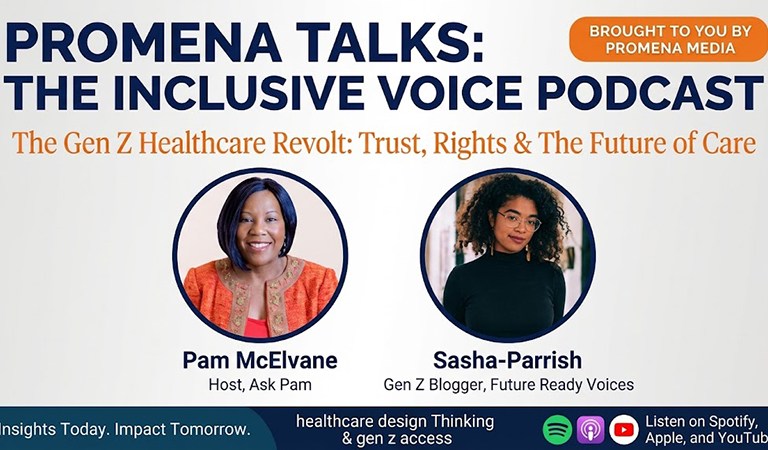

Overview: What is this episode of Promena Talks about?
Executive accountability requires senior leaders to translate organizational promises into consistent communication, measurable expectations, and daily behaviors across every management level. When C-suite executives send mixed signals or apply standards unevenly, leadership misalignment erodes employee trust and stalls cultural transformation.

Articulated Insight – “News, Race and Culture in the Information Age”
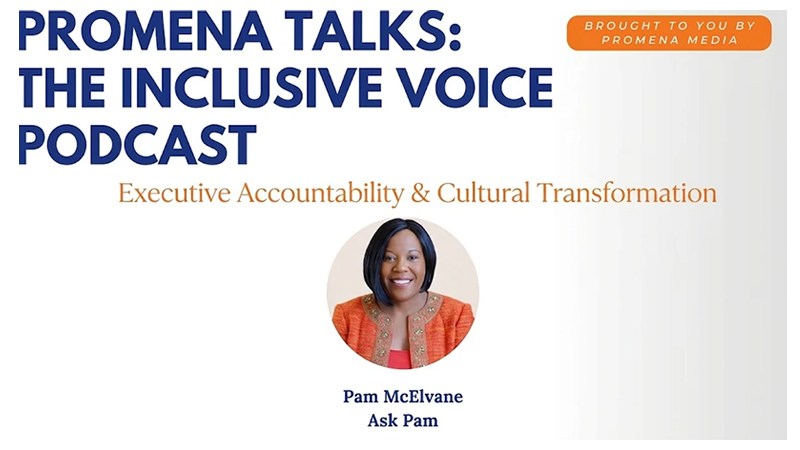
Host Pam McElvane breaks down how leadership misalignment erodes workplace trust and outlines a five-stage maturity model to turn C-suite promises into daily action.
Executive Accountability and Cultural Transformation in Leadership
Why Executive Accountability Defines Cultural Transformation
Executive accountability is the backbone of any successful cultural transformation and sustainable business growth. In the latest episode of The Inclusive Voice Podcast, host Pam McElvane breaks down how leadership agility and clear ownership keep organizations grounded during rapid change.
Boards and C-suite executives own accountability at the top of the house. Managers then translate those strategic priorities into team goals, while frontline professionals operationalize the work every day. When that chain of communication breaks down, employees experience a painful disconnect between what leaders promise in town halls and what actually happens in daily operations.
How Leadership Misalignment and Executive Incongruence Erode Trust
Executive incongruence happens when leaders make bold commitments to inclusion and belonging but reward behaviors that contradict those values. Even when a CEO delivers a clear mandate, senior leaders often walk out of the boardroom and interpret priorities through their own departmental lenses.
For example, legal and risk teams may strip out key language around equity and representation to minimize perceived exposure, while talent acquisition teams quietly pull back from diverse recruiting pipelines. Employees immediately notice these contradictions. Once staff see that promises do not match their lived experiences, trust erodes, engagement drops, and cultural momentum stalls.
Five Stages of the Executive Accountability Maturity Model
Drawing on research from Promena and the Industry Inclusion Index, Pam McElvane outlines a structured maturity model to help leadership teams diagnose where they stand and close organizational gaps:
- Awareness: Leaders recognize that cultural gaps exist and acknowledge the need for consistent alignment across the enterprise.
- Action: Senior teams move beyond crisis-only responses and begin modeling transparent, humble leadership during everyday business decisions.
- Defined Initiatives: Organizations establish clear, non-negotiable behavioral expectations alongside Chief People Officers and operational leaders.
- Integration: Accountability metrics, skip-level feedback loops, and regular wellness checks become embedded in daily management practices.
- Optimal Alignment: Leadership teams continuously self-audit subcultures, address the dissatisfied minority even when engagement scores hit 95 percent, and hold every tier accountable for results.
Practical Steps to Strengthen Leadership Alignment Today
Closing the feedback loop requires courage, humility, and consistent follow-through. Leaders cannot rely solely on annual engagement surveys as a vanity metric while ignoring frontline friction.
To build real momentum across your organization:
- Clarify non-negotiable priorities in the C-suite before cascading messages to middle management.
- Create psychological safety so emerging leaders can ask clarifying questions without fear of retaliation.
- Partner closely with Employee Resource Groups as frontline advocates who provide honest feedback on what works and what fails.
- Tie executive incentives and performance reviews directly to transparent communication and inclusive leadership behaviors.
Summary:
Executive accountability is not a one-time crisis response or a motivational speech. When senior leaders align their words with daily decisions, empower managers to communicate clearly, and audit their own blind spots, cultural transformation becomes a lasting competitive advantage.
Stream the Episode
Riverside (free):https://inclusivevoicepodcast.riverside.com/
Spotify: https://open.spotify.com/show/033JeNKxT86Bz60p0nDZWQ
Apple Music:https://podcasts.apple.com/us/podcast/the-inclusive-voice-podcast/id6787224490
Youtube: https://youtu.be/xet1KD-o9oo?si=YYWaQKv-cmqbKWrK
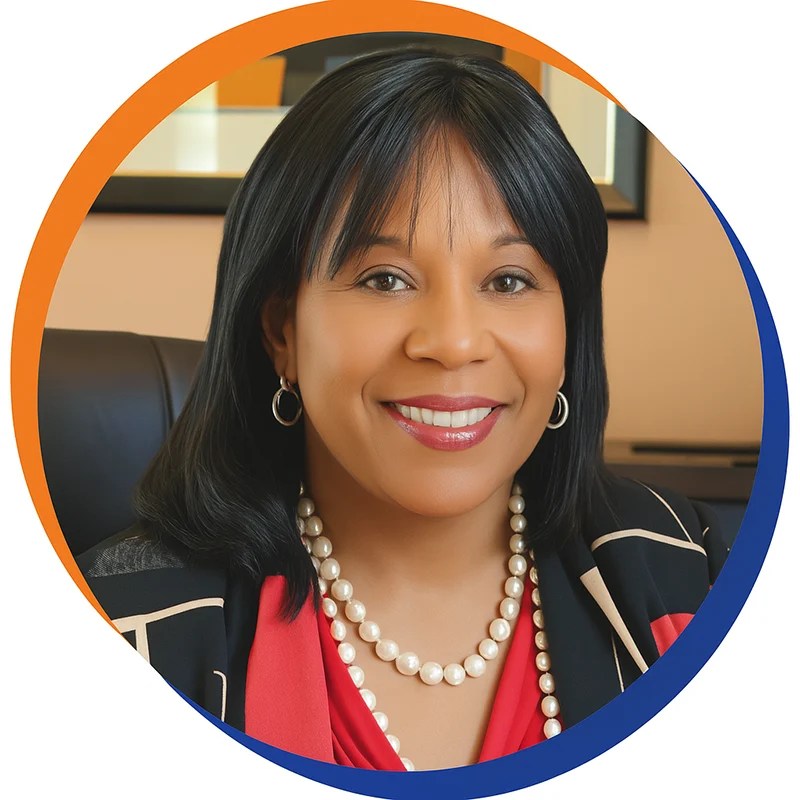
Pam McElvane, CEO, Author & Publisher, Promena Media
CEO | Master Coach | Board Governance Expert | Data Scientist | Strategist | Publisher
Pamela McElvane, MBA, MA, MCPC, is the CEO and founder of P&L Group, Ltd which has 3 key brands: Promena, 3I Research Institute & Diversity Learning Solutions, headquartered in Chicago, IL. Ms. McElvane has spent more than 25 years working with large and midsize companies providing insights and best practices, leadership and executive coaching, strategy, and organizational management.
About Promena (A P&L Group Brand)
Promena.Set the Standard (previously Diversity MBA) is a media, leadership, learning, research, and insights company dedicated to setting the standard for inclusion, equity, and performance. Through data-driven benchmarks, executive education, and thought leadership, Promena helps organizations turn inclusion from aspiration into a measurable business capability.
About Promena Insights
Promena Insights is the research and analytics division of Promena. It develops proprietary indices, benchmarks, and frameworks—including the Inclusive Leadership Index™ (ILI) and the Industry Inclusion Index (I³)—to measure inclusion maturity and guide evidence-based strategy for organizations and industries.
Contact for public speaking, coaching and leadership training opportunities:
833-362-2100 ext. 700 (Main)
#ExecutiveAccountability #CulturalTransformation #InclusiveLeadership