


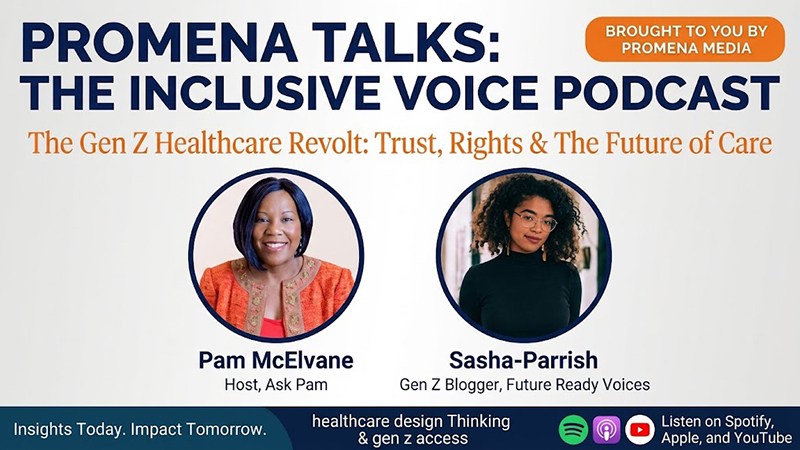
Overview: On The Inclusive Voice podcast, Promena Media host Pam McElvane and Associate Managing Editor Sasha Parrish examine why Gen Z is pulling away from traditional healthcare systems. Rooted in insights from the 9th Annual Healthcare Design Thinking Summit, the discussion details how the loss of reproductive rights, alarming Black maternal mortality disparities, narrow pharmaceutical marketing, and the abrupt loss of parental insurance at age 26 have created widespread distrust, forcing younger adults to demand culturally competent, transparent, and accessible medical care.
Beyond the Exam Room: How Lost Rights, Insurance Traps at 26, and Systemic Skepticism Are Reshaping the Next Generation of Healthcare Consumers
Walking into a clinic should not feel like gambling with your life savings or your dignity. Yet for millions of young adults across the country, engaging with the medical system feels exactly like that.
On a candid episode of The Inclusive Voice, host Pam McElvane sat down with Sasha Parrish, Associate Managing Editor at Promena Media and writer for Future Ready Voices: Gen Z. Fresh off discussions from the 9th Annual Healthcare Design Thinking Summit, the two tackled a reality that corporate health networks routinely overlook. The next generation of patients is stepping into adulthood with profound skepticism toward medical institutions, frustrated by systemic barriers, soaring insurance premiums, and care that frequently feels out of touch.
The Wake-Up Call of Stripped Rights and Maternal Disparities
For Gen Z, coming of age meant watching foundational bodily autonomy vanish overnight with the overturning of Roe v. Wade. As Sasha pointed out, growing up with rights created an expectation of baseline protection. Seeing those protections dismantled showed young women that fundamental healthcare access is fragile and subject to political shifts.
The immediate realization was stark: people were going to die. That fear was not abstract. It connected directly to ongoing realities in Black maternal health, where Black women face disproportionately high maternal mortality rates regardless of wealth or status. When cultural icons like Serena Williams struggle to have life-threatening post-birth complications taken seriously by their doctors, everyday patients notice. The message received by young women of color was loud and clear. If the medical establishment will not listen to world-class athletes, why would they listen to someone walking in with basic coverage?
When clinical care strips away choice and ignores patient intuition, trust shatters. Rebuilding that trust requires more than public relations campaigns. It requires medical professionals who possess cultural competency and the patience to listen before making assumptions.
Navigating the Shark-Infested Waters of Health Insurance
Turning 26 marks the moment young adults lose coverage under their parents’ insurance policies. For most, that transition feels like being pushed into shark-infested waters without a life vest.
Suddenly, young professionals are expected to understand high deductibles, co-pays, networks, out-of-pocket maximums, and confusing supplemental plans. Even in states with state-run marketplaces, missing a rigid deadline or experiencing a temporary income gap can lock someone out of comprehensive coverage for an entire year.
At the same time, older adults face their own bureaucratic gridlock with Medicare Advantage plans and Medicaid cuts. Seeing older relatives navigate endless paperwork and denials just to secure basic care sends a warning signal to the younger generation. The system feels built to confuse rather than heal.
When young people cannot navigate insurance portals or afford basic preventive appointments, they avoid doctors entirely. They turn to search engines and online groups out of necessity, risking algorithmic misinformation just to dodge an unexpected emergency room bill.
Where Public Health Messaging Drops the Ball
Bridging the gap also requires honest, inclusive public health campaigns. During their conversation, Pam and Sasha explored modern pharmaceutical marketing, pointing to recent national campaigns for HIV prevention drugs like PrEP.
While raising awareness around preventative medication is vital, narrow advertising that relies on outdated tropes misses broad segments of the population. HIV impacts everyone regardless of gender, sexual orientation, or background. When public health marketing silos life-saving therapies into narrow boxes, it reinforces decades of stigma and leaves young heterosexual men, women of color, and families out of the conversation.
Education needs to happen early, openly, and without shame. Programs that bring healthcare practitioners into schools to teach youth about their bodies, chronic illness, and proactive protection lay the groundwork for lifelong health literacy.
What Health Systems and Employers Must Do Next
Solving the healthcare disconnect cannot wait until the next generational health crisis hits. Leaders, health system designers, and corporate employers need to take decisive action now:
Integrate real health literacy into family and school discussions. Young people need transparent conversations about insurance terms, navigating doctor visits, and self-advocacy long before they turn 26.
Move from general corporate wellness perks to real healthcare support. Gym stipends are fine, but young workers need clear guidance on choosing coverage tiers, accessing preventive mental health services, and understanding their rights.
Demand cultural competency and empathy from providers. Medical staffing shortages are real, but rushing patients through ten-minute exams leads to missed diagnoses and fatal mistakes. Providers must create environments where patients are heard.
Broaden public health outreach to reflect community realities. Remove stigmas from sexual health and infectious disease prevention by engaging everyone at the table, from parents to young adults.
Normalize chronic illness and disability awareness. Managing chronic conditions and neurodivergence is a reality for millions of young adults. Healthcare delivery must design around accessibility rather than treating disability as an afterthought.
True health equity does not happen by accident. It is built when healthcare institutions, employers, and community leaders listen to the rising generation and build systems designed for human dignity.
Stream the Episode
Catch the full conversation and hear the panel unpack these critical workplace topics across your preferred platform:
Listen here:
Riverside (free):https://
Spotify: https://open.spotify.com/show/
Apple Music:https://podcasts.apple.
Youtube: https://youtu.be/J7xncX28SAM?
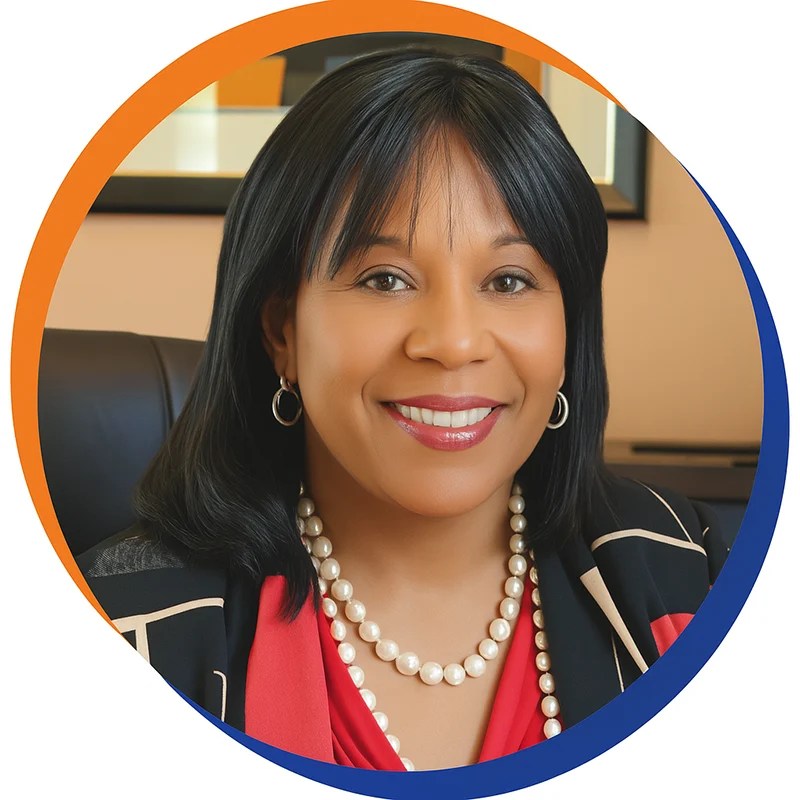
Pam McElvane, CEO, Author & Publisher, Promena Media
CEO | Master Coach | Board Governance Expert | Data Scientist | Strategist | Publisher
Pamela McElvane, MBA, MA, MCPC, is the CEO and founder of P&L Group, Ltd which has 3 key brands: Promena, 3I Research Institute & Diversity Learning Solutions, headquartered in Chicago, IL. Ms. McElvane has spent more than 25 years working with large and midsize companies providing insights and best practices, leadership and executive coaching, strategy, and organizational management.
About Promena (A P&L Group Brand)
Promena.Set the Standard (previously Diversity MBA) is a media, leadership, learning, research, and insights company dedicated to setting the standard for inclusion, equity, and performance. Through data-driven benchmarks, executive education, and thought leadership, Promena helps organizations turn inclusion from aspiration into a measurable business capability.
About Promena Insights
Promena Insights is the research and analytics division of Promena. It develops proprietary indices, benchmarks, and frameworks—including the Inclusive Leadership Index™ (ILI) and the Industry Inclusion Index (I³)—to measure inclusion maturity and guide evidence-based strategy for organizations and industries.
Contact for public speaking, coaching and leadership training opportunities:
833-362-2100 ext. 700 (Main)
#GenZHealthcare #HealthEquity #PromenaTalks