

Articulated Insight – “News, Race and Culture in the Information Age”
Overview: Treating Hispanic and Latino employees as a demographic monolith undermines talent retention, suppresses diverse perspectives, and weakens corporate culture. True workplace belonging requires business leaders to distinguish between nationality, race, and language, confront subtle barriers like accent bias, and turn annual heritage month awareness into year-round, measurable sponsorship and accountability.

Vitaly Gariev for Unsplash
Why treating 60 million people as a monolith hurts retention, and what corporate leaders need to change
“All Hispanics are not the same. Our approach to inclusion, executive sponsorship, and genuine belonging must reflect that reality every single day.”
The Limit of Single Labels
As Hispanic Heritage Month arrives, I want to challenge corporate America to push past surface celebrations and examine how we actually understand the people we honor. There is immense pride, deep history, and powerful contribution across Hispanic and Latino communities. There are also sharp, meaningful differences that deserve our full attention.
When we say “Hispanic” or “Latino” inside our organizations, who do we actually picture? Whose heritage are we recognizing, and whose personal story gets erased when we pack millions of people under one tidy umbrella and assume we have them figured out?
Geography tells an immediate story. Mexico anchors North America. Central America spans Guatemala, Honduras, El Salvador, Nicaragua, Costa Rica, and Panama. South America encompasses Colombia, Venezuela, Ecuador, Peru, Bolivia, Chile, Argentina, Paraguay, Uruguay, and Brazil. The Caribbean brings distinct cultural heritage from Puerto Rico, the Dominican Republic, Cuba, and beyond. Every region carries its own history, community norms, and economic pulse.
These distinct backgrounds shape different relationships to language, race, and national identity. Even two colleagues from the exact same country will not walk through life with the same perspective or expectations. Knowing someone’s heritage gives you an initial bridge for conversation. It never substitutes for knowing the individual human being sitting across the conference table.
Untangling Language, Race, and Identity
Language matters, and clear leaders use it with precision. “Hispanic” generally points to Spanish cultural or ancestral origins. “Latino” points to Latin American origins. A colleague with roots in Spain may identify as Hispanic; someone from Brazil may identify as Latino with Portuguese heritage rather than Spanish. On top of that, these communities include people who are Black, White, Indigenous, Asian, and multiracial. Nationality, ethnicity, and race intersect, but each one reveals something distinct.
An Afro-Latina director, an Indigenous Guatemalan software engineer, and a White Argentine business owner may all fall under the same demographic reporting box. Yet their lived experiences in our hallways and boardrooms are vastly different. Real inclusion makes space for those differences without questioning anyone’s authenticity or credibility.
Rethinking the Melting Pot
We often hear the United States described as a melting pot. Some employees arrive as immigrants, intentionally preserving their traditions and native tongues. Others were born here, balancing their heritage alongside American schools, neighborhoods, and career ladders. Many families have lived on this soil for generations. Puerto Ricans born on the island are U.S. citizens at birth, a reminder that we cannot treat every Latino narrative as an immigrant narrative.
A professional can be thoroughly American and simultaneously anchored in their Mexican, Salvadoran, Cuban, or Colombian heritage. Speaking English more comfortably than Spanish does not diminish their cultural connection. Coming from a multicultural household does not make them any less grounded.
My fundamental issue with the melting pot metaphor is what it demands people surrender to fit in. Are your teams welcoming the whole individual? Or are you only welcoming the comfortable parts while silently signaling them to quiet down the rest?
The Real Lesson of “Latinx” and “Latine”
The emergence of terms like “Latinx” and “Latine” highlights another dimension of this discussion. Both arose as gender-inclusive alternatives to Latino and Latina, making room for individuals who do not see themselves in traditional binary grammar. The terms have gained visible traction across universities, advocacy circles, LGBTQ+ networks, and corporate spaces.
Yet Latinx has not become a universal identity. Research from the Pew Research Center showed that 47% of U.S. Hispanic adults had heard the word, but only 4% used it to describe themselves. That reality check illustrates how personal collective identifiers really are.
The executive takeaway here is straightforward: respect what people call themselves. One colleague chooses Hispanic, another prefers Latina, Latino, Latinx, Latine, Mexican American, Boricua, or their ancestral country of origin. Do not assume finding a single buzzword finishes the work of inclusion. Listen first, and honor individual preference.
What This Demands in the Workplace
Inside the workplace, these nuances make or break retention. No single employee should carry the burden of acting as the spokesperson for an entire population. An effective Hispanic employee resource group needs room for different generations, nationalities, racial identities, and career paths. Celebrations should highlight that full spectrum, shaped by employees voluntarily rather than treated as a checklist chore. According to the Promena Inclusive Leadership Index, 86% of companies have Hispanic ERGs. The presence of a group is standard; the quality of engagement is what sets top cultures apart.
Leaders must also confront the silent assumptions that steer career progression. Does an accent subtly influence how you assess executive presence? Do managers automatically assume every Latino teammate speaks Spanish? Do you recognize global work and international experience as major competitive assets? Are Afro-Latino professionals visible in succession plans and high-level decision rooms? When an employee flags that their lived experience differs from the group consensus, are senior leaders truly listening?
These questions are not academic. They directly influence talent acquisition, project sponsorship, leadership pipelines, and long-term retention.
Three Concrete Commitments for Everyday Leadership
Hispanic Heritage Month is a launching pad, not a once-a-year checkbox. Here are three practical commitments every executive can start executing today:
- 1. Look past the label. Dig into the backgrounds, traditions, and distinct cultures represented across your workforce. Ask respectful questions, stay curious, and let team members decide what parts of their story they want to share.
- 2. Broaden who shapes the conversation. Audit who is establishing cultural norms and workplace definitions inside your business. Invite unconventional perspectives to the table and ensure their feedback directly shapes policy and operational choices.
- 3. Turn insight into business action. Move from goodwill to concrete accountability. Re-evaluate access to executive sponsorship, remove barriers in promotion pipelines, or solve a persistent workplace friction point. Assign an executive sponsor and set a firm calendar deadline to review measured progress.
America’s workforce diversity is an incredible driver of innovation when we treat it with depth and rigor. This month, celebrate with genuine curiosity, listen with personal humility, and lead with measurable accountability. Above all, let people tell you who they are.
About the Author & Series
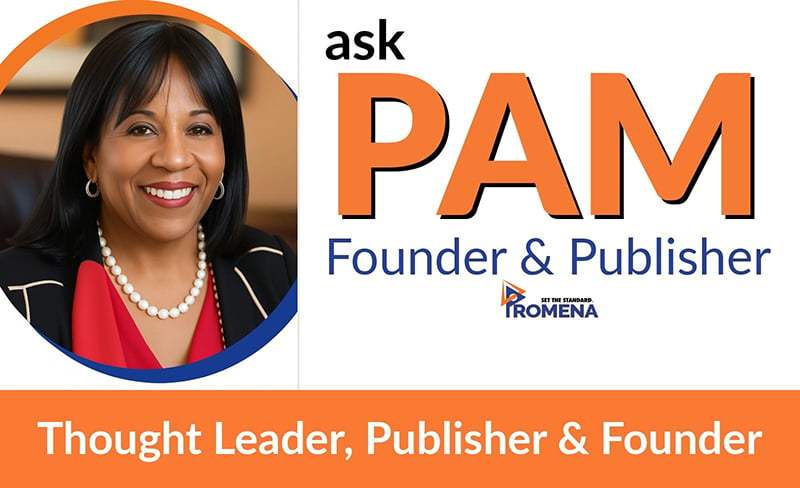
CEO | Master Coach | Board Governance Expert | Data Scientist | Strategist | Publisher
Pamela McElvane, MBA, MA, MCPC, is the CEO and founder of P&L Group, Ltd which has 3 key brands: Promena, 3I Research Institute & Diversity Learning Solutions, headquartered in Chicago, IL. Ms. McElvane has spent more than 25 years working with large and midsize companies providing insights and best practices, leadership and executive coaching, strategy, and organizational management.
About Promena (A P&L Group Brand)
Promena.Set the Standard (previously Diversity MBA) is a media, leadership, learning, research, and insights company dedicated to setting the standard for inclusion, equity, and performance. Through data-driven benchmarks, executive education, and thought leadership, Promena helps organizations turn inclusion from aspiration into a measurable business capability.
About Promena Insights
Promena Insights is the research and analytics division of Promena. It develops proprietary indices, benchmarks, and frameworks—including the Inclusive Leadership Index™ (ILI) and the Industry Inclusion Index (I³)—to measure inclusion maturity and guide evidence-based strategy for organizations and industries.
Contact for public speaking, coaching and leadership training opportunities:
833-362-2100 ext. 700 (Main)
About Ask Pam
Ask Pam is an executive thought leadership platform offering direct, unfiltered access to the perspective of CEO and publisher Pam McElvane. Drawing on over two and a half decades of advising senior leaders through workplace transformation, Pam links breaking workforce trends directly to bottom-line business performance. Through P&L Group, Ltd. and its operational arms, Promena Media, 3i Research Institute, and Promena Learning Solutions, she brings a multifaceted lens to complex human capital questions. Ask Pam invites readers to engage, ask challenging questions, and shape future-ready leadership.
#HispanicHeritageMonth #WorkplaceInclusion #Leadership