
Overview: Missouri residents, small businesses, and local non-profits have access to millions of dollars in immediate financial assistance, utility bill forgiveness, and capital improvement grants heading into late 2026. Key programs include Ameren Missouri’s utility grants (offering up to $1,000 for small businesses and unhoused residents, and $275 for residential customers), the City of St. Louis HUD-backed domestic violence emergency shelter funding, a $200,000 state agriculture grant, and $4 million deployed to rebuild 250 tornado-damaged rental units in North St. Louis. At the municipal and state level, major policy shifts are also underway, led by a public hearing on Board Bill 91 to fund year-round Code Blue shelter operations via local cannabis taxes and Proposition A on the November ballot addressing congressional redistricting.
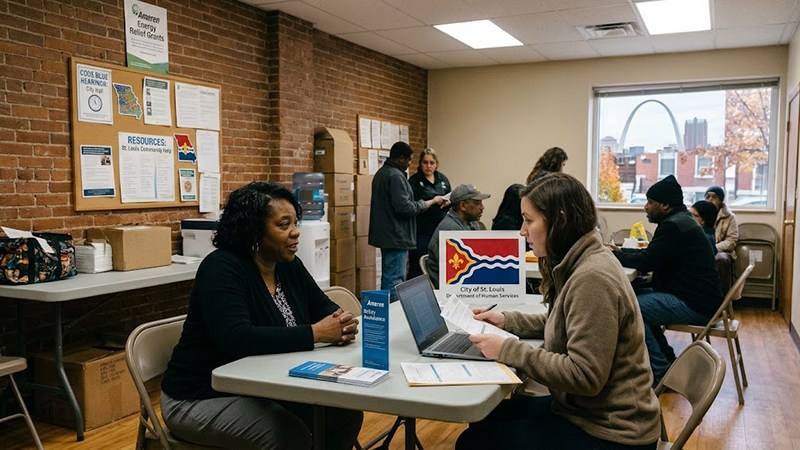
Utility Grants, Housing Relief, and High-Stakes Civic Decisions Are Shaking Up St. Louis and Missouri—Here Is How to Access Them
Community Resources, Energy Relief, and Civic Updates Across St. Louis and Missouri
A wide array of critical funding opportunities, public hearings, and civic developments are underway across the St. Louis metropolitan area and the state of Missouri. Ranging from utility bill relief and emergency shelter operations to tornado recovery projects and statewide redistricting measures, these initiatives offer essential support and vital information for local residents, small businesses, and community organizations.
Energy Relief & Utility Assistance Programs
Ameren Missouri Non-Residential Hardship Program
- Target Audience: Small businesses and 501(c)(3) nonprofit organizations with an active Ameren Missouri electric account.
- Benefit: A one-time grant of up to $1,000.
- Eligibility Criteria:
- Must have an active Ameren Missouri electric account.
- Must be experiencing financial hardship.
- Principal office must be located in Missouri.
- Must employ fewer than 50 employees.
- Eligible entities include retail establishments, daycares, salons, faith-based and religious institutions, civic organizations, and Community Action Agencies.
Ameren Residential Energy Relief Grants
- Grant Amount: One-time grants of $275 per qualifying household.
- Program Funding: Part of a broader $10 million utility commitment assisting customers facing rising energy costs or past-due utility balances.
- Application Process: Applications cannot be submitted directly on the utility website; residents must process their requests through an authorized local community partner agency.
- Partner Agency Directory: Ameren Partner Grant Agencies List.
New Start Energy Relief Program for Unhoused Neighbors
- Target Audience: Individuals and families reestablishing permanent housing after experiencing homelessness or staying in emergency shelters.
- Benefit: Up to $1,000 in past-due bill forgiveness to help reconnect electric service. Funding can be applied to outstanding balances, late fees, and charges linked to unauthorized use, with security deposit requirements waived upon agency connection.
- Eligibility Criteria:
-
- Unpaid balance on a past utility account.
- Prior Ameren Missouri electric service customer.
- History of homelessness or shelter residency (including domestic violence facilities) within the past 12 months, or seniors currently facing eviction from public housing.
- Application Pathway: Applicants must apply through a participating community provider.
- Agency Directory: Ameren New Start Partner Agencies List.
Housing, Shelter & Community Grants
City of St. Louis Domestic Violence Emergency Shelter Grant (HUD-Supported)
- Administering Agency: City of St. Louis Department of Human Services (DHS), Homeless Services Division.
- Scope: Operational and service support for emergency shelters serving victims of domestic violence, dating violence, stalking, and human trafficking.
- Eligible Costs:
- Shelter facility operations (lease/rent, utilities, maintenance, security, food, equipment, insurance, and furnishings).
- Essential resident services (case management, legal support, child care, mental health and substance abuse treatment, job readiness, life skills training, and transportation).
- Submission Deadline: November 11, 2026, at 4:00 PM.
Compass Cares Foundation Community Grants
- Eligible Applicants: 501(c)(3) nonprofit organizations.
- Focus Pillars: Food insecurity relief, local supplier and smallholder farmer empowerment, workforce development within hospitality/food services, and natural disaster relief.
- Funding Amount: Award sizes vary by program scope.
- Application Deadline: October 31, 2026.
Home Builders Charitable Foundation (HBCF) Shelter Grants
- Mission: Supporting housing improvements and shelter infrastructure for local non-profit facilities.
- Requirements:
- 501(c)(3) tax-exempt status (organizations only; individuals are not eligible).
- Must be sponsored by an active Home Builders Association (HBA) member and contributor.
- Requires at least one formal project bid submitted by an HBA member contractor.
- Organizations may apply once per calendar year.
- Upcoming Review Deadline: November 23, 2026.
Missouri Value-Added Farm to Table Grant Program
- Administering Agency: Missouri Agricultural and Small Business Development Authority (MASBDA), Missouri Department of Agriculture.
- Purpose: Financial assistance for Missouri small agricultural businesses to buy processing, packaging, and handling equipment (such as walk-in coolers, freezers, washing lines, and bagging units) or obtain GAP/GHP and HACCP food-safety certifications to supply state institutions.
- Funding Limits: Maximum cumulative grant of $200,000, with a mandatory 10% cash match requirement.
- Submission Deadline: Applications must be received by December 15, 2026, at 3:00 PM.
- Physical Mailing Address: MASBDA P.O. Box 630 1616 Missouri Boulevard Jefferson City, MO 65102
Pride St. Louis Community Giveback Fund
• Award Ceiling: Grants up to $5,000, plus promotional partnership packages.
• Target Populations: LGBTQIA+ youth, elders, transgender and non-binary individuals, and intersectional BIPOC or housing-insecure communities.
• Eligibility: Open to 501(c)(3) nonprofits, fiscally sponsored grassroots groups (with two years of financial history), and individual community organizers with demonstrated event portfolios.
• Application Deadline: December 31.
St. Louis City Housing & Municipal Policy
Board Bill 91: Permanent “Code Blue” Shelter Funding
- Context: “Code Blue” protocols temporarily expand cold-weather shelter capacity, transportation, and outreach during freezing temperatures. Currently authorized only through temporary executive actions, the program faces recurring administrative and budgetary hurdles each winter.
- Proposed Solution: Board Bill 91 proposes a permanent funding framework by allocating revenue from the City’s 3% local sales tax on adult-use recreational marijuana directly to a dedicated Code Blue emergency shelter fund.
- Public Hearing Details:
- Date & Time: Wednesday, October 28, 2026, at 5:15 PM
- Location: St. Louis City Hall, Kennedy Room (2nd Floor), 1200 Market Street
$4 Million Allocated for Tornado-Damaged Affordable Housing
Utilizing funds from the city’s $79 million NFL Rams legal settlement allocation (authorized under Board Bill 22), the Affordable Housing Commission and the Recovery Office have deployed $4 million to rehabilitate 250 storm-damaged affordable rental units across North St. Louis neighborhoods:
- Roosevelt Towne Apartments (Fountain Park): $750,000 to improve 154 rental units.
- Alumnus Gardens (Greater Ville): $1.22 million to restore 54 evacuated apartments.
- North Newstead V (O’Fallon & Penrose): $1.18 million to repair 31 rental units.
- Justine Petersen Housing & Reinvestment Corp: $538,229 targeting seven properties across the West End, Fountain Park, and Greater Ville.
- Tabernacle Community Development Corp (O’Fallon): $306,400 to rebuild four residential units damaged by exterior structural collapses.
Statewide Legislative & Ballot Spotlight: Proposition A
Missouri voters face a major redistricting referendum on the upcoming November ballot regarding the future boundaries of the state’s eight congressional seats:
- The Ballot Question: Proposition A is a citizen-initiated veto referendum concerning House Bill 1, a redistricting law passed by the General Assembly during a September 2025 extraordinary legislative session.
- The Competing Proposals:
- House Bill 1 (2025 Map): Redraws district lines—specifically reconfiguring the Kansas City-area 5th Congressional District into rural counties—aiming to create a 7–1 Republican congressional split.
- 2022 Congressional Map: Retains the boundaries drawn following the 2020 U.S. Census, which maintain a 6–2 Republican-to-Democratic seat breakdown.
- Ballot Mechanism:
- A “Yes” vote approves House Bill 1, enacting the 2025 congressional map for future elections starting in 2028.
- A “No” vote rejects and repeals House Bill 1, keeping the 2022 district boundaries in place through the remainder of the decennial census cycle.
- Legal Landscape: Following signature verification by People Not Politicians and a challenge supported by Put Missouri First, the Missouri Supreme Court ruled the referendum legally sound and mandated the use of the 2022 map for the current election cycle, a decision left intact after federal court reviews.
#MissouriGrants #UtilityAssistance #StLouisNews