
Overview: What are the three essential health tips for improving everyday vitality?
This week’s DiSC Health guidance, presented in collaboration with Howard University Hospital, centers on three manageable daily habits:
Turning sit time into fit time: Rather than relying solely on intensive workouts, individuals can maintain cardiovascular and metabolic health by seizing incidental opportunities to move—such as taking the stairs, pacing during phone calls, and parking further away from destinations.
Chewing food thoroughly and eating slowly: This practice triggers salivary enzymes for optimal nutrient absorption, eases digestive strain, and gives the body the required twenty minutes to signal fullness, preventing overeating.
Eliminating tobacco and secondhand smoke: Giving up tobacco immediately reduces risks of stroke, cardiovascular disease, and chronic lung damage, while protecting children and loved ones from harmful environmental toxins.

DISC Health Equity Action Lab
Howard University Hospital and DiSC Health Detail Practical Daily Habits to Improve Digestion, Clear Arteries, and Build Effortless Physical Stamina
Living well rarely requires an overhaul of your entire lifestyle overnight. In fact, true wellness is built on small, intentional decisions that compound throughout the week.
In this edition of DiSC Health’s weekly series, we explore three fundamental habits with Howard University Hospital. Specifically, these tips focus on slowing down at mealtime, quitting tobacco, and moving more throughout your day. By embracing these manageable adjustments, you can protect your long-term vitality without complicating your daily routine.
1. Slow Down and Chew Your Food Thoroughly

Between fast-paced work shifts, daily commutes, and busy family commitments, eating is often treated as a rushed chore. When you gulp down meals in a hurry, your body misses out on vital signals that regulate nutrition and satiety.
Taking the time to chew thoroughly transforms your metabolic health. As a result, smaller food particles enter your stomach smoothly. Salivary enzymes can then begin nutrient absorption immediately, which reduces post-meal bloating and acid reflux.
Furthermore, eating at a measured pace gives your digestive tract the necessary twenty minutes to signal fullness. This natural biological delay prevents overeating. Consequently, your blood sugar levels remain balanced throughout the afternoon. Set down your fork between bites, focus on every flavor, and give your body the time it needs to digest properly.
2. Protect Your Lungs: Say No to Tobacco
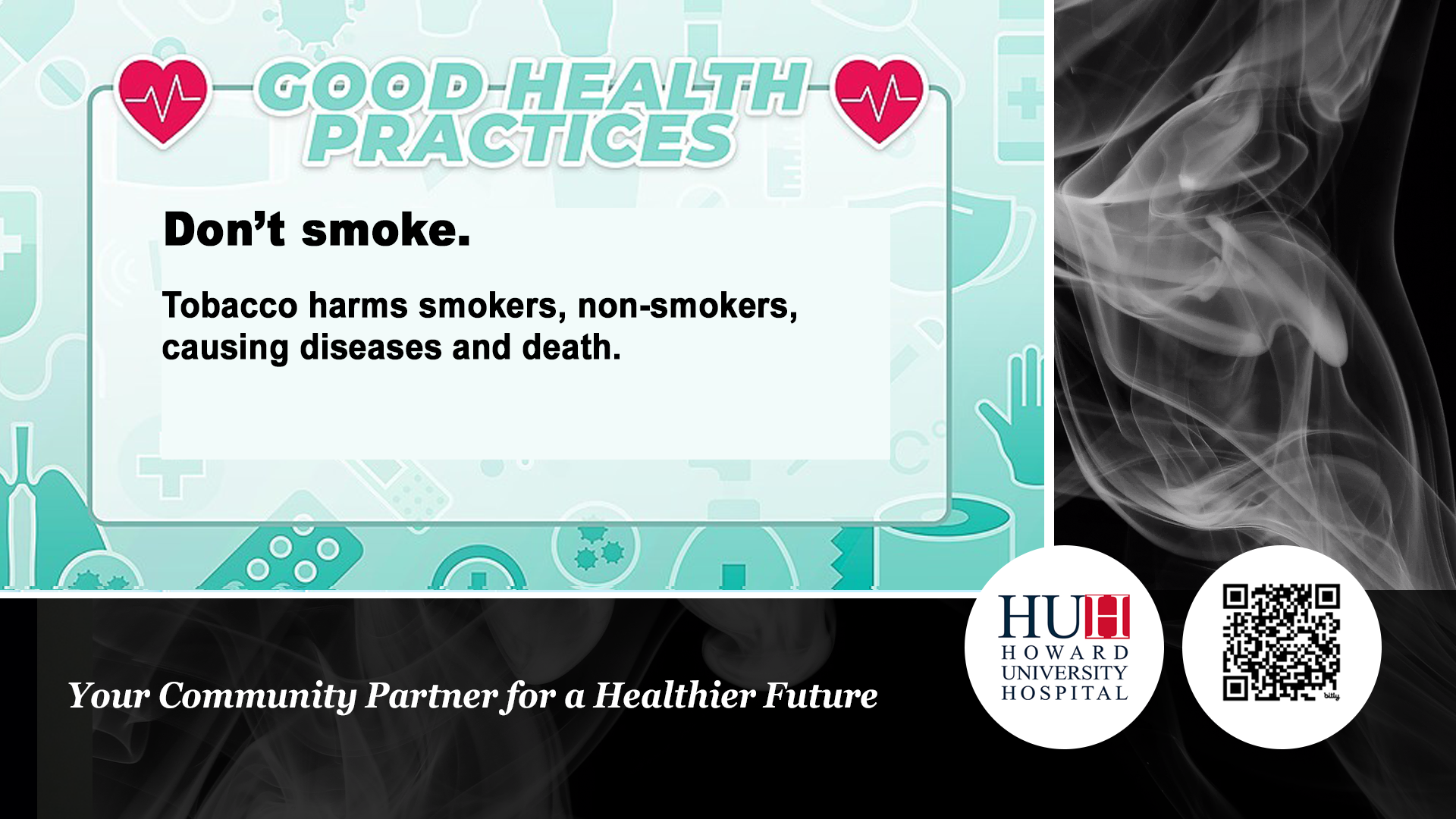
Among all preventive health measures, quitting tobacco remains the most decisive action you can take to safeguard your future.
Tobacco smoke contains thousands of toxic chemicals that inflict immediate damage on your body. For example, smoking restricts oxygen flow and stiffens arterial walls. Thus, it elevates your lifetime risk of cardiovascular disease, stroke, and chronic lung disease.
Just as critically, the harm extends far beyond the individual smoker. Secondhand smoke exposes family members, children, and coworkers to dangerous carcinogens. In children, this environmental exposure frequently triggers severe asthma attacks and respiratory distress. Choosing a smoke-free life clears the air in your home and shields the entire community.
If you are ready to quit, tap into local cessation resources. Doctors at Howard University Hospital can help you access proven therapies and clinical support. Ultimately, every tobacco-free day allows your heart and lungs to repair themselves.
3. Turn Sit Time into Fit Time with Daily Movement
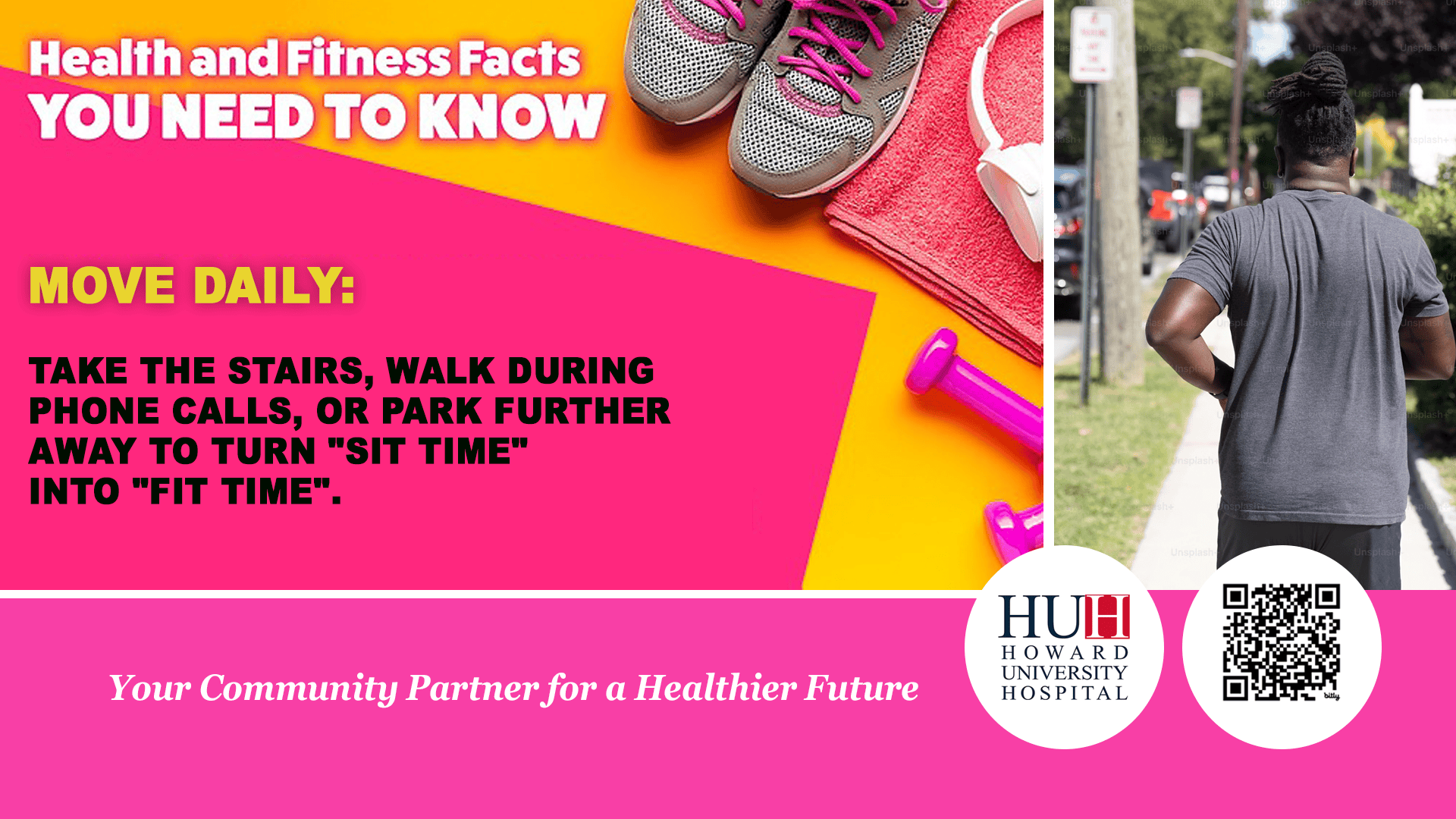
inding an hour to visit the gym can feel daunting on crowded weekdays. However, physical activity does not need to happen in a single, intense workout to count toward heart health.
The human body was engineered to move consistently throughout the day. Extended sedentary periods weaken postural muscles and reduce metabolic efficiency. Fortunately, the solution is straightforward: turn sit time into fit time by finding quick opportunities for movement.
To begin, you can integrate small physical habits into your existing schedule:
- Skip the elevator and take the stairs to engage major leg muscle groups.
- • Stand up, pace, or take a walking lap while taking phone calls at work.
- • Park further away from store entrances and office doors to rack up functional steps.
Because these activities are brief, they easily fit into any schedule. In addition, these micro-bursts of physical exertion stimulate circulation and sharpen mental focus.
Small Steps Toward a Healthier Community
Building sustainable health is not about perfection. Rather, it centers on making mindful, practical choices where you live, work, and eat every single day. When you chew your food with purpose, eliminate harmful tobacco, and stay active, you invest in lifelong vigor.
Scan the QR codes provided by Howard University Hospital to discover preventive screenings, nutrition workshops, and community health resources tailored to your family’s needs.
About
DISC Health
The Health Equity Action Lab (HEAL) is an initiative by Dynasty Interactive Screen Community aimed at addressing health disparities in the U.S. and globally. By engaging media and stakeholders, HEAL seeks to reduce health inequalities and raise awareness. Their approach includes overcoming socio historical barriers and confronting the institutional, social, and political factors that perpetuate healthcare inequality.
Learn more about the health education partnership:
Howard University Hospital (HUH)
Howard University Hospital, established in 1862 as Freedmen’s Hospital, has a rich history of serving African Americans and training top medical professionals. Located in Washington, D.C., it is the only teaching hospital on the campus of a historically Black university. HUH is a Level 1 Trauma Center and a critical healthcare provider for underserved populations. It offers advanced medical services, including robotic surgery, and has received numerous accolades for excellence in specialties like heart care, stroke treatment, and radiology.
Learn more about Howard University Hospital (HUH)
Howard University Faculty Practice Plan (FPP)
The Howard University Faculty Practice Plan is a multi-specialty physician group in Washington, D.C., dedicated to advancing healthcare and eliminating health disparities. It offers comprehensive services, including primary and specialty care, mental health, imaging, and cancer care, all connected to Howard University Hospital. FPP emphasizes patient-centered, respectful care for the diverse community and provides free health screenings and events to promote wellness.
Learn more about Howard University Faculty Practice Plan (FPP).
Get more Disc Health Weekly Tips:
#DiSCHealth #HowardUniversityHospital #HealthyLiving