
Missouri Governor Mike Kehoe was excited to share some news that will once again benefit Boeing’s defense portfolio. While critics are already voicing concerns on social media, this development is a win for both St. Louis and Missouri.
Mike Kehoe: St. Louis is Fighterland, USA!
Proud of this incredible win that further cements Missouri as a critical leader in the future of America’s air dominance, innovation, and national defense.
Boeing’s response:
6th-gen edge. Thank you,
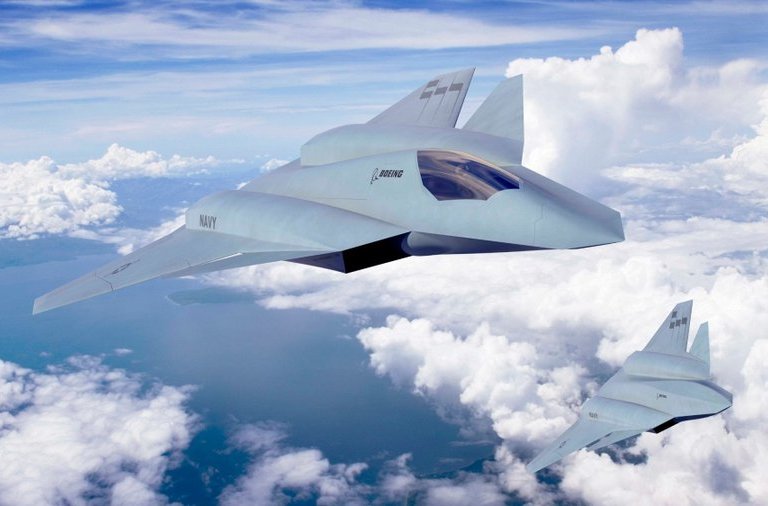
@USNavy, for continuing our partnership to design, build and deliver your F/A-XX aircraft. We’re honored to produce the 6th-generation fighter that will revolutionize advancements in naval aviation to maintain U.S. carrier air superiority.
Now, The Narrative Matters wants to share with the readers a release from a source online.
The Pentagon has selected Boeing to develop the U.S. Navy’s F/A-XX, awarding a contract worth more than $20 billion for the carrier-based fighter that will eventually succeed the F/A-18E/F Super Hornet. The decision gives Boeing a remarkable position in the future of American airpower.
It is already developing the Air Force’s F-47. It will now simultaneously develop the Navy’s next-generation carrier fighter after defeating Northrop Grumman in the final F/A-XX competition. Lockheed Martin had previously been eliminated.
The decision also resolves, at least for now, a debate that threatened to delay the aircraft for years. Pentagon officials had raised concerns that the U.S. defense industrial base might not have enough engineering and supply-chain capacity to develop two sixth-generation fighters simultaneously.
Congress pushed back, providing $750 million to accelerate F/A-XX in 2025 and another $1.4 billion in FY2026. Now both programs are moving forward, with the same company.
Much about F/A-XX remains classified, including its final configuration. What the Navy has disclosed points toward a stealthier aircraft with substantially greater range and endurance than today’s carrier fighters, advanced sensors and weapons, and the ability to operate as part of a networked formation with uncrewed combat aircraft.
That range is important. The Super Hornet was built for a different era of carrier warfare. In a Pacific conflict, increasingly capable Chinese missiles could force American carriers to operate much farther from the battlespace, making the combat radius of their aircraft a central constraint.
F/A-XX is intended to help push the carrier air wing back outward. The Navy plans to operate F/A-XX alongside the F-35C rather than replace it. The first production F/A-XX aircraft are expected in the 2030s, while Super Hornets could remain in service into the 2040s.
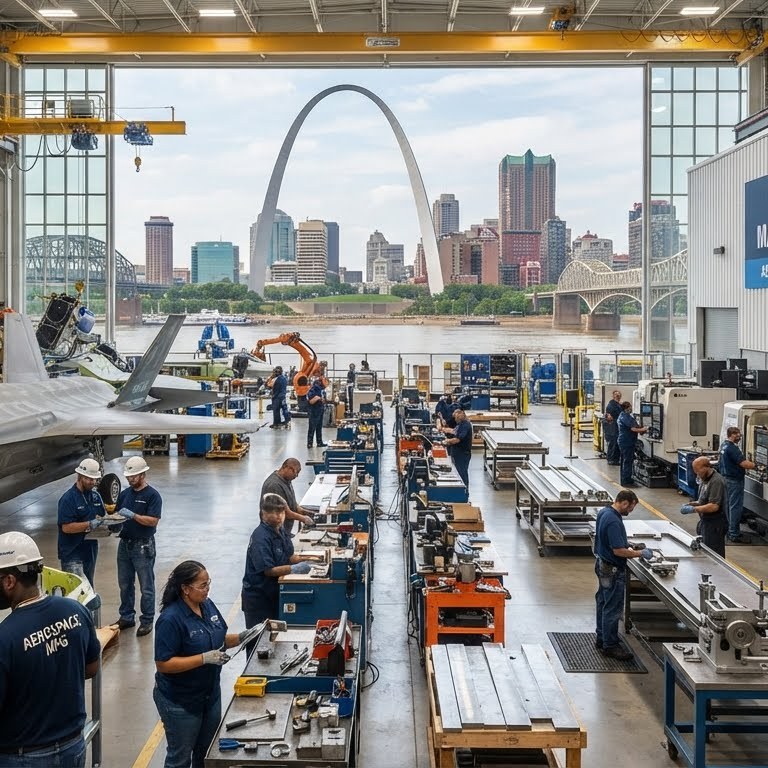
There is also an industrial story behind today’s decision. Boeing’s Super Hornet production line in St. Louis is approaching the end of new-aircraft production. F/A-XX, combined with F-47, now gives that industrial complex a path directly into the next generation of American combat aviation.
The unanswered question is whether Boeing and its supplier base can execute two of the world’s most technologically demanding military aircraft programs at the same time.
Source: The Tectonic