
Overview: Gabby Williams delivered one of the most clutch performances in basketball history, scoring 28 second-half points in Game 7 to lead the second-year Golden State Valkyries to their first WNBA championship over the Atlanta Dream. Finishing with 30 points, 4 blocks, and 2 steals, Williams set all-time WNBA Finals records for total series points (137), total series steals (18), and points in a single playoff half. Her Finals MVP run shatters traditional multi-year expansion rebuilding models, proving that prioritizing two-way defensive tenacity and modern franchise culture can immediately produce championship dominance.
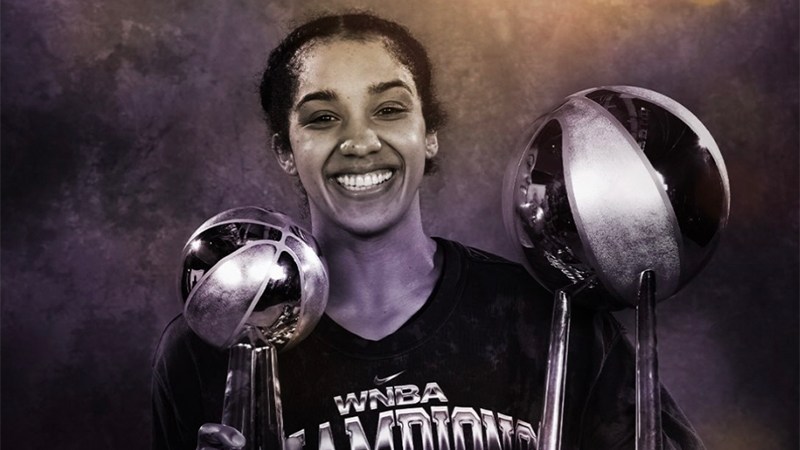
How Gabby Williams erased a halftime deficit, shattered postseason records, and led the Golden State Valkyries to an improbable Year 2 title.
The Winner’s Circle: They Called Expansion Teams a Five Year Project: Gabby Williams Just Torched the Entire Playbook
The Anatomy of a Second-Year Miracle
When Joe Lacob and the Golden State Valkyries ownership group paid the expansion fee to bring a team to San Francisco, the traditional sports media gave them the standard five-year timeline. Build the infrastructure, take your lumps in the lottery, sign a few veteran stabilizers, and hope to compete for a playoff spot by year four.
Gabby Williams and the Valkyries decided they did not have that kind of patience.
In only their second season of existence, Golden State hoisted the 2026 WNBA championship trophy inside a deafening Chase Center after edging out the Atlanta Dream 68-63 in Game 7. At the center of that triumph stood Williams, clutching the Finals MVP trophy and validating one of the most calculated roster bets in modern professional sports.
Championships are usually won by continuity and tenured chemistry. The Valkyries built a winner out of relentless pace, cultural buy-in, and a lead playmaker who spent the entire postseason proving she belongs in every conversation about elite two-way basketball.
The Coldest Second Half in Postseason History
Every classic Game 7 features a signature turning point, but what unfolded in the second half on Saturday night defied normal playoff logic.
Through the first two quarters, Atlanta had Golden State completely locked down. Williams had just two points on the board. The Dream were packing the paint, daring Golden State to beat them from the perimeter, and it was working. Through the first six and a half games of the series, Williams had been ice cold from beyond the arc, hitting only 22 percent of her attempts from deep.
Then came the second twenty minutes.
Williams came out of the locker room looking entirely liberated. She attacked gaps, ran transition lanes with purpose, and completely flipped her perimeter mechanics under the brightest lights imaginable. She knocked down 4 of 6 from three-point range in the second half alone, drilling back-to-back daggers that tore the roof off the building.
When the dust settled, Williams had dropped 28 points in the second half. That is not just a personal milestone. It stands as the all-time WNBA record for the most points scored in a single half of any playoff game. She finished the night with 30 points, four blocks, and two steals, becoming the first player in WNBA Finals history to post a 30-plus point, 4-plus block, and 2-plus steal stat line in a Finals game.
Rewriting the Finals Record Books
While Game 7 delivered the viral climax, Williams earned this MVP across all seven grueling contests. Atlanta brought size, physical defensive switches, and elite rebounding to the floor, yet Williams dictated the terms of engagement every night.
Over the full series, she averaged 19.6 points, 3.6 rebounds, 2.7 assists, and 2.6 steals per game. Her two-way motor established two new all-time WNBA Finals records: 137 total points scored and 18 total steals across a single Finals series.
That defensive production matters just as much as the scoring. In high-stakes basketball, offense comes and goes, but defensive disruption travels. Williams consistently blew up Atlanta’s horns sets, deflected entry passes, and converted turnovers into instant run-out points. She refused to let her offensive cold spells dictate her defensive intensity, and when the shots finally started falling, the Dream had zero answers left.
The Blueprint for Modern Sports Dominance
From a sports business perspective, what Golden State pulled off changes the math for future expansion franchises across the WNBA and women’s sports globally.
The Valkyries did not wait around for an established superstar to demand a trade to the Bay Area. Instead, head coach Natalie Nakase and the front office identified high-motor, high-IQ athletes who were undervalued in traditional offensive systems. They built a defensive foundation, gave Williams the freedom to operate as the engine of their offense, and created an electric fan culture at Chase Center that rivaled any playoff atmosphere in basketball.
Williams bet on her ability to carry an expansion roster to the mountaintop, and the organization gave her the keys. That trust culminated in a historic championship ring, an MVP trophy, and an enduring lesson in sports culture: when you build around two-way grit and fearless leadership, timelines shrink in a hurry.
Relive the postgame celebration and trophy presentation with the Valkyries Finals MVP Trophy Presentation. This video showcases the live on-court ceremony at Chase Center where Gabby Williams was officially crowned the 2026 Finals MVP.
Get more The WInner’s Circle:
#WNBAFinals #Valkyries #GabbyWilliams