
Overview: Hispanic fall art intersects harvest labor, ancestral memory, and civic storytelling. Visual artists honor the essential contributions of migrant farmworkers (campesinos) using rich earth tones, connect living communities to sacred memory through Día de los Muertos iconography and natural harvest materials, and activate public streetscapes with murals that symbolize transformation, cultural equity, and economic revitalization.
How Campesino Labor, Sacred Día de los Muertos Altars, and Street Murals Turn Autumn into Cultural Power
The Ground We Stand On: Dignity, Soil, and the Autumn Hustle
Fall is never just about cooling temperatures or changing leaves. For Hispanic and Chicano communities, autumn represents sweat equity, sacred memory, and relentless vitality. When you look at the canvas of Hispanic history during this time of year, you see the real economic engine of culture: the harvest.
For generations, visual storytellers have focused on the campesinos. These migrant farmworkers gather the autumn bounty with calloused hands, bent backs, and unwavering resolve. Chicano artists lean into this reality with purpose, saturating canvases with raw terracotta reds, burnt umber, and glowing ochres. They take farm labor out of the background shadows and place it dead center where it belongs. This is not about pity. It is an unapologetic declaration of dignity and ancestral ownership over the land.
That connection between communal work and seasonal abundance stretches far back. Francisco Goya famously nailed this spirit in his classic tapestry cartoon The Grape Harvest, painting rural townsfolk sharing the heavy lift and celebrating the bounty together. Hispanic artists carry that exact lineage forward today. They remind every viewer that behind every meal, every market stall, and every thriving economy stands a collective of people moving in rhythm with the soil.
When Memory Comes Alive: The Golden Glow of Día de los Muertos
As the harvest concludes, the creative energy shifts into something deeply spiritual. The fall landscape leads directly into Día de los Muertos, turning grief on its head and transforming mourning into an electric cultural celebration.
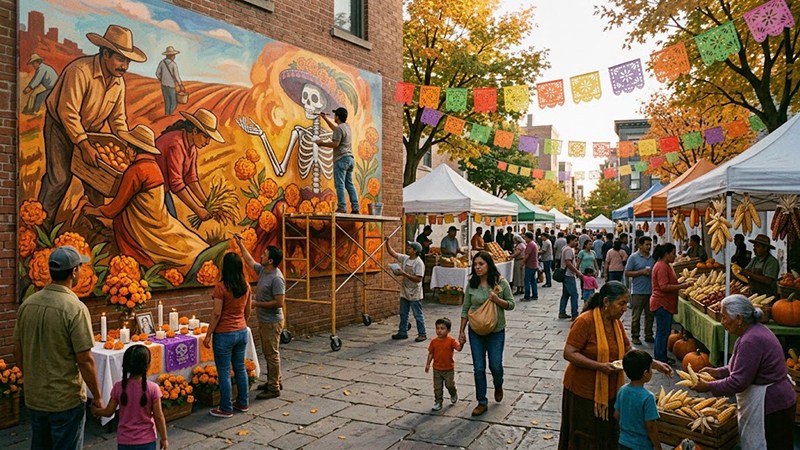
Hispanic painters, printmakers, and sculptors refuse to view death as a sterile end. Through vibrant representations of iconic skeletal Catrinas, glowing cempasúchil marigold petals, and elaborate candlelit altars, art acts as an active contract with history. The dead are not lost to the ether; they are invited back to sit at the family table.
You see contemporary creators using the physical harvest inside their pieces. Dried corn husks, intricate papel picado, and natural clay pigments become part of mixed-media installations. This work captures an essential spiritual fusion where ancient Indigenous harvest rituals merge seamlessly with centuries-old Catholic feast days. It demonstrates that tradition is not frozen in museum display cases. It is an evolving, living organism that breathes fresh life into each generation.
Public Walls and Modern Platforms: The Cultural Currency of Autumn
This creative surge takes center stage every year between mid-September and mid-October. Hispanic Heritage Month operates as a powerful megaphone, pushing regional Latin American movements into major cultural institutions and community conversations.
Yet the most critical cultural work never stays locked inside white-cube galleries. It explodes across urban landscapes through public murals.
During fall neighborhood arts festivals, artists claim public brick walls to paint the story of seasonal transition as a direct metaphor for community power, urban survival, and neighborhood rebirth. These walls do more than beautify a district; they establish permanent roots. They drive foot traffic, generate local pride, and validate the community’s presence in growing cities.
When Hispanic artists paint the fall season, they hand us a masterclass in resilience. They connect the sweat of the fields, the sacred respect for those who came before, and the unstoppable drive of the next generation. That intersection is where culture turns into power, and it is a rhythm everyone can learn from.
Google News SEO & Editorial Metadata Package
Article URL:
#HispanicArt #DiaDeLosMuertos #ChicanoCulture