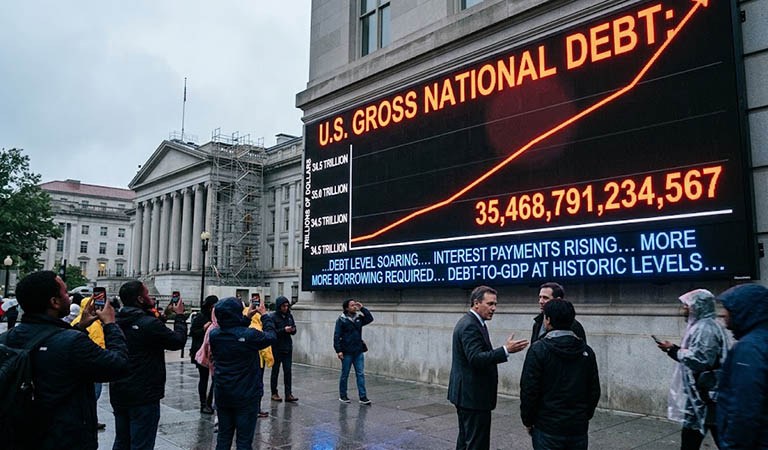

Recent US policy changes include the national debt officially crossing $40 trillion, a temporary 90-day emergency tariff waiver on 300,000 metric tons of imported ground beef to curb grocery inflation, and new federal directives opening 45 million forest acres to logging while fast-tracking public land for commercial space launch sites.

tommao wang ofr Unsplash
A breakdown of record national debt numbers, emergency tariff cuts at the supermarket, and commercial access expansions on federal lands.
Top World News Stories Week August 21: Domestic Policy and Economic Realignment
US Policy Changes: National Debt Records, Beef Tariffs, and Forest Logging
US policy changes are accelerating across fiscal policy, consumer agriculture, and public land management. Total federal obligations have surpassed forty trillion dollars for the first time, driving fresh scrutiny over government expenditure. At the same time, emergency tariff adjustments and federal forestry modifications are reshaping consumer costs and industrial land rights nationwide.
National Debt Surpasses Historic Thresholds
Treasury department records confirmed the national debt exceeded $40 trillion. This total has doubled over the past ten years, driven by rising mandatory spending and elevated debt-servicing costs. Corporate treasurers and investors are adjusting their balance sheets to account for persistent borrowing pressures and long-term interest rate volatility.
Grocery Relief Through Emergency Meat Tariffs
The administration signed an emergency measure granting duty-free access for 300,000 metric tons of imported beef over ninety days. The executive action targets high consumer prices directly by increasing domestic supplies at an estimated discount below prevailing wholesale averages. Importers must adjust procurement pipelines immediately to capture temporary duty relief windows.
Access Expansions for Federal Forestry and Space
The U.S. Forest Service published a rule proposal opening 45 million acres of public lands to commercial logging and road development. In a related push to optimize federal real estate, new executive directives allow commercial space operators to fast-track launch corridors on government-owned parcels. Regulatory filings and environmental impact statements are accessible through the Federal Register.
These domestic shifts require operators to reassess commodity sourcing, track federal real estate actions, and build flexible risk plans to navigate evolving regulations.
#USPolicy #EconomyNews #NationalDebt