
Overview: Missouri voters fundamentally altered the balance of power in Jefferson City during the November 2026 midterm elections. By rejecting Amendment 3 and Proposition A while passing Amendment 6, voters firmly shielded direct ballot initiatives and locked in existing congressional boundaries. Simultaneously, suburban seat flips in St. Louis and Kansas City broke the Republican Party’s longstanding two-thirds supermajorities in both the state House and Senate. The outcome restores veto leverage, forces cross-aisle budget negotiations, and confirms that Missouri’s electorate will fiercely defend citizen-passed measures against legislative rollback.
Suburban flips, rejected constitutional rollbacks, and a new 80 percent supermajority rule just took away the GOP’s legislative blank check.
The Mid-Week Rundown: Voters Draw the Line: Inside the Historic Election Night That Broke Missouri’s Supermajority
Between November 1 and November 4, 2026, Missouri politics experienced a structural shift that will shape policy, regional business, and voter behavior for the next decade.
For years, Jefferson City ran on autopilot. A solid Republican supermajority meant policy debates rarely left party backrooms. That dynamic vanished on Tuesday night. Fueled by high turnout, suburban shifts in St. Louis and Kansas City, and a fierce defense of the direct ballot process, voters broke the GOP supermajority in both chambers while blocking every attempt to roll back previous citizen initiatives.
If you lead a business, run an advocacy campaign, or track policy in the Midwest, this is the political landscape you are dealing with today.
The Ballot Measures: Voters Protect Direct Democracy
The clearest takeaway from the 2026 midterms is that Missouri voters do not like lawmakers undoing their decisions.
Voters rejected Amendment 3 with 55.6 percent against. The measure was a direct attempt by state lawmakers to dismantle the reproductive rights protections passed in 2024 while adding new restrictions on gender transition care for minors. By rejecting it, voters sent an unambiguous signal: constitutional protections approved at the ballot box are off limits.
That pattern continued down the ballot.
Proposition A, a proposed mid-decade congressional map designed to dilute Democratic strongholds, crashed with over 61 percent of the vote against it. By defeating Proposition A, voters locked the existing 2022 congressional map in place through the end of the decade.
Then came the structural backstop. Voters passed Amendment 6 with roughly 60 percent support. This amendment embeds direct democracy rights into the Missouri Constitution and raises the legislative threshold required to tamper with citizen-approved ballot measures to a strict 80 percent supermajority in both the House and Senate.
Voters also shot down Amendment 7, the proposed “Show-Me Prosperity Fund,” which aimed to create a sovereign wealth fund with the long-term goal of replacing state taxes. On the local governance side, voters narrowly passed Amendment 8, securing constitutional status for elected county sheriffs and granting sole removal authority to the state attorney general.
Statehouse Reset: The Supermajority Crumbles
The most consequential legislative outcome is simple math. Democrats picked up 16 seats in the Missouri House of Representatives and secured pivotal wins in the Missouri Senate.
For the first time in years, the Republican Party no longer holds a two-thirds supermajority in either chamber.
That shift changes day-to-day governance instantly. A broken supermajority means:
Veto power now carries genuine weight, forcing real compromise on contested budgets and regulatory bills.
Constitutional amendments can no longer sail through along strict party lines without cross-aisle negotiations.
Centrist and suburban lawmakers now hold balance-of-power leverage over state appropriations and infrastructure policy.
Kansas City: Cleaver Wins, Jackson County Realigns
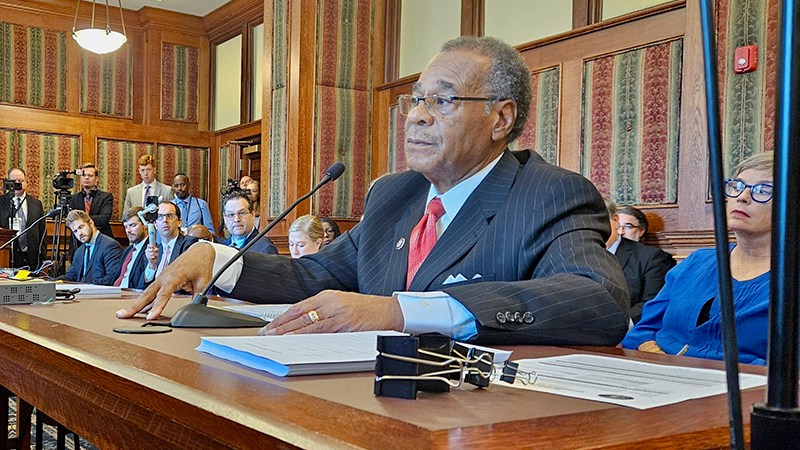
In the Kansas City metro, the failed redistricting effort meant smooth sailing for longtime incumbent Representative Emanuel Cleaver, who held his seat in Missouri’s 5th Congressional District.
In eastern Jackson County, Democrat Keri Ingle pulled off a defining win by defeating outgoing House Speaker Jon Patterson. Ingle’s victory provided the critical Senate seat required to break the upper chamber’s supermajority.
Locally, Jackson County voters chose continuity on safety funding, approving the renewal of the COMBAT anti-crime sales tax. In the county executive race, Democrat Stacy Lake claimed victory, taking over leadership of a regional government facing big infrastructure and budgetary choices.
Outside politics, healthcare workers and families across the region were hit by difficult news heading into Election Day, as Children’s Mercy Hospital announced a restructuring plan that resulted in major layoffs across its network.
St. Louis: Suburban Flips and Big Municipal Moves
The suburban realignment was on full display across St. Louis County and St. Charles County. Democrats unseated established figures, including Representative Brad Christ in the 96th District, alongside three legislative wins in St. Charles County that redrew the region’s political influence.
At City Hall and in local enforcement, two major stories developed:
The St. Louis Board of Police Commissioners approved a citywide surveillance drone initiative for the St. Louis Metropolitan Police Department. The program moves forward despite community pushback and privacy concerns voiced by municipal leaders.
In federal court, a former St. Louis city building inspector received a six-year prison sentence following an investigation into a 1.6 million dollar fraud scheme that drained municipal home repair funds and community grant programs.
On a lighter community note, Forest Park confirmed the seasonal return of the iconic Steinberg Skating Rink, bringing back one of the city’s favorite winter traditions.
Tragedy also touched central Missouri over the weekend, when a small aircraft crashed and caught fire near Lake of the Ozarks, leaving two dead and prompting ongoing investigations by the FAA and NTSB.
What This Means Going Forward
Missouri is not suddenly a blue state. What it is, undeniably, is an independent-minded electorate with zero patience for institutional overreach.
When voters pass something at the ballot box, they expect it to stick. When lawmakers push past what suburban voters find reasonable, suburban voters push back. As Jefferson City prepares for the upcoming legislative session, every lobbyist, executive, and community organizer will be operating under an entirely new set of rules.
#MissouriPolitics #Election2026 #Midterms